
The Biden administration is taking a worthy stand against Russian membership in the U.N. Human Rights Council — a position that also demands asking why the U.S. isn’t yet going further.
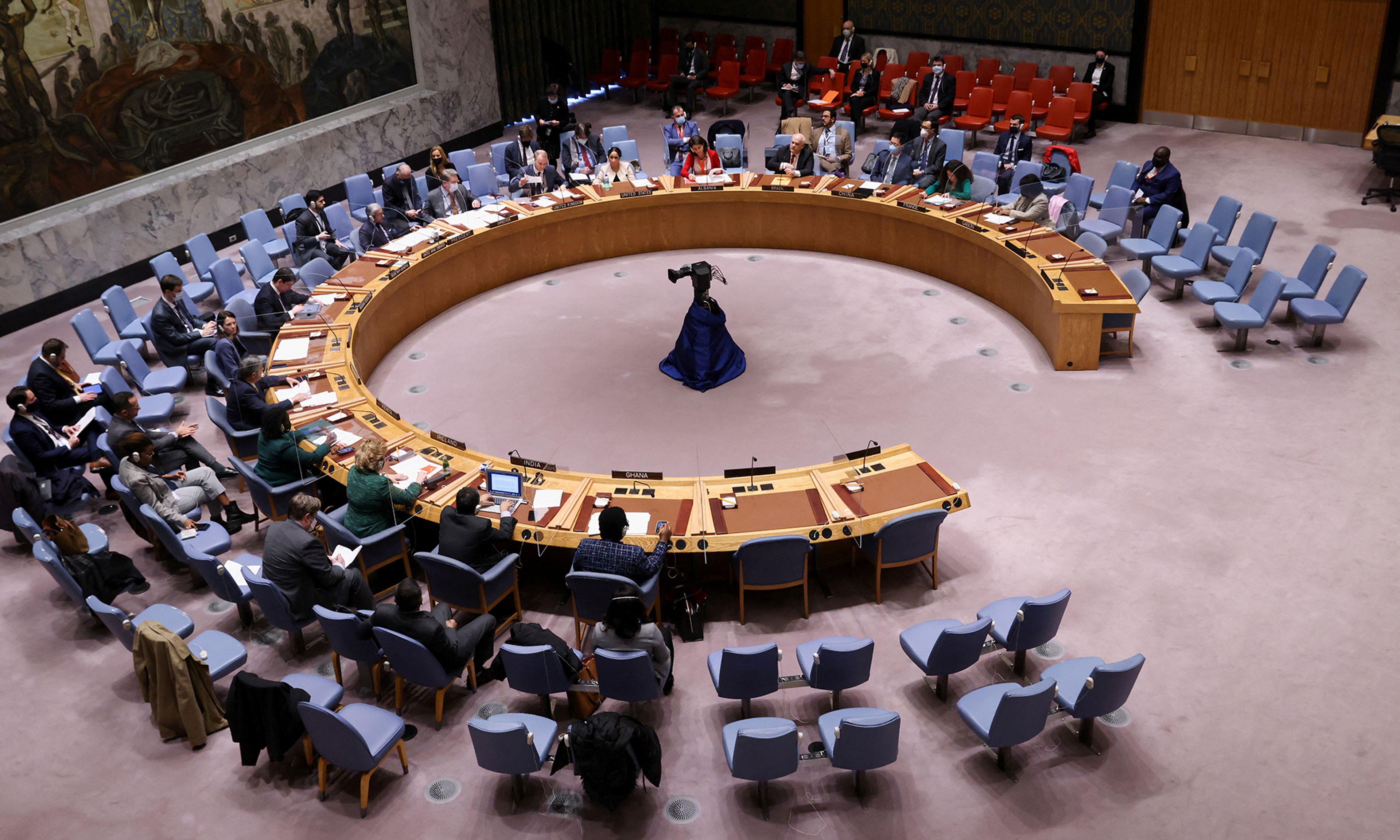
During a showdown at the U.N. Security Council this morning Linda Thomas-Greenfield, Washington’s U.N. ambassador, elaborated on her recent announcement that the U.S. would seek Russia’s removal from the Human Rights Council. A vote expelling Russia might take place as soon as this week.
“Given the growing mountain of evidence, Russia should not have a position of authority in a body whose purpose, whose very purpose, is to promote respect for human rights. Not only is it the height of hypocrisy — it is dangerous,” she said, referencing the mass killings in Bucha. “Russia is using its membership on the Human Rights Council as a platform for propaganda to suggest Russia has a legitimate concern for human rights.”
Russia’s continued presence on the body is dangerous, and it does serve as a propaganda instrument.
China does this, too. And so do the continued memberships of Cuba, Venezuela, and a number of the council’s other authoritarian members.
The Biden administration, reversing a Trump-era decision to shun the council over its persistent singling out of Israel and role in promoting authoritarian countries’ propaganda agendas, pledged to seek meaningful reforms of the council. Removing Russia from the body would be a significant first step toward making good on that promise — but only a first step. Staunch proponents of meaningfully reforming the council advocate overhauling its fundamental rules and membership criteria, so as to bar egregious human-rights abusers from eligibility for membership in the first place.
Thomas-Greenfield’s comments this morning also explain why the U.S. could be well-served to seek Russia’s expulsion from the U.N. Security Council as well.
She almost certainly did not mean to imply that, and changing that body’s composition is a much tougher political lift.
But by Thomas-Greenfield’s logic, Russia’s continued presence on the U.N. Security Council, where Moscow wields a veto against just about the only binding proposals that the U.N. is capable of advancing, also ought to become a target.
Ukrainian president Volodymyr Zelensky, addressing the Security Council ahead of Thomas-Greenfield’s remarks, compared Russian war atrocities in occupied parts of Ukraine to the actions of other terrorist organizations. He told U.N. members that they “need to act immediately” to reform the Security Council.
It took the Biden administration a month between a suggestion by Secretary of State Antony Blinken in early March that Russia could not remain a member of the Human Rights Council and Thomas-Greenfield’s announcement yesterday. How long will it take to come around to supporting a campaign to remove Moscow from its Security Council seat?






Comments