
Financial markets had a bad day. Stocks fell across the U.S. and Europe, with the S&P 500 losing 1.2 percent of its value and the Eurostoxx 600 shedding 1.4 percent. U.S. Treasury bonds and the yen rose, suggesting a move into “safe haven” assets by investors. At Bloomberg, Randall Jensen attributes the selloff to “concern” that “Italy’s political woes will destabilize Europe,” and indeed, the yields on Italian government bonds jumped by a margin not seen in decades (yields move inverse to prices) suggesting investors think the risk of owning those bonds has skyrocketed.
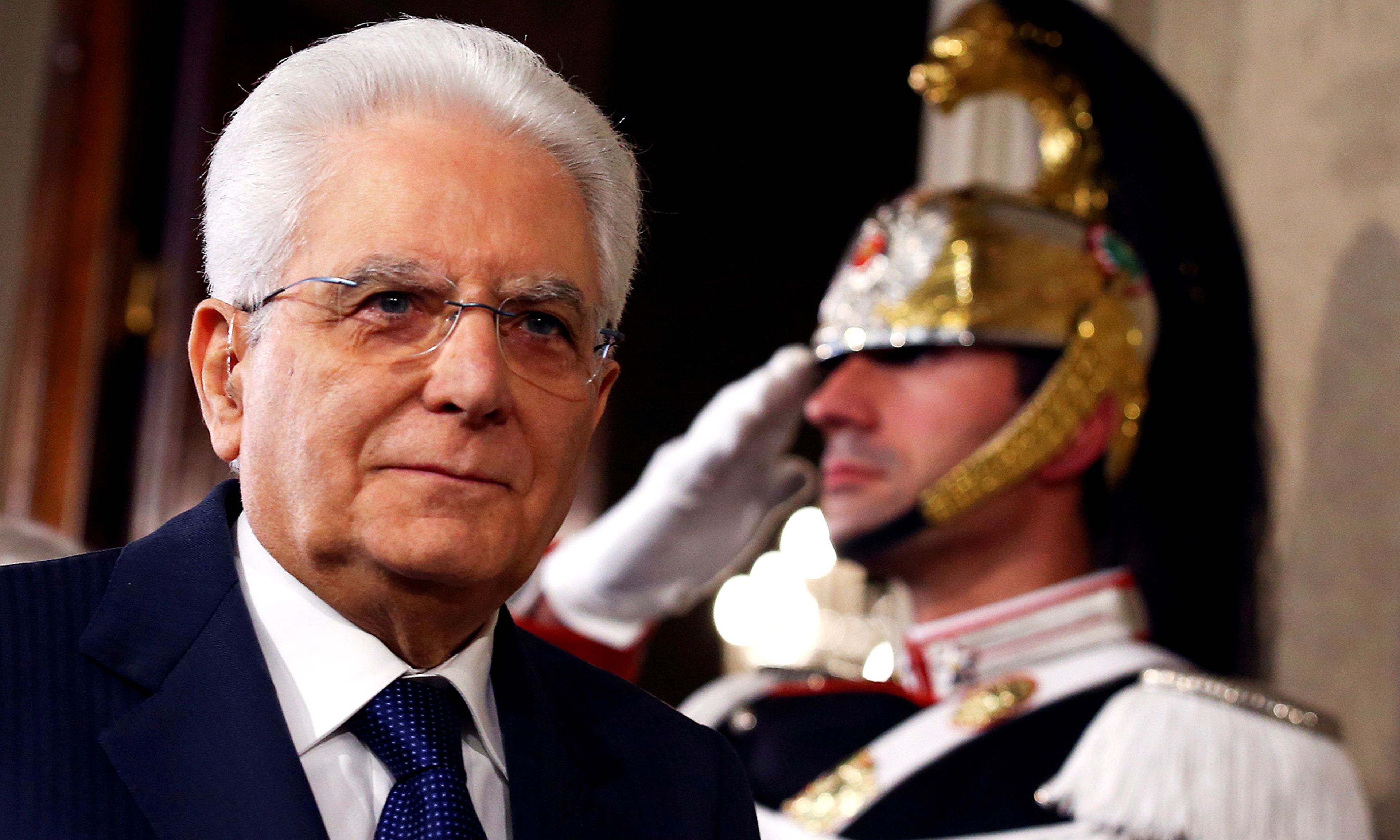
The necessary caveat is in order: There might be several other causes for today’s market action. But it’s worth dwelling on the situation in Italy, which does seem to be a contributor. Last week, Italian president Sergio Mattarella decided to block the formation of a populist coalition government between the idiosyncratic Five Star Movement and the right-wing Northern League. Combined, the two parties won a majority of votes in March’s parliamentary elections, giving them the opportunity to form a coalition government. But this month, the coalition decided to appoint Euroskeptic economist Paolo Savona as its finance minister, at which point Italian bonds began to sell off — and Mattarella intervened. Citing “the uncertainty about our position in the euro,” which he said “has alarmed Italian and foreign investors,” the president blocked the appointment of Savona.
Markets don’t seem convinced that Mattarella has saved the day. Also in Bloomberg, Ashoka Mody identifies a potential reason. When new elections eventually are held, voters, angry with a Europhile technocratic establishment that refuses to take their concerns seriously, may flock to the M5S and the League in even higher numbers. So, Mody argues, “in trying to preserve European orthodoxy, [Mattarella and his advisers] may unleash destructive forces that they can’t control.” Real interest rates in Italy are being held down — for now — by the European Central Bank, but with a stagnant domestic economy, any further rise in rates could lead to a recession. According to Mody, “Mattarella may well have set in motion a financial crisis from which it will be hard to pull back.”
If you’re a political leader, this saga makes a good case study in why you shouldn’t base your decisions on the whims of the bond market: It might not react as you hoped.




Comments