
Herman Cain appears to have made another foreign-policy gaffe in an interview with PBS NewsHour on Monday. He claimed, as Katrina Trinko noted earlier: “[the Chinese] are trying to develop nuclear capability and they want to develop more aircraft carriers like we have. So yes, we have to consider them a military threat.” While Cain is of course correct that China is a military threat (in the sense that our military is no longer totally dominant in east Asia), his two specific comments on China’s assets suggest a developing understanding of China as a foreign threat, but a somewhat inaccurate one.
A nation’s “nuclear capability,” in a discussion of international security or foreign policy, describes whether or not their military possesses nuclear weapons. In that sense, China is certainly not “developing nuclear capability”: The People’s Republic of China has been a nuclear power since the 1960s — detonating its first nuclear test in 1964, and signing the Non-Proliferation Treaty as a “nuclear weapons state” in 1968.
However, tonight on Fox News, Cain’s chief of staff Mark Block explained that Cain was referring to “the nuclear capability China is getting for their submarines and aircraft carriers.”
This clarification doesn’t do much to help Cain: China launched its first nuclear submarine, part of the Han–class of attack boats, in 1974. In 2004, it launched its class of nuclear-powered ballistic-missile subs, which are capable of launching the strategic nuclear weapons China already had.
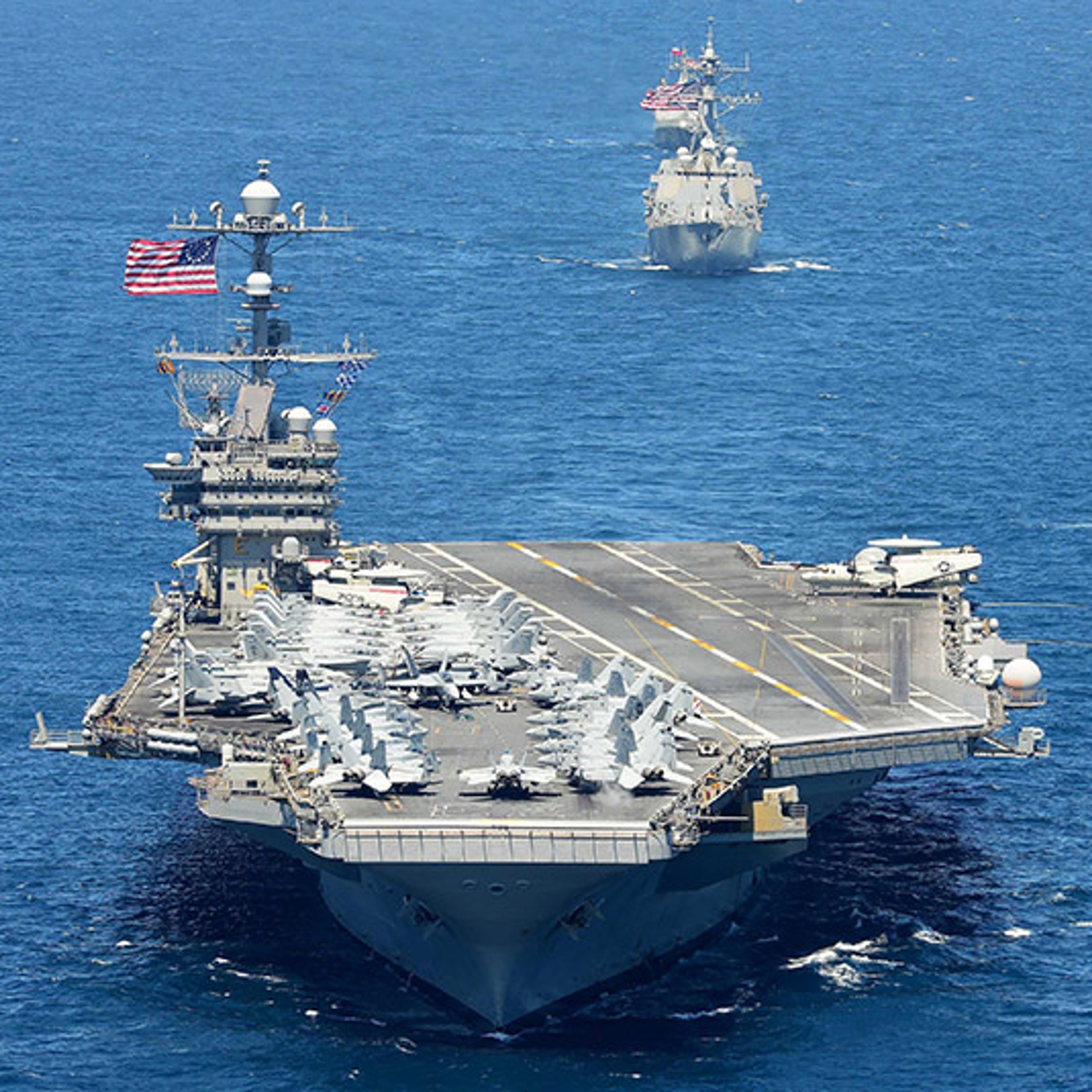
Moreover, China is developing aircraft carriers, but they will be gas-turbine-powered, not nuclear, ships. This is according to the Chinese themselves: They are planning to build two 50–60,000 ton mid-sized aircraft carriers, similar to the Queen Elizabeth–class that the United Kingdom is currently developing. If one suspects they are being dishonest, the Chinese would, if anything, have an incentive to intimidate by suggesting the carriers may be nuclear — this would, unlike the production of more nuclear submarines (on which the intelligence remains murky), be a big step for China, toward a blue-water navy, meaning one with an independent global range. A nuclear-powered Chinese carrier would be extremely worrisome, but is not a near-term possibility for China, as they lack the ability to support a blue-water fleet.
Even a conventional Chinese aircraft carrier is, to credit Cain, an important development in our security relationship with China: The nation’s only genuine overseas security threat, as it stands now, is Taiwan, which lies just over a hundred miles offshore from China. Developing aircraft carriers will give China offensive naval capabilities its conflict with Taiwan does not justify, though its lack of nuclear carriers and overseas bases would geographically limit that influence to east and south Asia.
Cain deserves some credit for addressing his critics and offering a substantive answer about China as a security threat, confirming reports that he has been cramming on foreign policy, but he still wasn’t completely coherent or informed. Unfortunately, the fact that his campaign manager offered an inaccurate clarification also indicates that the foreign-policy team surrounding him may still be weak, despite his own growing knowledge. It remains to be seen how well Cain will be able to integrate his crash-courses in foreign policy into developing a coherent campaign message about America’s role abroad.





Comments