

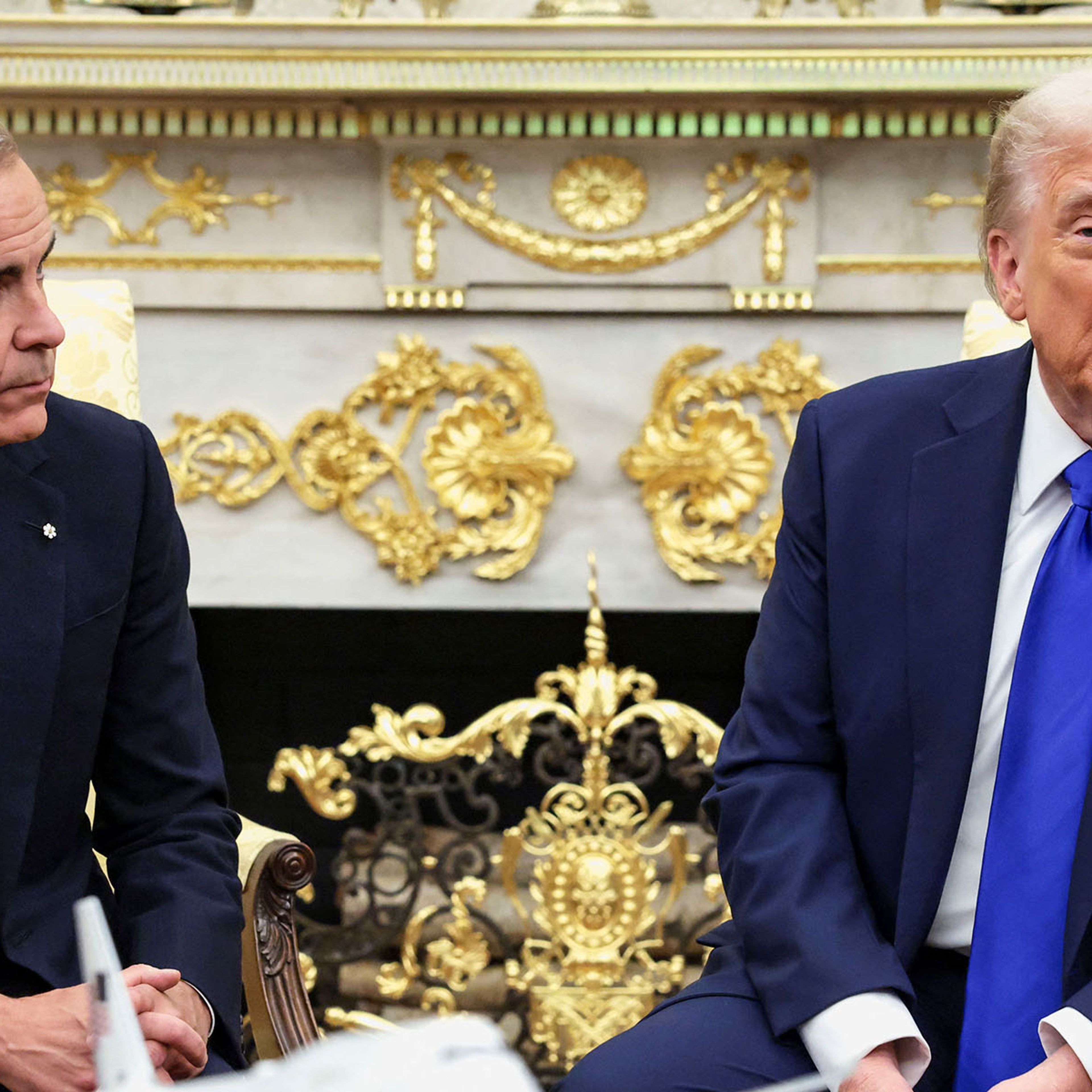
Canada failed its statehood exam. Maybe that’s too flip a way to describe what our northern neighbors did in doubling down on the disastrous tenure of the Liberal Party just to spite Donald Trump, his trade war, his disregard for his own prior trade agreement with Canada, and in particular his protracted insistence on calling Canada our “51st state.” There’s blame to go around among Canadian voters, Trump, and Pierre Poilievre (who proved unable to adjust a previously winning strategy to a new reality and seems to have ended up losing even his own seat in Parliament). The fundamental reality of the election is that the reaction to Trump drove voters who usually pick one of Canada’s left-wing third parties to lock arms with the Liberals as an anti-American gesture.
That electoral behavior — the combination of nationalist resistance to America and self-destructive left-wingery — ought to convince the American right once and for all that we do not want Canadians in our electorate. They don’t like us, they won’t vote with us, and they simply do not see the world the way we do. Canada didn’t even have a written constitution until the year Joe Biden turned 40, having had its government originally established in 1867 by an act of the British Parliament. Indeed, Canada’s very existence as a country in 1867 was the result of a decade of events that convinced Britain that it needed to offload the defense of the place against America to the locals in order to relieve London of the costs and responsibilities of doing so. These included the 1857 Sepoy Mutiny in India, which forced a rethinking of the resources needed to simultaneously protect all of the British Empire’s far-flung possessions; the 1861 Trent affair, which led to a war scare between the U.S. and Britain in which Canada’s defenses were exposed as pitiably unprepared; the growing de facto U.S.-Russian alliance during the American Civil War, which raised the specter of Britain having to deal with Russia and the United States simultaneously; the Fenian raids of 1866-67, in which Irish rebels based in upstate New York invaded Canada to try to hold it hostage in exchange for Irish independence, and after some initial successes were repelled only when the Canadian militia was marshaled; and William Seward’s efforts at northern expansion into Alaska, Greenland, and Iceland, which raised the prospect of Canada being flanked on all sides by American possessions.




Comments