
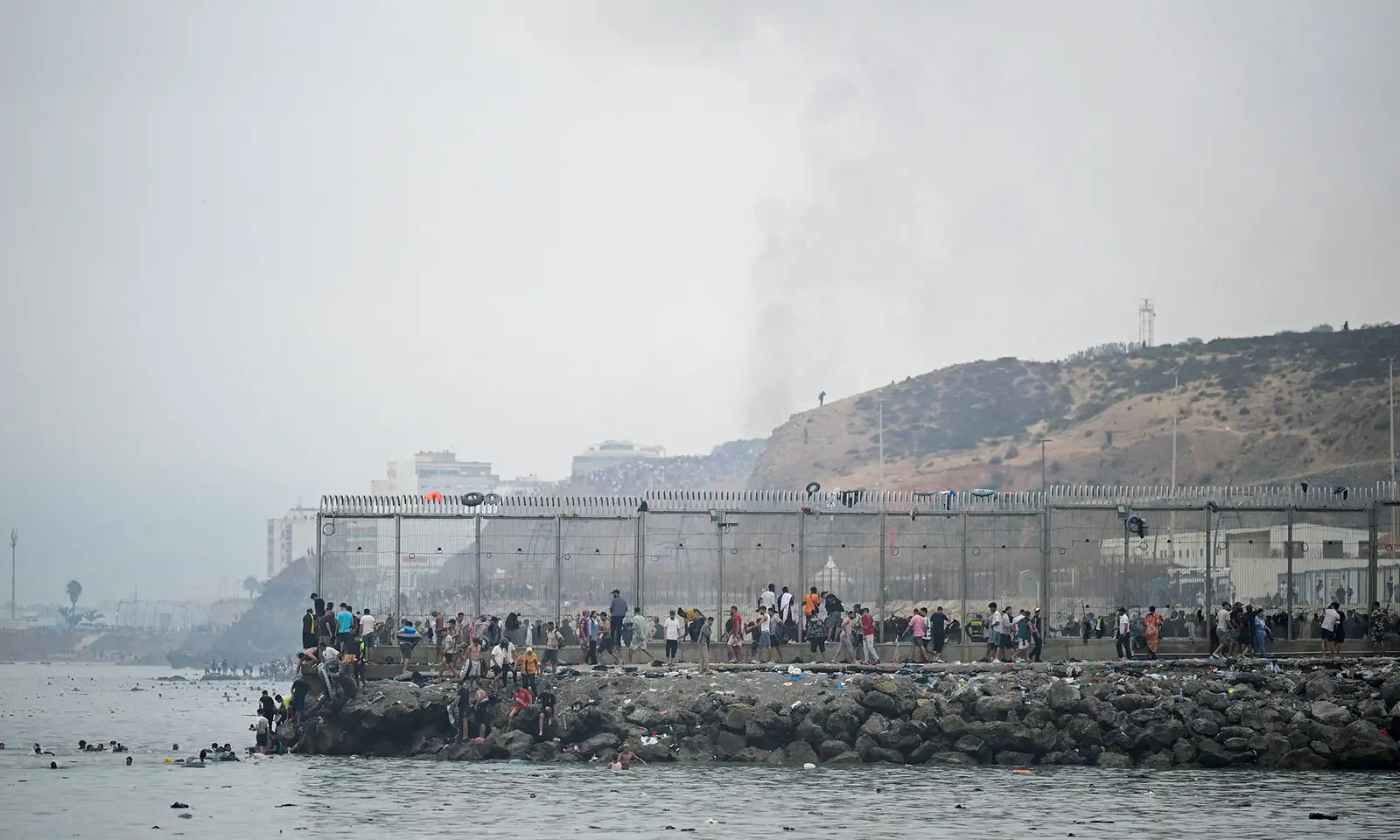
The dramatic (and, for now, largely reversed) migrant incursion into Ceuta has focused attention on a city that is not that often in the spotlight. Located on the North African coast, Ceuta is typically described as a Spanish “exclave,” although it is more accurately described as a semi-exclave.
To rejoice in some pedantry, “real” exclaves are separated from their parent countries by the territory of other nations. Semi-exclaves, such as Ceuta (and its twin, Melilla), Alaska, Russia’s Kaliningrad oblast, and Angola’s Cabinda are all coastal territories. Islands are not regarded as exclaves. Unleaded exclaves do exist, however. They are typically legacies of complex, but no longer pressing, histories. The Baarle-Hertog question is unlikely to lead to war between Belgium and the Netherlands.





Comments
On “Ceuta and Constantinople”