
Brandon McGinley thinks that no one who is pro-life can, consistent with that commitment, support same-sex marriage. I think he’s wrong. Let’s consider.
Here is his argument:
1. If we recognize same-sex marriage, we’ll have to permit the use of assisted reproductive technologies.
2. If we permit the use of such technologies, we won’t have a pro-life culture.
3. We need a pro-life culture.
4. So we mustn’t permit the use of assisted reproductive technologies.
5. So we mustn’t recognize same-sex marriage.
We grant 3. If 1 and 2 are true, then so are 4 and 5 — 4 follows from 2 and 3, and 5 from 1 and 4.
But 1 is clearly not true. There are people who argue for ending the use of assisted reproductive technologies by everyone, no matter how we define civil marriage. (Jennifer Lahl, writing at NRO here and here and at Public Discourse here, is one such. We’ll touch on her arguments below.) In that case, couples — whatever their sexes — who couldn’t have children of their own would have to adopt. It is actually possible to think about each issue on its own merits.
McGinley thinks we can’t. He despairs of restricting assisted reproductive technologies. He thinks that once same-sex marriage is accepted, “any policy that seeks to circumscribe the availability of [these technologies] . . . will be viscerally opposed, using rights talk,” since gay couples will come to think of having a child of their own — or trying to do so — as a kind of right. This “right” will supposedly be “culturally binding” though not “legally actionable.” It would all the same be a contingency, not a fate. McGinley’s apparent position here is that the public will simply be too stupid to recognize the wisdom of his objections to assisted reproductive technologies. But if the use of these technologies really is wrong, then the reasons for its wrongness can persuasively be put before the public.
So 1 is false. So 5 has not been established.
Even setting aside the separability of the issues McGinley is conflating, we should be doubtful that recognizing same-sex marriages would uniquely affect the public’s attitudes about assisted reproductive technologies. They already are in widespread use. This already is widely known. Same-sex marriage does not “redefine parenthood itself” with respect to the requirement of a biological link between children and their custodial parents; that redefinition has already happened. McGinley tries to save his argument with the claim that opposite-sex couples raising children who are not biologically their own “have always stood as placeholders for (or reminders of) the unavoidable fact that children have a [biological] mother and a [biological] father.” But this concession that such cases can at best symbolically represent the already-broken link between biology and parenting discredits McGinley’s apocalyptic interpretation of the cultural impact of same-sex marriage — unless, again, we assume that the public is simply too stupid to see the truth.
How about 2 and 4? How are assisted reproductive technologies supposed to be incompatible with a pro-life culture?
Here is McGinley’s central argument:
A truly pro-life culture with respect to abortion — that is, a culture that places the welcoming of nascent, vulnerable human life at the center of its political, economic, and social considerations — cannot emerge from a society that views children as instrumental to the happiness and fulfillment of adults rather than valuable in themselves. Children’s worth, like that of consumer products, will be dependent on those whose desires they are fulfilling. Dignity must be either inherent or contingent; it cannot be both.
This whole passage depends on an equivocation between the concepts instrumentally valuable and only instrumentally valuable, along with a baseless insinuation that people who use or endorse the use of assisted reproductive technologies view children as being only instrumentally valuable.
McGinley wants us to think — as he has said a little earlier in his piece — that a child conceived through technological intervention “enters the world more like a bespoke suit than a person, belonging to whoever laid a claim on him by ordering him into being.” “More like” is ridiculous, but let’s think about the analogy. It’s true that a suit, like any consumer good, is only instrumentally valuable. If I no longer want to wear it, I have no reason to care whether it continues to exist. But there are certain other things — we call them “human beings” — that can be instrumentally valuable without being only instrumentally valuable. Anybody you care about is instrumentally valuable to you insofar as your relationship brings you joy, but it doesn’t follow that he or she is only instrumentally valuable, or that if your joy in the relationship waned you would thereby be justified in abrogating some duty you owed him or her.
Specifically, nobody’s right to exist depends on the satisfaction of anybody else’s desire. It arises from the simple fact that he or she already does exist. This is part of what we mean when we say that every human being has dignity. Contingent dignity, in McGinley’s odd phrase, would not be dignity. The idea of human dignity is that it inheres in the simple fact of one’s humanity.
So if children are said to be instrumentally valuable to their parents, the assertion is a truism. If children are said to be only instrumentally valuable — if their dignity, their claim on their parents’ care and protection, and their right to exist depend on their parents’ desires — the assertion is false and abhorrent. McGinley needs the “only”; without it, his claim that the children in question are not seen as being “valuable in themselves” does not follow. But he gives us no argument for the “only.” He doesn’t even assert it. Instead he implies it with his suit analogy. And the analogy is question-begging in the strict sense of assuming the conclusion it is meant to support.
So 2 has not been established. So neither has 4.
The main burden of McGinley’s argument rests on nothing more than a sweeping conjecture about the psychology and motives of people who use assisted reproductive technologies or endorse their use. This conjecture is implausible and ungenerous. Such parents go to extraordinary lengths to have a child. Their uncommon deliberateness and deliberation bespeak motives opposite those of someone who has an abortion in the desire not to be a parent. There is no reason to assume that they, more than any other parents, take toward their children the attitude of a consumer toward an inanimate object. (Have adoptive parents, we ask in passing, bought a suit off the rack instead of ordering a bespoke one?) No doubt many parents who conceive without assistance also regard themselves as having made a choice and acted on a desire for children. The joy any parent-to-be expects from the fulfillment of this desire is profoundly different from the satisfaction one takes in a consumer good. It is a desire for a type of relationship, not for an object, and it is moreover a desire to incur an obligation, since the essence of the relationship is to care and provide for another until he or she becomes self-sufficient. Any third-party observer is as capable of understanding all this as the parents are themselves.
***
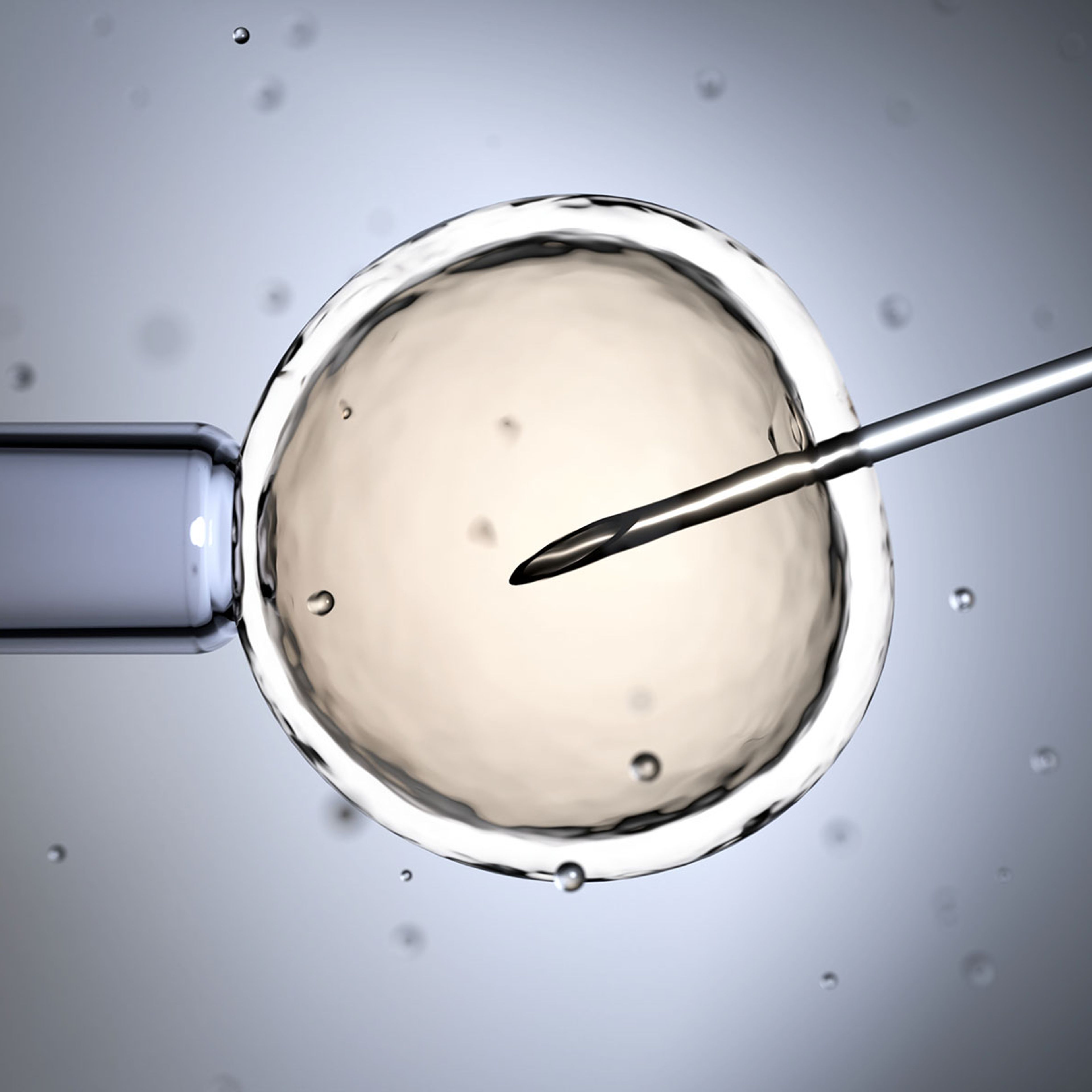
There is, in fact, a narrower but much more reasonable pro-life objection to a particular type of assisted reproductive technology, at least in some of its applications. IVF usually involves the fertilization of more eggs than will be implanted, and the remnant “supernumerary embryos” are usually destroyed. Sometimes embryos with traits deemed undesirable, such as a genetic disease, are selected for destruction.
The pro-life objection to this is that an embryo — even prior to cell differentiation — is a human organism at a very early stage of development: “nascent, vulnerable human life.” Embryos that are deemed unnecessary to the satisfaction of the parents’ desire for a child are indeed, in this circumstance, treated as having no inherent value. I think that is something to be troubled by. I think no human being, no matter its stage of development, should be deemed disposable, and that we should avoid creating human beings that we will dispose of.
The remedy is to stop practicing in vitro fertilization that produces supernumerary embryos. This would make IVF less effective and cost-efficient, and would make it impossible to assure parents that they were not passing on a genetic disease to their offspring, but those who wish to protect all unborn human life are willing to bear these consequences.
Notice that in making this argument we have restricted ourselves to consideration of intrinsic features of the cases under discussion. This in contrast with slanderous psychological speculation yoked to subtextually paternalistic cultural fatalism. As I said, it is actually possible to think about each issue on its own merits.
***
We mentioned Jennifer Lahl. Her arguments have focused on particular aspects and consequences of assisted reproduction. They express a range of concerns, for example the medical risks of egg donation, the exploitation of poor women in commercial surrogacy arrangements, the possibility that surrogacy imposes developmental disadvantages on children, and standard-issue arguments about the ideality of the two-parent, biological-mother-and-father home. I don’t have anything to say about all this in detail, but permit me to make three general comments.
First, while Lahl’s diagnoses of potential harms are admirably specific, they always culminate in the same stark conclusion: that we should simply put an end to all of these practices. But specific problems are usually susceptible of equally specific solutions. Lahl’s disbelief in the possibility of regulatory remedies strikes me as dogmatic and little justified. For example, if commercial surrogacy too severely threatens the exploitation of women, this provides an argument not for banning surrogacy but for restricting it to unpaid, altruistic forms. If “we see a shift from helping infertile couples have a child to helping adults produce the types of children they desire,” as Lahl writes at Public Discourse, this provides an argument for prohibiting the selective destruction of embryos. If biological parents are asking surrogate mothers to terminate pregnancies when children are found to have Down’s syndrome, this provides an argument for protecting all unborn human life — many biological mothers seek abortions for the same reason, after all — and for assisting any parents who do not wish to raise their children in finding adoptive parents who do.
Second, a lot of participants in these debates ought to check the promiscuous zeal with which they brandish whatever statistic du jour seems to support their preestablished convictions. They should also pay closer attention to distinctions concerning what their statistics are about and what the practical implications are supposed to be. If a type of technological intervention comes with a certain statistical risk of causing medical problems, we may assume that, unless the technology is refined, the risk is ineliminable, involving as it does a fixed physiological mechanism. By contrast, when we measure indicators of behavioral development in children from different types of family structure, we cannot be sure that transient cultural biases are not affecting what we see. Traditionalists and liberals tend predictably to favor one side or the other of that question, but there is no obvious way to resolve the dispute, and the very fact that such evidence is disputed should restrain us from too readily making public policy on its basis. Further, even if we rule out cultural bias, the causation in such cases still must proceed via some aspect of human psychology — something much more complicated than brute physiology, and much less understood, and not always so ineluctable. Finally and above all, liberty does count for something, and the threshold for restricting it on the basis of statistical evidence should be much higher than that for encouraging a particular exercise of it.
Third, the claim that a certain type of situation is ideal provides no argument against non-ideal situations if the ideal was never possible to begin with; the relevant question is whether, on its own terms, compared with the possible alternatives, something is choiceworthy. If ever you find yourself pronouncing a person’s very life — suboptimal though you may find it — not worth living, some scruple of modesty should make you bite your tongue. Lahl ends her Public Discourse article with a story about a child being raised, in part, by a surrogate mother. She writes:
One day [the child] asked her surrogate mother a very poignant question: since she looked like her biological mother, why is it that her mommy gave her away? The little girl simply could not understand how her mother would do this. The surrogate mother’s response? “I didn’t know what to tell her.”
I wouldn’t know what to tell that little girl either. Maybe we should just stop making such messes.
Maybe that’s a really arrogant thing to say. It isn’t like saying that some other set of circumstances consistent with the little girl’s existence should have been chosen instead. No: The unavoidable implication here is that the girl’s family situation is such a “mess” that she simply shouldn’t have come to be. Whatever we tell her, it must not be that.




Comments