
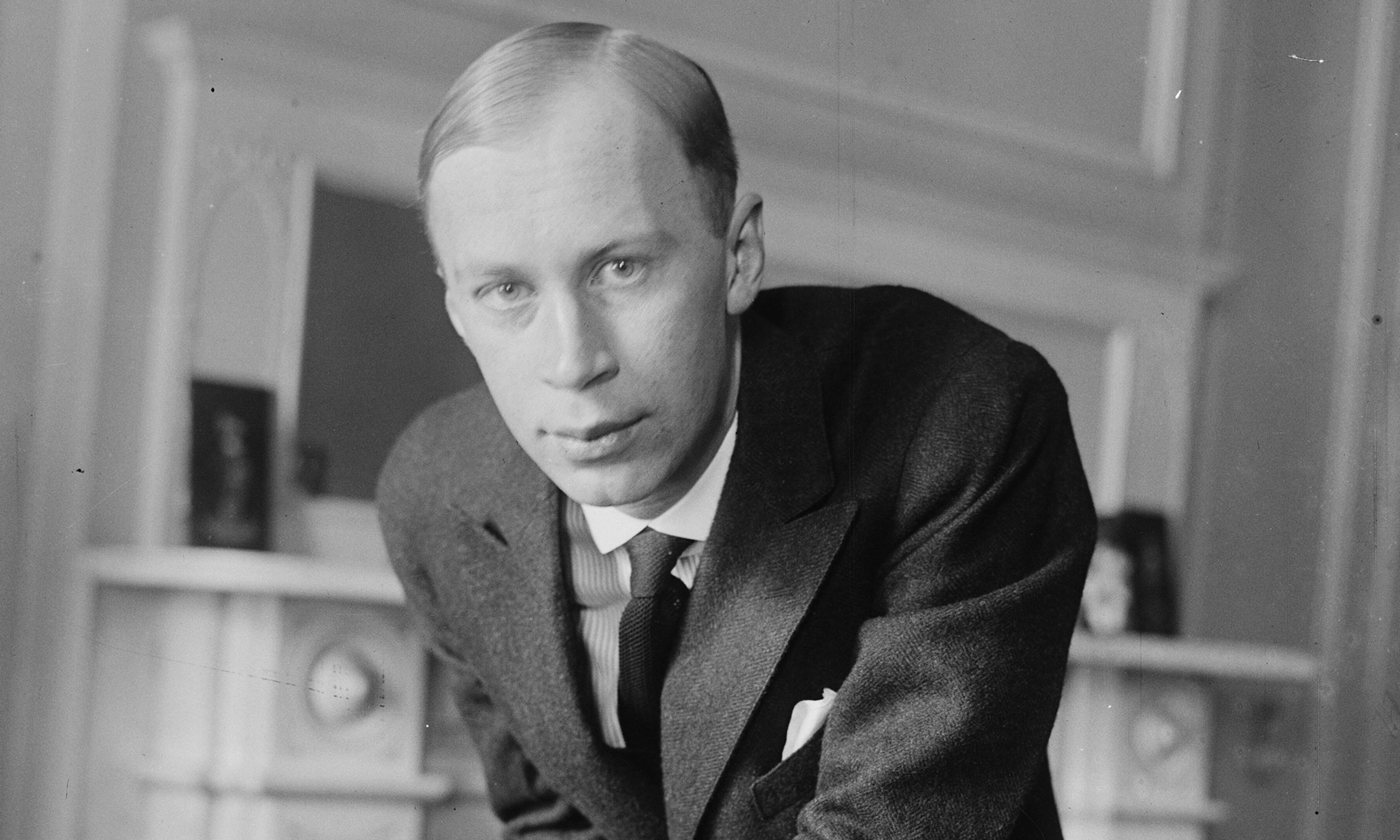
Today’s installment of my Salzburg journal has a mélange of items — as it’s supposed to — with an emphasis on a conversation with the great Latvian-born conductor Mariss Jansons. He grew up in St. Petersburg, where his father was an important conductor. (His mother was a singer. Mariss was immersed in music right from the cradle.)
(Actually, Mariss had a perilous birth. He was born in the Riga ghetto in 1943. His mother was in hiding. Her father and brother had already been killed by the Gestapo.)
In Salzburg the other week, Jansons told us some wonderful stories about Shostakovich, Prokofiev, Stravinsky, and others — including pretty much the best story I’ve ever heard.
Now that I’ve said that, I guess I need to tell it, right here. (The story is in my journal entry, too.) First, a smidge of background. (1) Prokofiev was one of the greatest composers of the century (20th). He died in 1953 (same day as Stalin, but that’s another story). (2) “Seryozha” is a nickname — a diminutive — for “Sergei.” (3) Stravinsky was a top composer himself, although possibly not the most gracious of men. Okay, here we go.
Stravinsky returns to Russia — the Soviet Union — in 1962, after almost 50 years in exile. This, of course, causes great excitement. Musicians gather around him, to see him, touch him, talk to him. Someone says, “Who are your favorite composers?” He says, “Tchaikovsky, Beethoven, and Debussy.”
That itself is an interesting story.
Someone says, “What do you think of Prokofiev?” Stravinsky says, “Who?” “Prokofiev,” comes the answer. Again, “Who?” “Sergei Prokofiev, our great composer.” Still, Stravinsky is puzzled, or affects to be. The questioner finally says, “Sergei Sergeyevich Prokofiev!” Stravinsky brightens and says, “Ah, Seryozha — good pianist.”
That is pretty much the best story I know. (By the way, Prokofiev was a good pianist. But that’s like saying Beethoven could arrange flowers or something.)
On the subject of composers: The New York Times had an obituary yesterday of George Walker. It is a fine obituary. George Walker was an American composer — black — born in 1922. His grandmother was an ex-slave and in fact lived with the family. George knew her very well, and dedicated his most famous piece, Lyric for Strings, to her. (Hear it here.) I’m glad I didn’t wait much longer to request an interview with Walker. I saw him last year, and wrote about him in two installments, here and here.
Remarkable man, remarkable life.
A switch of subjects: In Part I of my Salzburg journal, I had this to say:
Angela Merkel comes every year [to the festival] . . . She was here shortly before I arrived. She always comes with invisible security. (I’m sure they’re around.) She is unassuming and makes no fuss. . . .
I have a friend who has friends who live in Merkel’s neighborhood (Berlin). The chancellor will go to the drugstore — apparently unaccompanied — and wait in line. Others in line say, “Please go ahead.” She declines.
Yesterday, another friend wrote me,
Regarding Chancellor Merkel’s personal shopping habits, I can add a little bit more to the story. My late father-in-law also lived very close to Mrs. Merkel’s apartment. They both would shop at the same supermarket, as my father-in-law, being a longtime widower, had to do his own grocery shopping. It got to the point where the two would politely greet each other when they were shopping at the same time. He did tell me that Mrs. Merkel not only waited in line at the checkout, but she bagged and carried her own groceries just like any other German shopper.
This same friend — this same correspondent of mine — had something to say about John McCain: “He was one of a very select group who enthusiastically supported Phil Gramm for president in 1996.” Indeed, he was national chairman of the Gramm campaign. “If that doesn’t get him into heaven, then I don’t know what would. And yes, I know of two other members of this select group.”
I think my friend means him and me. And also NR, which endorsed Gramm days before he dropped out! Still, he would’ve been great (or certainly interesting).





Comments