
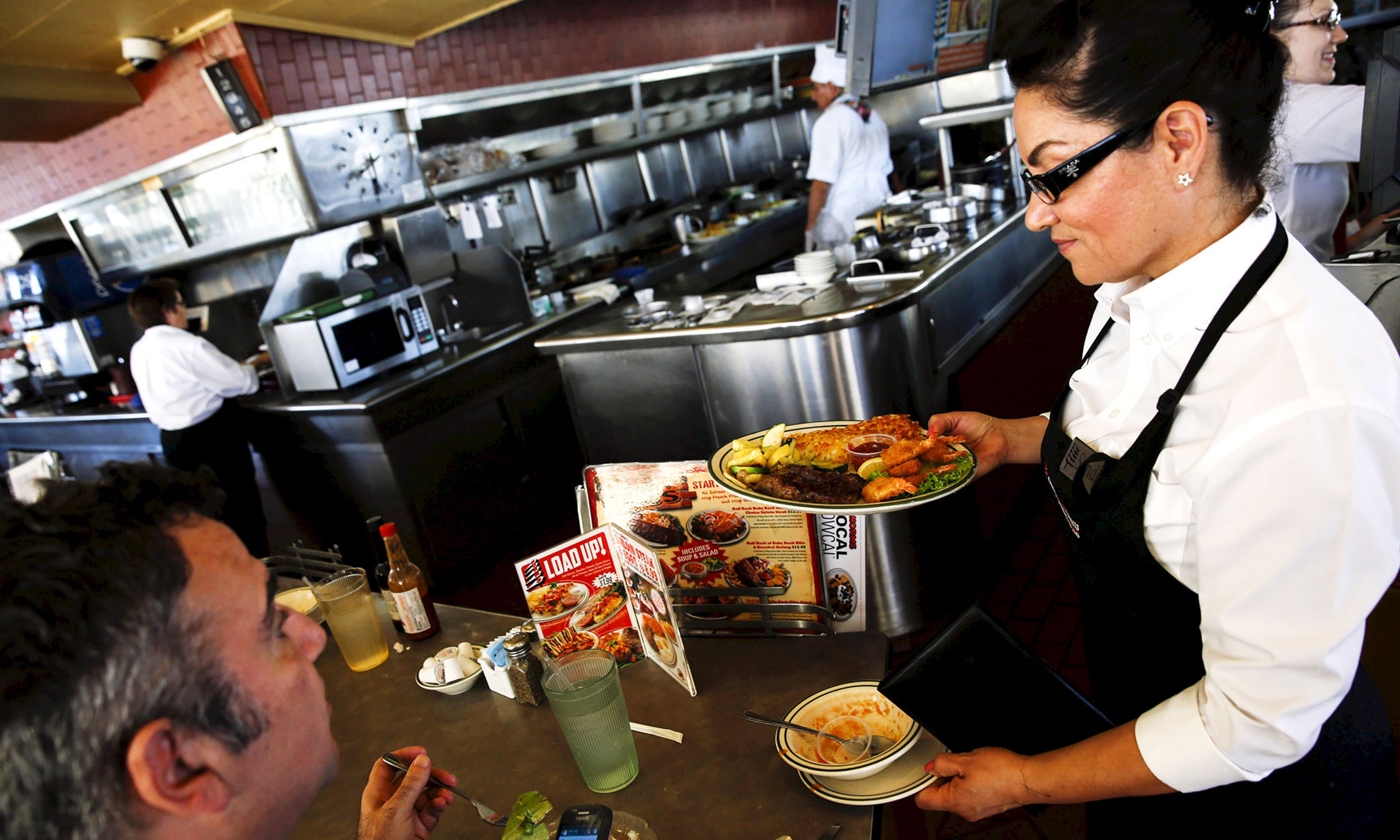
“The lunch wagon is the most democratic and therefore the most American of all eating places,” a 1932 article in World’s Work says. “Actors, milkmen, chauffeurs, debutantes, nymphes du pave, young men-about-town, teamsters, students, streetcar motormen, messenger boys, policemen, white wings, businessmen — all these and more rub elbows at its counter.”
The “lunch wagon” is the ancestor of what we know today as “diners”, and while the name, architecture, and menus of the quintessentially American, stainless-steel-clad restaurants have changed, they’ve remained a civic center for Americans across the social hierarchy, and a staple in our national food vernacular. With its biblical-length menu offerings of humble pricing, it’s unapologetic in its kitsch and soul, and is reminiscent of the old Christian adage that even if you’re in the gallows or in the gutter, “God meets you where you are.” American diners are some of the few places left without ego besides churches, where one can expect a sense of mercy and grace in a shared space that can’t be reserved, and that will take your tired, your poor, your huddled masses.
I’ve written before in National Review that American food, of all national cuisines, intrigues me the most — our peculiar set of circumstances has churned out a national cuisine that is a pastiche of international cuisines, and our trademark food items are often served from a drive-through window. The diner, which began as a lunch wagon almost 140 years ago in Rhode Island, has integrated the American food tradition into its often expansive menu, providing local flavors such as grits in the south to Southerners, and crab cakes in Maryland to Marylanders, alongside every other imaginable food item that can be cooked by an unnamed chef (again, lacking ego) and served within a short waiting period by a mother-like figure (coziness and humility) in an apron (or, at the diner on my college campus, in patterned nursing scrubs). The diner will be open after a little league soccer game on Saturday mornings, and it’ll also be open late enough to usher in college drunkards at a more ungodly hour. It meets you where you are.
I especially love reading that other countries are replicating American food culture abroad, and was fascinated by TriBeCa, a chain of diners in Scotland, based in Glasgow. On Tuesday, the Sunday Post reported that TriBeCa would be unveiling a new menu, the manager Elaine Mackenzie saying that it would go back to “the roots of the American diner,” which includes pizza and tacos “as well as bigger sharing plates and desserts.”
My colleague, Madeleine Kearns, fondly reflects on her experience at a TriBeCa restaurant in Glasgow when she thought that moving to New York City (something she later did) was only a pipe dream, and recalls laughing with a friend about the idea, which she says was quixotic at the time. She ordered a stack of pancakes, with strips of bacon on top that she notes is uncharacteristic of her native Scotland, sprinkled with powdered sugar, and moderated with a glass of milk. Cloying, for some, but a diner’s menu is disingenuous without the saccharine excess.
Usually, foreign-made renditions of a national cuisine are criticized for their lack of authenticity — chocolate-flavored hummus, just off the top of my head, could one day be the catalyst for a diplomatic crisis between the Middle East and the American iconoclasts who conjured the (offensive) idea. But the beauty of American cuisine is that it’s pretty hard to mess it up outside of chocolate hummus, because we’ve been trying to perfect it ourselves for two-and-a-half centuries, and we don’t have a strictly defined tradition like, for example, the French do. It’s reflective of the American experiment, and we shouldn’t be ashamed of that even though the occasional products of it are culinary Frankensteins reflective of a place that’s catching its footing. But clearly, it’s something worth replicating — we sometimes need reminded that America isn’t just an idea, as people from John Kasich and Lindsey Graham to Bono have said. We have a culture, and the American diner is a microcosm of it. We should be proud of pizza, tacos, and pancake stacks garnished with bacon strips and powdered sugar.
In our tumultuous times, amidst the political contention, it’s also comforting to be reminded, from the outside, that our roots haven’t changed, either. Pizza, tacos, and larger plates to allow for the sharing of our food is patently American.




Comments