
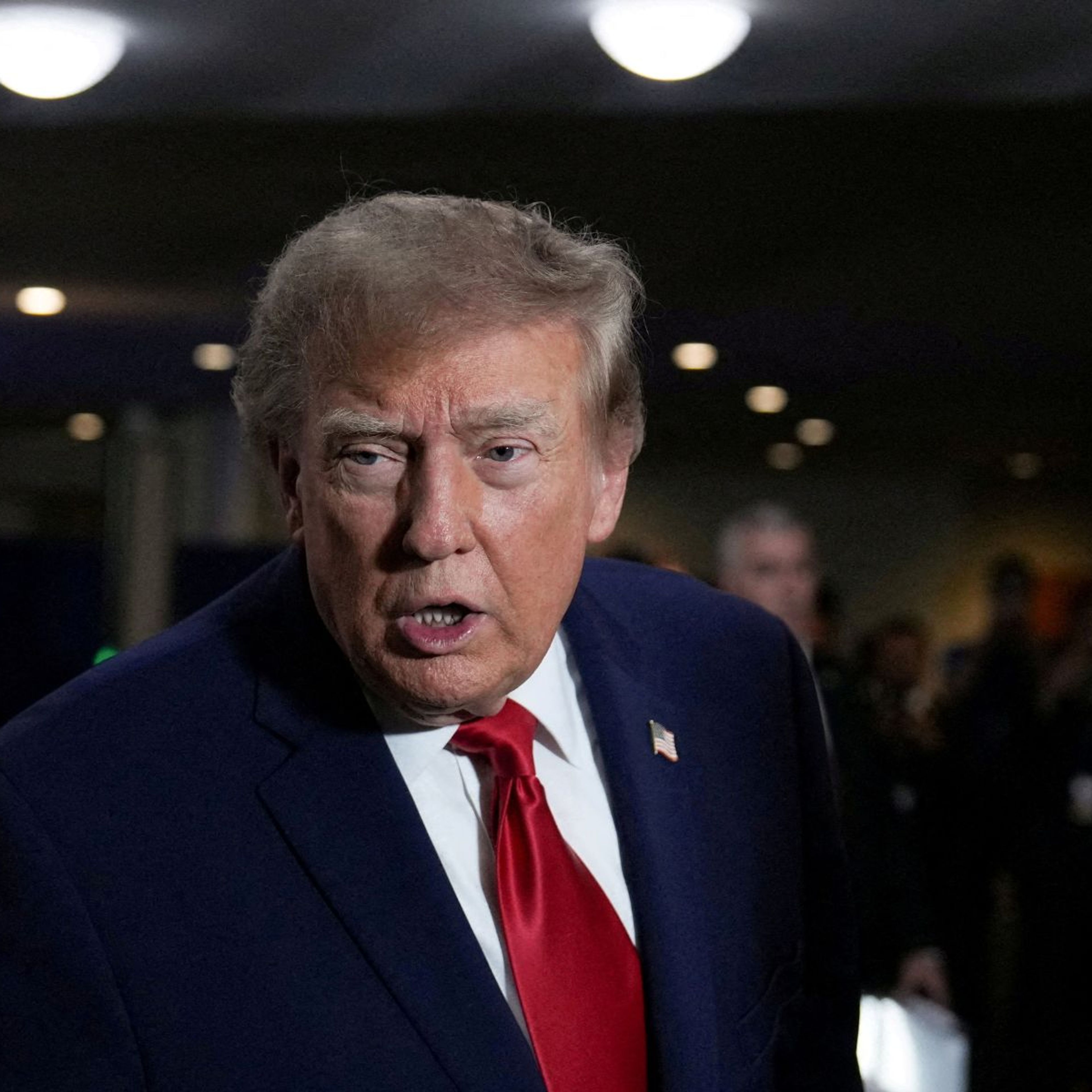
Japan has been one of Donald Trump’s favorite targets. Sounding as though he just stepped out of a 1985 Delorean, Trump has railed against Japan’s economic policies, concluding that it is stealing U.S. jobs and undercutting our currency, and threatening a trade war with the world’s third-largest economy. As for our six decade-long alliance, through which Japan continues to host 40,000 U.S. military personnel and pays $2 billion a year to do so, Trump is willing to jettison it, if Tokyo doesn’t pay more for our protection. That walking away from our alliance would immediately and almost certainly fatally destroy our credibility in Asia, appears not a concern to the putative Republican nominee. To even greater consternation, if possible, Trump has infamously suggested that both Japan and South Korea could go nuclear, thereby shredding our decades of promises to provide extended deterrence to our allies, so as to forestall what could be an uncontrolled nuclear arms race in Asia. All in all, Trump’s vision for American policy toward half the world frightens the Japanese (and others in Asia) almost past the point of rational discussion. Even were he not to carry out his threats, the bluster alone would keep our allies and partners in a state of destabilizing uncertainty, making it far more difficult to deal with China and North Korea.
The new normal seems to be for foreign leaders to weigh in on the domestic politics of allies and adversaries alike. Thus, taking a page from Barack Obama’s recent attempt to sway British voters into staying in the European Union, Japan’s ambassador to the United States recently gingerly criticized Trump’s unsettling policy ideas. Ambassador Kenichiro Sasae made clear that Japan hopes the United States will not turn isolationist, referring to Trump’s controversial “America First” pronouncements, and that Washington will maintain the U.S.-Japan alliance, given the “geopolitical implications of emerging or resurgent powers in the world.” Americans may have found it strange to hear a foreign ambassador remind them that “the question is whether [America] could be strong without a proper role around the world.” Proving that these comments were not from a loose cannon, Sasae’s boss, Japanese prime minister Shinzo Abe, openly shared some of the same sentiments in Tokyo, stating that the alliance between Washington and Tokyo was the foundation of peace and security in Asia.
While the world wonders what Donald Trump (and, for that matter Hillary Clinton) would actually do as president, Japan’s Abe continues to defend the current international system and its role in maintaining global order. David Cameron may be flirting with radically upending Great Britain’s relationship with Europe, with unknown consequences for the future of the United Kingdom and the European Union alike, and Recep Tayyip Erdogan appears to be dismantling Turkish democracy under the world’s eyes, while Angela Merkel has brought Europe to the point of crisis by opening up the floodgates to Middle Eastern migrants, and China’s Xi Jinping cracks down on civil society more forcefully than at any time since 1989. The pillars of global order seems to wobbling. Few among world leaders are actively working to maintain stability and arguing for the benefits of today’s long-standing, if imperfect, international system. Shinzo Abe is among them. Long-derided on the left at both home and abroad for being a dangerous nationalist, Abe instead may come to be appreciated as one who advocated to protect the rules-based order that dominated the post-World War II era. While Japan long ago forewent the opportunity to develop its military power commensurate with its economic strength, it may be default become one of the leading voices for liberal values and the need to defend global order, at least compared to the actions of its contemporaries. Often portrayed as isolated from the rest of the world, Japan may once again find itself alone — but this time for the right reasons.



Comments