
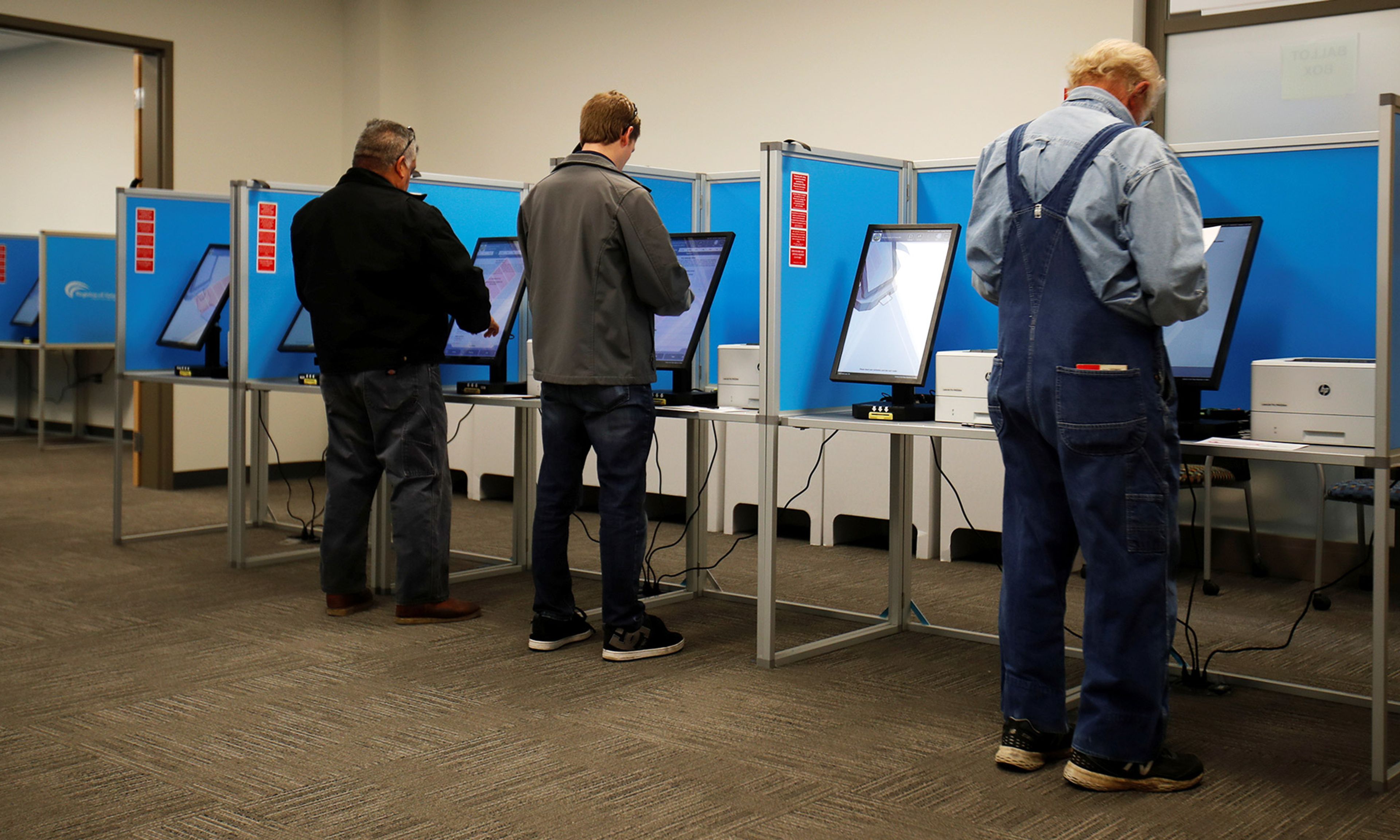
Yesterday the heads of just about every federal agency tied to elections and cybersecurity issued a statement saying that the U.S. government “remain[s] alert and ready to respond to any efforts to disrupt the 2020 elections. We continue to make it clear to foreign actors that any effort to undermine our democratic processes will be met with sharp consequences.”
The joint statement came from Secretary of State Mike Pompeo, U.S. attorney general William Barr, Secretary of Defense Mark Esper, Acting Secretary of Homeland Security Chad Wolf, Acting Director of National Intelligence Richard Grenell, Federal Bureau of Investigation director Christopher Wray, U.S. Cyber Command Commander and National Security Agency director General Paul Nakasone, and Cybersecurity and Infrastructure Security Agency director Christopher Krebs:
The level of coordination and communication between the federal government and state, local, and private sector partners is stronger than it’s ever been. Our departments and agencies are working together in an unprecedented level of commitment and effort to protect our elections and to counter malign foreign influence, but voters have a role to play too.
We encourage all voters going to the polls to check your voter registration and know ahead of time when to vote, where to vote, what’s on your ballot, and whether your state requires identification. Your state or local election official’s office is the most trusted source for election material. A well-informed and vigilant republic is the best defense against disinformation.
That last line is key. As I said during presentations last year, “the best defense against disinformation is a better-informed and less credulous public that doesn’t automatically believe everything they read on the Internet and doesn’t gleefully share any information they encounter that reaffirms their preconceptions.”
Those most inclined to see Russian bots everywhere they look will probably dismiss assurances from Pompeo, Barr, Esper, or Grenell, contending that they’re untrustworthy Trump loyalists. But Nakasone is career military, Wolf worked for senators on both sides of the aisle, Wray has tried to keep the FBI out of politics and the Washington spotlight as much as possible, and Krebs has a long resume of working cybersecurity issues in the private sector for companies like Microsoft. These are the top people in the federal government working cybersecurity; if you don’t trust their assessment of our preparedness, you won’t trust anyone’s. When it comes to foreign efforts to meddle in our elections, our government is as ready as it’s going to get.


Comments