
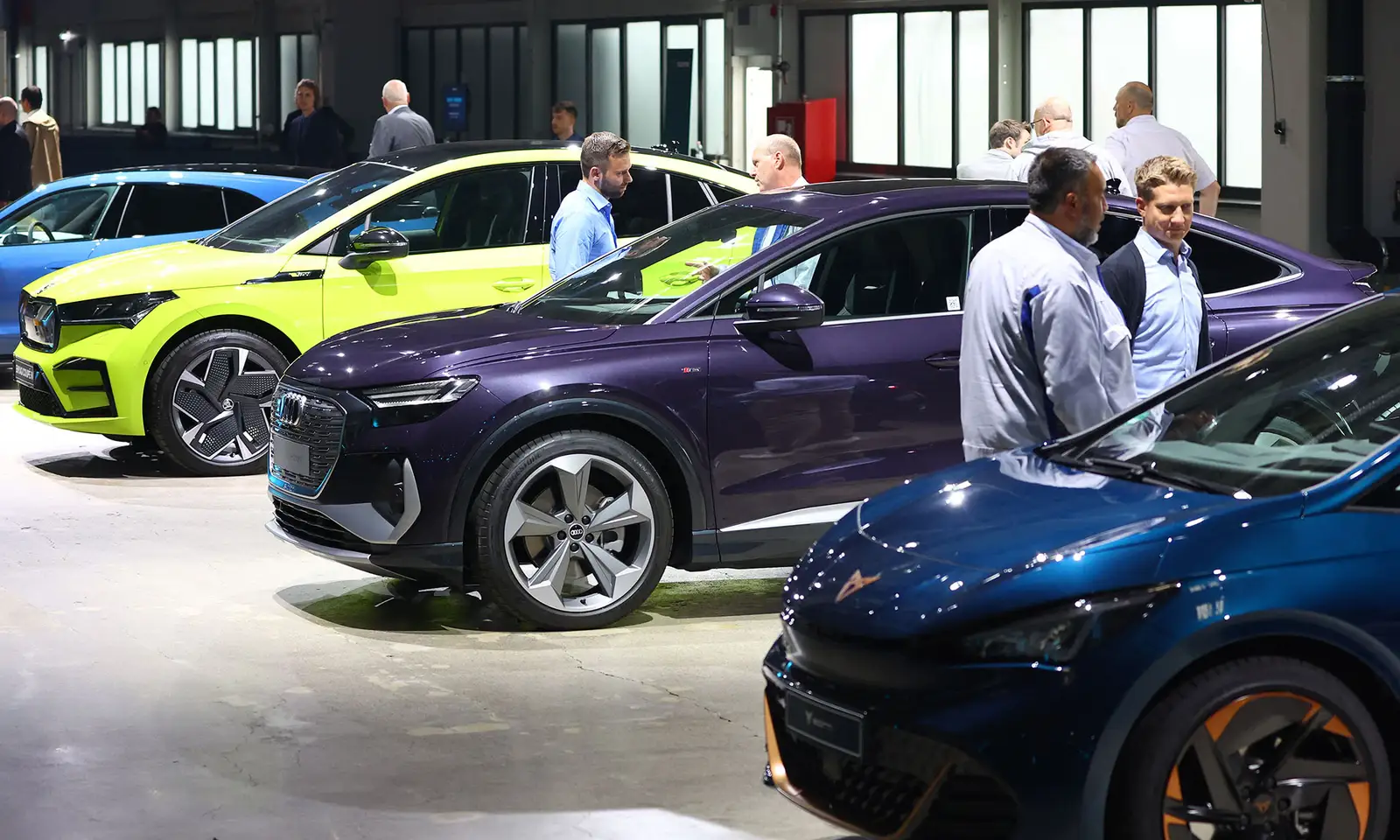
Car dealers are, obviously, an important element in the auto market, one of the links in the chain of information that connects consumer and manufacturer, which helps manufacturers design cars that consumers will want to buy.
Unfortunately, the intervention of big government into the auto market, encouraging and increasingly coercing the manufacture of electric vehicles (EVs), appears to have led dealers astray.
The Wall Street Journal:
You can subsidize a buyer into the auto showroom, but you can’t make him buy. That’s the word from some 3,900 car dealers across the country who on Tuesday wrote President Biden that electric vehicles are piling up unsold on their lots. They want relief from his onerous and unrealistic EV sales mandate.
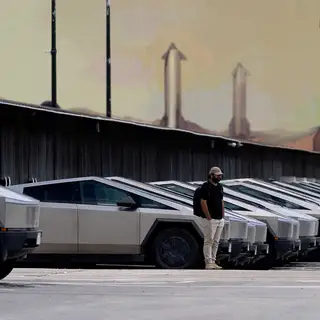
“There are many excellent battery electric vehicles available for consumers to purchase,” the dealers write in their letter to the President. But they add that “electric vehicle demand today is not keeping up with the large influx of BEVs arriving at our dealerships prompted by the current regulations,” and “BEVs are stacking up on our lots.”
Please reread that last paragraph. The influx of EVs has not been led by anticipated consumer demand — which is the way that things are supposed to work in a market economy — but by “current regulations.”
Dealers have a 103-day supply of EVs compared to 56 days for all cars. It takes them on average 65 days to sell an EV, about twice as long as for gas-powered cars. EV sales are slowing though manufacturers have slashed prices and increased discounts. Consumers paid on average $50,683 for an EV in September, compared to $65,000 a year ago.
The reason, as the dealers explain, is that “early adopters formed an initial line and were ready to buy these vehicles as soon as we had them to sell.” But most consumers aren’t “ready to make the change,” in part because EVs are still too expensive. Many apartment renters also don’t have garages for home charging, and public charging networks are spotty with one in four not functional, according to one study.
“Customers are also concerned about the loss of driving range in cold or hot weather,” the auto dealers say. “Some have long daily commutes and don’t have the extra time to charge the battery. Truck buyers are especially put off by the dramatic loss of range when towing.”
The dealers want the Administration to “tap the brakes” on its proposed tailpipe emissions rules that would effectively mandate that EVs comprise two-thirds of car sales by 2032. Auto makers might meet the government’s quotas in leftwing cities where Teslas are a political fashion statement, but price and convenience matter more elsewhere.
Once again, we are reminded that EVs are pouring into the market before they (or their supporting infrastructure) are ready for prime time. It’s telling that Tesla (for all its government assistance, a company that identified a market demand) was quick to deal with the importance of range anxiety (something that has been known about for more a century; it helped sink EVs last time round) by developing a reasonably extensive charger network.
Others in EV-land have ignored or underestimated the charger problem in a way that would have been impossible had the rollout of EVs been subject to the disciplines of the marketplace.
But the government is on it, here to help.
Dominic Pino, writing yesterday:
The $7.5 billion in funding for electric-vehicle chargers from the 2021 bipartisan infrastructure law has so far yielded zero new chargers, according to Politico. “Odds are they will not be able to start powering Americans’ vehicles until at least 2024,” the story says.
Oh.
Meanwhile, the WSJ notes that:
A new study from the University of California, Berkeley’s Energy Institute at Haas finds a “strong and enduring correlation between political ideology and U.S. EV adoption.” About half of EVs registered as of last year were to “the 10% most Democratic counties, and about one-third to the top 5%,” the study notes. This suggests “it may be harder than previously believed to reach high levels of U.S. EV adoption.”
I suspect that, in part, that reflects class and income divides. Wealthier members of the upper middle class are able to afford an EV as, critically, a second (or even third) car. They can be fun to drive around locally (where range should not be much of an issue), and as owners, probably, of single-family homes with a garage or driveway, these EV buyers can get round much of the charging problem.
Moreover, in more progressive parts of the country an EV is a boost to, or a confirmation of, social status. For “conspicuous conservation” is just another example of conspicuous consumption, a luxury good chosen by its buyer to impress the right audience. That’s a source of value to the buyer, and EVs’ higher prices won’t be a deterrent, rather the contrary.
As markets go, however, that’s fairly niche. And climate policy-makers know it. They also know that consumers know that EVs, once issues such as range are added to the equation, would currently represent an inferior driving experience for many potential car buyers. That’s why, through the effects of aggressive regulation, consumers who want to buy new cars will increasingly be “forced” to buy EVs. That’s a recipe not only for substandard cars but, within a few years, for a crisis in the auto sector, when EV sales once again (unexpectedly!) disappoint.
There will be bailouts.




Comments
On “Electric Vehicles: What Do Car Dealers Know about the Car Market, Anyway?”