
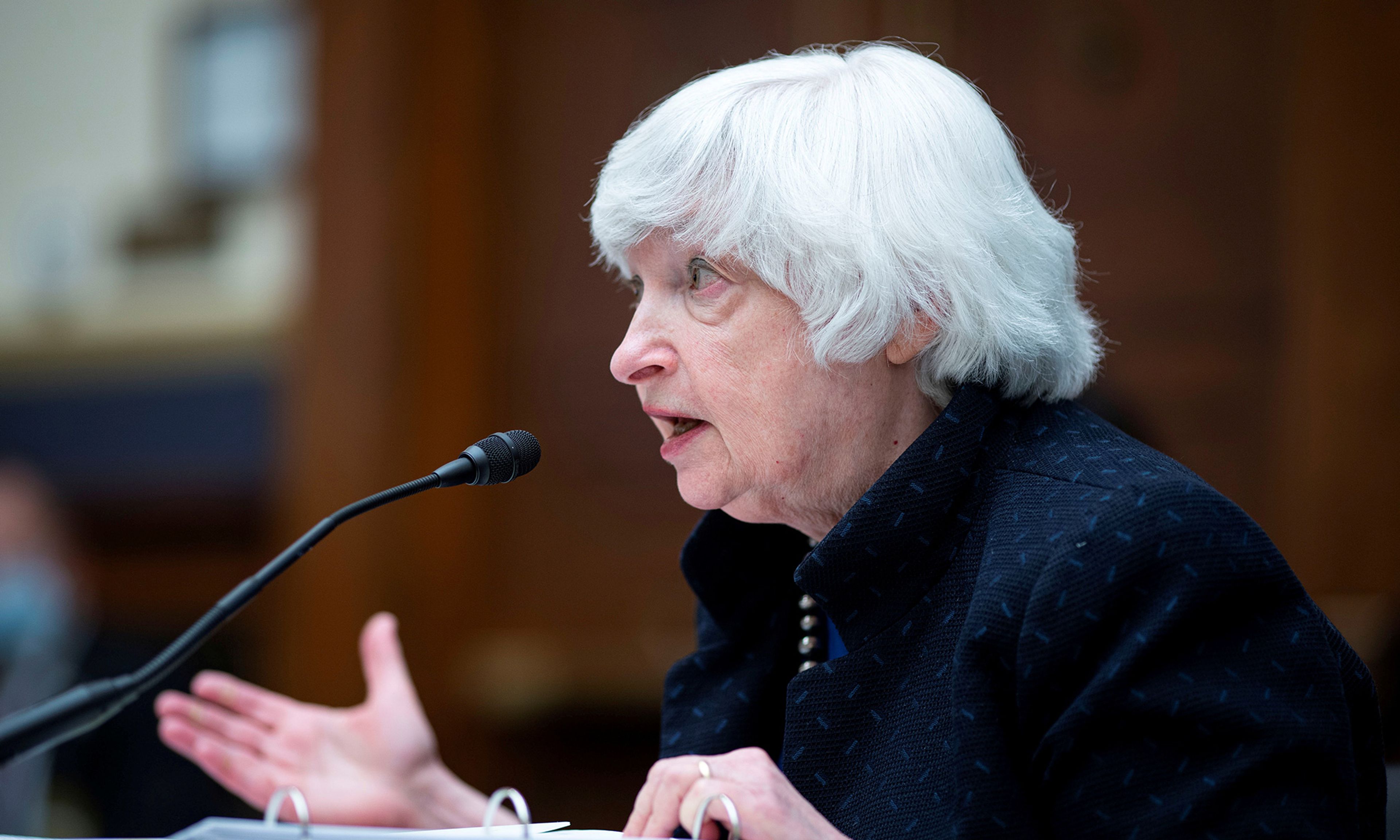
If you wonder why people are increasingly skeptical of experts, you don’t have to look further than the Fed’s failure on inflation. In addition, you have this comment to CNN yesterday from Treasury Secretary Janet Yellen:
I was wrong then about the path that inflation would take. As I mentioned, there have been unanticipated and large shocks to the economy [. . .] that I, at the time, didn’t fully understand.
She wasn’t just wrong. She was spectacularly wrong. It is made a little bit worse by the fact that Yellen used to be the head of the Fed. By the way, I say only “a little” because the current Fed chairman also totally missed inflation last year. They were both surprised, but not everyone was.
And then there is President Biden’s op-ed about how he will combat inflation. The piece starts with:
The global economy faces serious challenges. Inflation is elevated, exacerbated by Vladimir Putin’s war in Ukraine. Energy markets are in turmoil. Supply chains that haven’t fully healed are causing shortages and price hikes.
In the piece you will find no mention of the $5 trillion of Covid spending or the trillions of dollars created by the Fed in part to accommodate all that spending as a potential cause of inflation.
I will say that I thought starting the piece with “the global economy” was clever. It implies that inflation is a global phenomenon, which would remove some of the blame for U.S. inflation from U.S. policies. Nice try. In reality, until the war in Ukraine, European countries, with few exceptions, experienced significantly lower levels of inflation than did the U.S.
In fact, OECD data show that during 2021 Q4, Eurozone inflation was 1.3 percent while ours was 6.4 percent. Also, today, most of Europe’s inflation is supply-shock driven because of the war, and in fact it’s more transitory in nature — and possibly more painful, too — than ours. (Here are my thoughts on the president’s particularly confused op-ed.)
It is amazing that so many people continue to blame inflation on supply issues. Obviously, these supply issues didn’t help. But blaming the 2021 U.S. inflation surge mostly on supply-chain problems ignores that supply (especially when the global economy was closed or partially closed for so long) never had time to adjust to the large and artificially boosted demand. Also, inflation in the U.S. started long before the war in Ukraine.
Jack Salmon and I have a piece over at Discourse looking at U.S. port data, among other things, and explaining why we were skeptical all along of the supply-chain argument and are becoming increasingly annoyed with the continued claim.


Comments