
Douglas Murray is a distinguished British journalist, who has written a fine cover story (on Brexit) for the most recent NRODT. He was also shortlisted for this year’s Orwell prize.
It’s the latter fact that makes one of his recent tweets all too…appropriate:
Facebook have just told one reader that my latest piece on Free Speech is ‘unsafe’.
The full piece can be read here, but here are some extracts.
When seated with Mark Zuckerberg, Frau Merkel wanted to know how the Facebook founder could help her restrict the free speech of Europeans, on Facebook and on other social media. Speaking to Zuckerberg at a UN summit last September (and not aware that the microphones were picking her up) she asked what could be done to restrict people writing things on Facebook which were critical of her migration policy. ‘Are you working on this?’ she asked him. ‘Yeah’, Zuckerberg replied.
In the months that followed, we learned that this was not idle chatter over lunch. In January of this year, Facebook launched its ‘Initiative for civil courage online’, committing a million Euros to fund non-governmental organisations in its work to counter ‘racist’ and ‘xenophobic’ posts online. It also promised to remove ‘hate speech’ and expressions of ‘xenophobia’ from the Facebook website.
I posted a bit about those non-governmental organizations here back in January. As you can imagine, they do not represent a diverse range of opinion. Then again, I, for welcome, the appointment of a former Stasi “unofficial colleague” (Inoffizielle Mitarbeiterin) as one of Facebook’s online overlords.
Murray (my emphasis added):
It was clear from the outset that Facebook has a definitional problem as well as a political bias in deciding on these targets. What is Facebook’s definition of ‘racism’? What is its definition of ‘xenophobia’? What, come to that, is its definition of ‘hate speech’? As for the political bias, why had Facebook not previously considered how, for instance, to stifle expressions of open-borders sentiments on Facebook? There are many people in Europe who have argued that the world should have no borders and that Europe in particular should be able to be lived in by anyone who so wishes. Why have people expressing such views on Facebook (and there are many) not found their views censored and their posts removed? Are such views not ‘extreme’?
One problem with this whole area — and a problem which has clearly not occurred to Facebook — is that these are questions which do not even have the same answer from country to country. Any informed thinker on politics knows that there are laws that apply in some countries that do not — and often should not — apply in others. Contrary to the views of many transnational ‘progressives’, the world does not have one set of universal laws and certainly does not have universal customs. Hate-speech laws are to a very great extent an enforcement of the realm of customs…..
To understand things which are forbidden, or able to be forbidden, in a society, you would have to have an enormous confidence in your understanding of that country’s taboos and history, as well as its speech codes and speech laws..
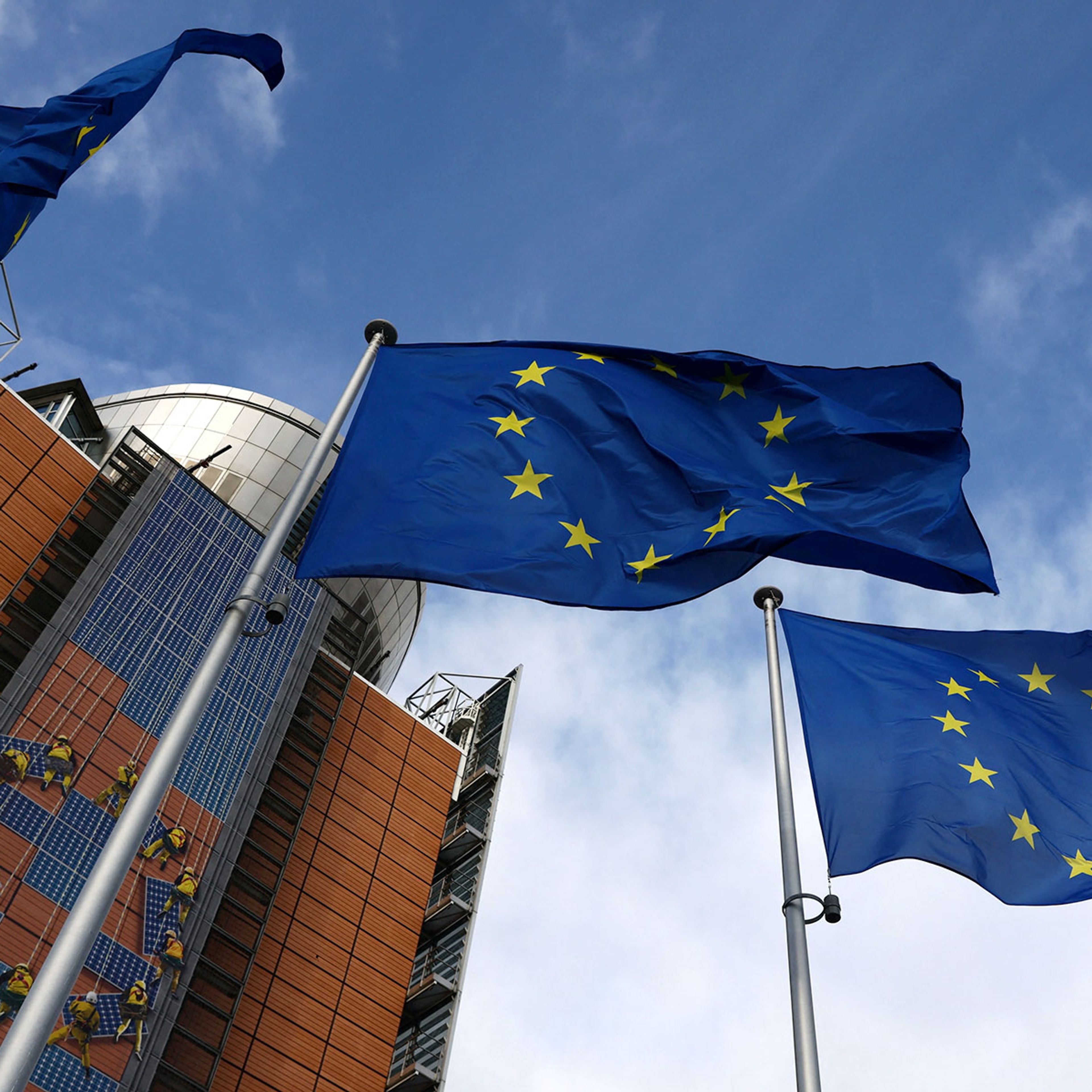
Facebook and others to draw up their own attempt at a unilateral policy of what constitutes hate-speech would be presumptuous even if it were not — as it is — clearly politically biased from the outset. So it is especially lamentable that this movement to an enforced hate-speech code gained additional force on May 31, when the European Union announced a new online speech code to be enforced by four major tech companies, including Facebook and YouTube. Of course, the EU is a government — and an unelected government at that — so its desire not just to avoid replying to its critics — but to criminalise their views and ban their contrary expressions — is as bad as the government of any country banning or criminalising the expression of opinion which is not adulatory of the government.
Over at Spiked, Reason’s Nick Gillespie tries to help out those who are unsure as to what ‘hate speech’ is:
What the f*** is hate speech, exactly? Like another phony, malleable concept — obscenity — it is simply a political category that gives power to the powerful to pick and choose what lesser mortals are allowed to read, think, and discuss…
In the US, libel, which by definition is false, is already punishable by law. So are ‘fighting words’, and plots and actions to cause physical harm. Beyond that, let speech rip like Lear howling on the heath.
And, yes, I’m aware of the irony of censoring those three naughty letters. Family-friendly publication, what can I say…
When I posted about Facebook’s collaboration with Merkel’s attack on free speech, I wrote:
Facebook is a private company. It is (or it ought to be) entitled, within what the law allows, to publish or decline to publish what it wants.
But that now that Facebook has accepted an official role as an EU censor (I posted something on it here), that out has gone. Facebook needs to be called out on the way it is abusing that power.
There’s a helpful irony in the fact that the EU, which takes such pride in its support of the ‘free movement’ of goods, services, capital and people, is so resolutely opposed to the free movement of speech. It reminds us that the EU is not, contrary to the claims of its defenders, a ‘liberal’ project.
It is the reverse.





Comments