
On the homepage today is Part IV of my “Oslo Journal” (notes on the Oslo Freedom Forum, the annual human-rights gathering in the Norwegian capital). I would like to excerpt a kind of extra-curricular bit from Part III, then publish a letter about it:
A session opens at the Nye Theater. It opens with music, performed by a duo: a woman and a man, on keyboard and guitar. They both sing (she principally, I think).
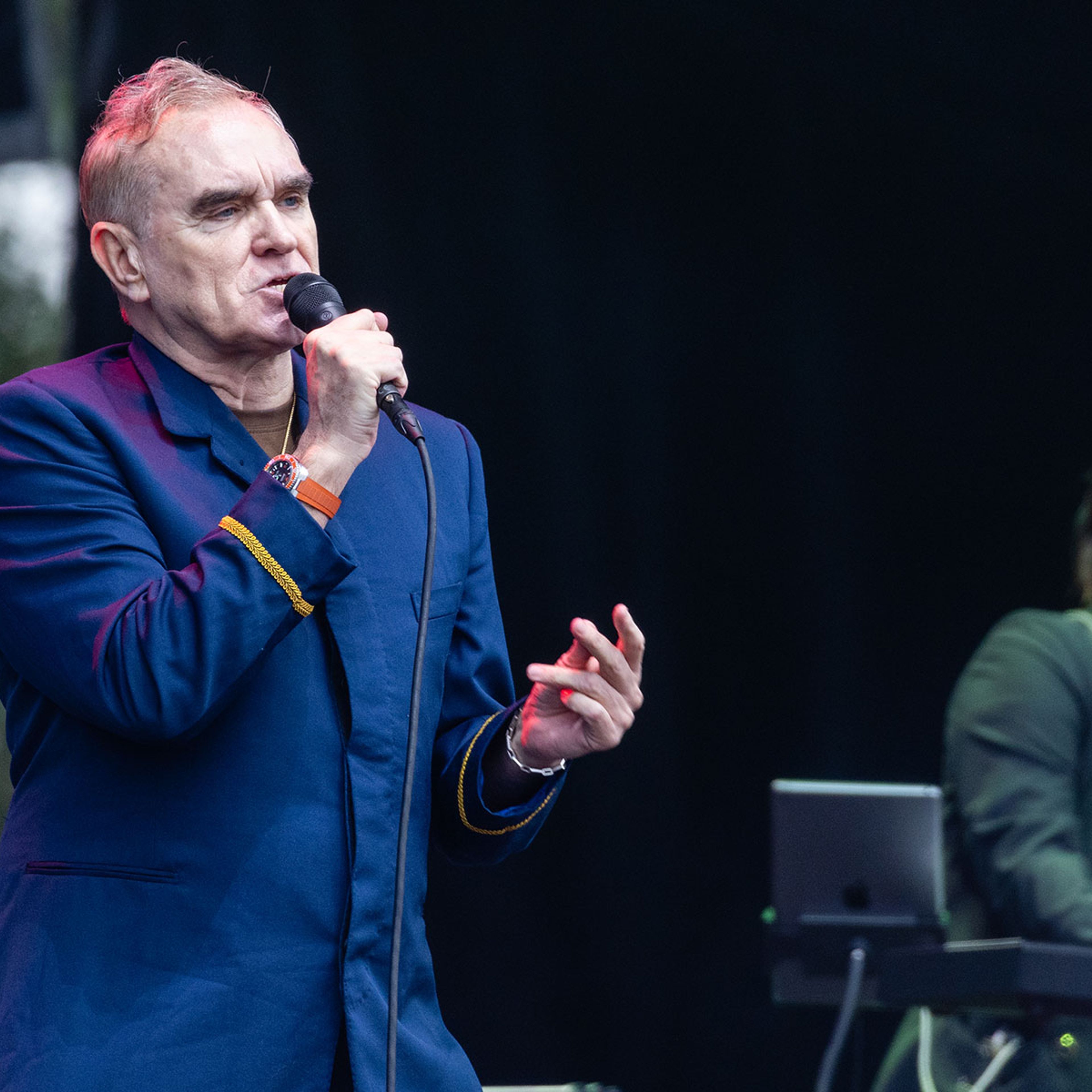
I have noticed something about pop singers — I hope this won’t sound too snarky, because I don’t really mean it that way: They close their eyes when they sing. And the more impassioned they want to be, the tighter they shut their eyes. I think that, when they are very young, they see singers do this — and figure that’s the way you sing.
Anyway . . .
A reader writes,
You mentioned in your latest Oslo posting about pop performers singing with their eyes closed. Having sung a few solos in my life I’m betting that it helps them control their stage fright as well as focus their emotions. I don’t sing with my eyes closed but sometimes, nervously looking over the audience, I’m tempted. I remember watching a season of American Idol where Andrew Lloyd Webber was tutoring David Archuleta (who ended up placing second). He specifically suggested he open his eyes. It bugged him too. I believe David Archuleta has followed his advice ever since.
In Part IV, I relate a memory from a Davos conference. And this memory has sparked another one, which I’d like to give you in a second. First, the excerpt from Part IV, relating the Davos memory:
I spoke with a man who had worked in the development field for 30 years. He was in the aid-to-Africa business. He had given his life to it.
I said, “Have these efforts done any good?” He said, quietly, “No.” I have never forgotten that. It was one of the most honest conversations I have ever had. (It was in the black of night, standing up, outside in the snow.)
There is such a thing as oversimplifying. There is also such a thing as overcomplicating. What do Africans need? The same things everyone else needs: the rule of law; property rights; an independent judiciary; accountability in government; economic freedom; other freedom. Then they will zoom. They are not born to be poor and desolate. The systems that control them make them that way.
Mankind knows pretty well what leads to prosperity and what leads to the opposite. Our experience has been ample — redundant. The road to prosperity is blocked by collectivists, tyrants, and spoilers.
Have I oversimplified? Probably, but the more common error is overcomplicating, I think.
Okay, let me give you a domestic version of the Africa business. Years ago, I spoke with a judge in West Virginia — a die-hard liberal Democrat who, as a young man, had worked with Sargent Shriver in the War on Poverty. I asked him, “Did it do any good?” Quietly, and with sadness, he said, “No.”
If an arch-right-winger like me says that — or even the best economist at the Cato Institute — that’s one thing. But for him to say that — I was kind of moved.
Anyway, this topic deserves books, not blogposts, and it has received books. But I’m just doing blogposts here — not even mentioning that daunting topic, culture.





Comments