
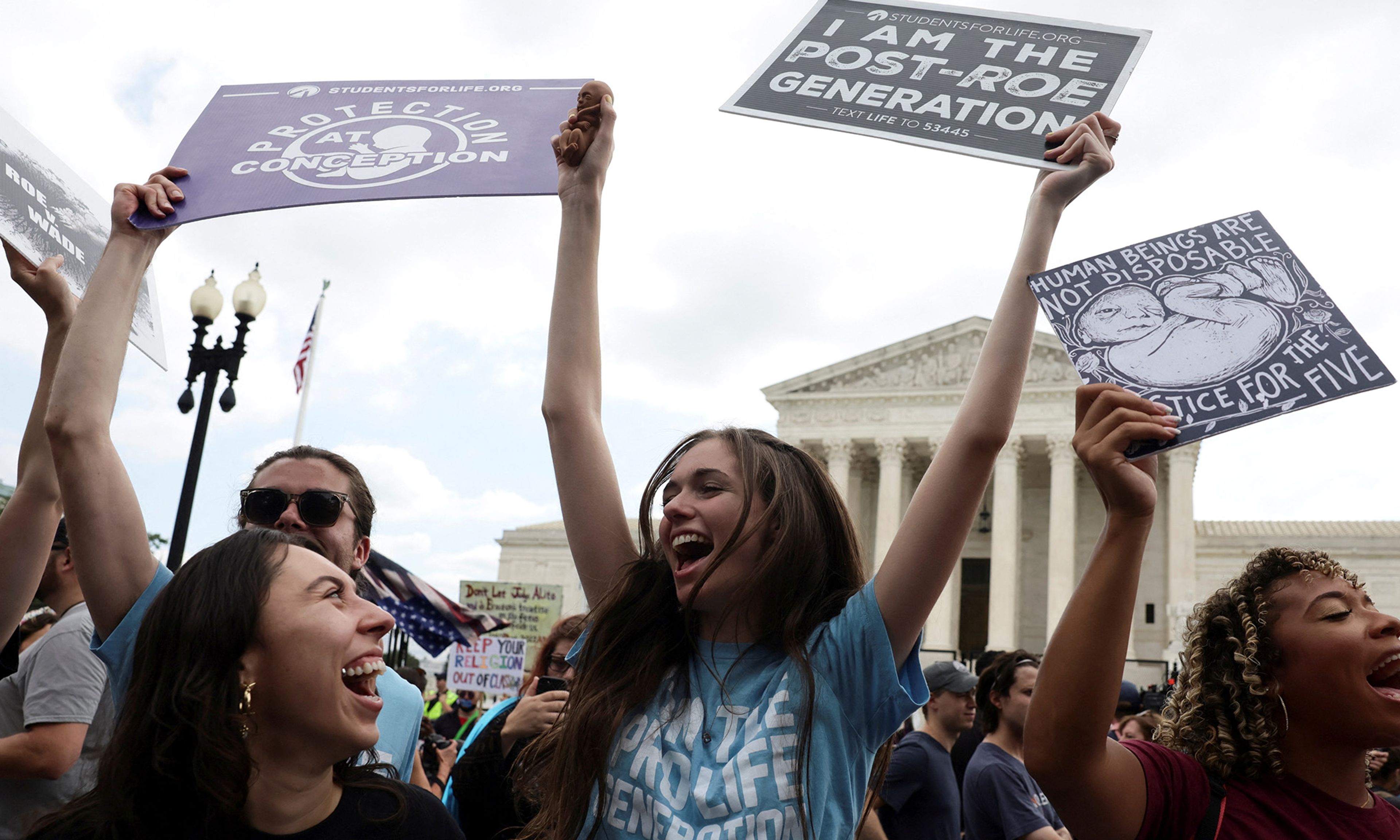
2. Erika Bachiochi in the NYTimes: What Makes a Fetus a Person?
Another vision for women’s equality and liberty exists that challenges rather than accepts the ideal of autonomy. The 18th-century English philosopher Mary Wollstonecraft, author of “A Vindication of the Rights of Woman,” and her heirs that were in the 19th-century American women’s rights movement sought civil and political rights so they might better fulfill their responsibilities to others. As Wollstonecraft reasoned, “The only method of leading women to fulfill their peculiar duties is to free them from all restraint by allowing them to participate the inherent rights of mankind.”
So while Wollstonecraft viewed persons as individuals justly protected by rights, as she vied for equality, she urged both women and men not to dismiss their responsibility to others. For her, maternal and paternal responsibilities began not when the child was born, but when he or she was still developing in the mother’s womb. Achieving the kind of moral maturity that would regard service to and care of others as life-giving and fulfilling was life’s goal.
As the nascent child shares her mother’s body, the mother depends upon many others for her own sustenance and flourishing. This is the case in every pregnancy, of course. But the need of the expectant mother becomes more acute when she is poor or ill, or her life or health is endangered by the pregnancy. The woman with child means two vulnerable patients for doctors to care for and for insurance to support; capacious workplace accommodations and financial assistance; paternal duties expected, not ignored.
Without robust societal support of pregnant women and child-rearing families, too many pregnant women will be left to regard their unborn children as trespassers on their already taxed lives rather than unbidden gifts that open new horizons to them. These women need society’s utmost assistance — not abortion, or scorn.
3. Naomi Schaefer Riley: Liberal policies return children like Julissia Batties, 7, back to their abusive parents
It’s about damn time. That’s the first thing to be said about the arrest in the murder of Julissia Batties by her mother, Navasia Jones, and her half-brother Paul Fine Jr. It’s been almost a year since the 7-year-old girl was found beaten to death in Jones’ Bronx apartment. And it didn’t take Sherlock Holmes to figure out who was responsible.
According to the district attorney, Fine assaulted her between Aug. 8 and Aug. 10, and Jones failed to get medical help while her daughter was dying. The beatings were so bad, they damaged her internal organs and she had bruises all over her body. Oh, and she was sexually abused as well.
But even if Jones and Fine spend the rest of their lives in jail, there is plenty more work to be done to fix the system that failed Julissia.
4. Nora Kenney: Former foster youth clap back against pro-choice narrative on TikTok
Let’s hear it for the former foster children on TikTok clapping back against the pro-abortion rights narrative that their lives are so miserable they’d be better off dead.
You know the narrative. It goes something like this: There are children conceived into bad situations, including abusive homes and cycles of poverty, and therefore, abortion must be legal to ensure their parents can end their lives and preempt their suffering.
“I have seen firsthand what happens to children born to parents who don’t want them,” one foster mother explained tearfully on TikTok. Her takeaway was clear: It would be better if the children had never been born, an outcome the Supreme Court’s June 24 decision in Dobbs v. Jackson Women’s Health Organization will threaten.
5. ‘This is terrorism’: Molotov cocktail thrown into Tennessee pregnancy resource center
6. Virginia Catholic Church targeted with fire, graffiti after SCOTUS overturns Roe
7.
8. Archbishop Salvatore Cordileone: Our Task in Post-Roe America
Call up a local pregnancy center and commit to a monthly donation. Support political leaders who not only restrict abortion but provide new resources for mothers in crisis. Volunteer to accompany single mothers not only during pregnancy, but also beyond. Fast one day a week and donate the money you save to Catholic Charities or other organizations that provide for mothers in need. And men, answer the call to be a father to the fatherless.
9. Lauren Green McAfee: After Roe, How Do We Stand for Life?
Practical Ways to Engage
There are myriad ways we can practically apply our theology to the pro-life issue. As individuals and churches consider how to engage at this monumental moment, these suggestions are meant to be a starting point, not all-encompassing.
Unexpected Pregnancy and Pro-Life Support
Start an Embrace Grace group or discipleship group at your church to walk alongside single moms in unexpected pregnancies.
Lead a Bible study or Sunday school series studying the imago Dei or similar content and seek to develop a holistically pro-life ethic among your church body.
Partner with a pregnancy center near your church.
Create a resource closet or list of resources available for mothers in unexpected pregnancies.
Pray for pro-life ministries that provide care to women and families facing an unexpected pregnancy, and support their work.
Attend a pro-life conference with members of your church.
Provide community and care for single mothers in your church.
Help post-abortive women and men connect with ministries like Support After Abortion that provide support in the healing process.
Adoption and Foster Care
Prepare your church to step in and support families in crisis who are at risk of having their children removed from the home.
Start an adoption fund from your church through Lifesong for Orphans, so that your church can provide grants to families in your community who want to adopt.
Share about ways the church can pursue adoption with gospel-centered agencies.
Educate church members about how to get involved in your local foster care system.
Start an adoption and foster care support group for families in your church.
As the church engages abortion in a way that demonstrates our belief that all people are created in God’s image, our culture will be radically changed—even more than it has been by this Supreme Court ruling. This is an opportunity for the church to love people to Christ and help them in their journey. Let us not waste it.
10. Laura Wolk: Protecting Unborn Disabled Life in a Post-Roe World
In short, exposure to people with disabilities enables us to transform the abstract principle of human dignity into a lived reality. Thus, we cannot move from rationally understanding the value of life in all its diversity, complexity, and beauty to living it out in our actions unless we come to know, befriend, and yes, even dislike people with disabilities—that is, until we invite them into the entirety of the messy human experience.
Now more than ever, the pro-life movement must recognize and rectify our failures in this area. Unfortunately, many of us lack this necessary exposure to disabled people in our daily life, leaving us just as vulnerable as those who are pro-choice to subconsciously devaluing their lives. Access barriers and refusals to accommodate keep people with disabilities out of our social, educational, and employment spaces, including those run by pro-life entities. Fear and lack of familiarity cause us not to approach. And our squeamishness in the face of suffering urges us to avert our gaze. But if we don’t have disabled friends, loved ones, colleagues, church members, or customers in our lives, how can we ever hope to convince a terrified mother, newly armed with a life-altering diagnosis and bombarded by her doctors to abort, that there is another way? If we do not have a realistic understanding of the time, energy, and resources it takes to raise a profoundly disabled child, or if we have never walked the road with someone who carries a terminal child to term, how can our hearts possibly contain the compassion and charity necessary to assist a stranger?
If we do not take a serious accounting of our approach to disabled lives outside the womb, we stand a huge chance that the lives of unborn disabled children will remain a viable bargaining chip in state legislatures across the country. If we only understand the intrinsic worth of disabled lives with our rational intellect rather than also through our personal experiences, then we will lack the adequate drive to advocate their protection, and we will risk allowing the right to kill a disabled child to remain a temporary or permanent part of the compromises forged at the state level.
11. Marco Rubio: The Providing for Life Act: A pro-life plan for post-Roe America
12. Nicole Stelle Garnett: A Victory for Religious Liberty and Educational Pluralism
The Supreme Court rejects policies that exclude faith-based schools from private-school-choice programs.
13. Ericka Andersen: Young people aren’t attached to religion, which could augur ill for their future giving.
14. David Alton: Religious persecution is a hallmark of the CCP
A Chinese pastor who is currently in prison is Wang Yi. His pen name is Wang Shuya. He is the founding pastor of the Early Rain Covenant Church, a Calvinist house church in Chengdu. He is also a writer, editor, and social activist, and was a legal scholar at Chengdu University. In 2018 he was arrested along with dozens of church leaders as part of an continuing crackdown on all unauthorized religious groups in China. He was given a 9-year prison sentence for “inciting to subvert state power” and “illegal business operations”.
15.
If you want to receive weekly email updates, with links and information on upcoming events, sign up here. (It’s free and not too spammy.)





Comments