
Last year, Jeffrey Rosen wrote a short essay for the New York Times Magazine on what he called the “radical constitutionalism” of the tea partiers. He claimed that the constitutional positions of Senator Mike Lee of Utah
appear to be inspired by the constitutional guru of the Tea Party movement, W. Cleon Skousen, whose 1981 book, “The 5,000-Year Leap,” argued that the founding fathers rejected collectivist “European” philosophies and instead derived their divinely inspired principles of limited government from fifth-century Anglo-Saxon chieftains, who in turn modeled themselves on the Biblical tribes of ancient Israel.
When I contacted Senator Lee, he denied that Skousen had played anything like the role in his intellectual development that Rosen claimed. “My strong opinions on the constitution were formed many, many years before I ever read a book by Cleon Skousen.”
Rosen has a new article in The New Republic attempting to classify and analyze the types of judicial conservatism visible on the Supreme Court. Skousen makes another appearance.
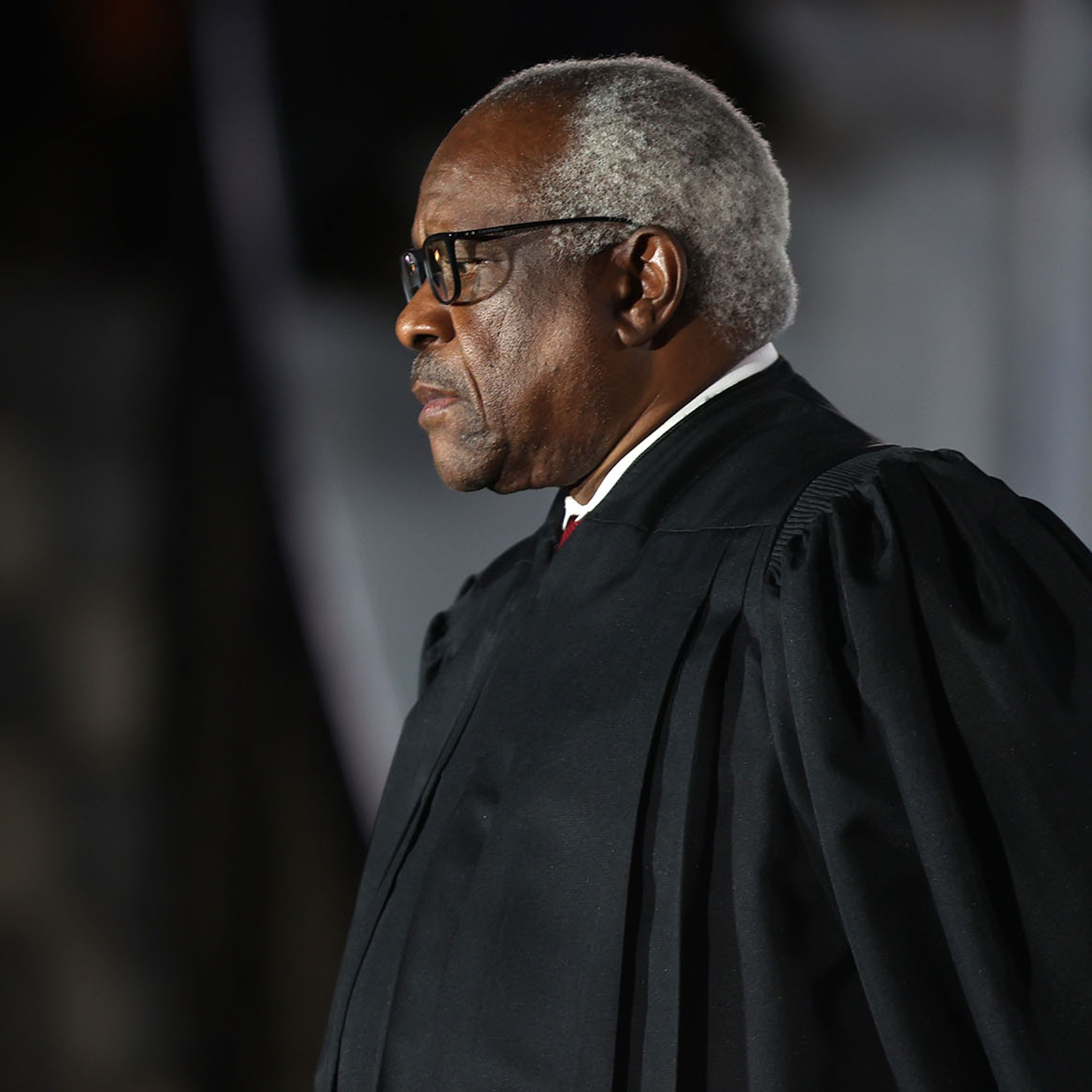
Thomas cannot really be called a libertarian. Instead, he is the leader of a third faction that has begun to gain prominence in recent years. Call them the legal arm of the Tea Party movement. They combine economic libertarianism—and a willingness to use courts to strike down regulations—with ardent social conservatism and devotion to states’ rights. Much of their philosophy is traceable to W. Cleon Skousen’s book The 5,000 Year Leap, which became the movement’s constitutional bible after receiving an endorsement from Glenn Beck. Skousen’s ideas are a mix of John Birch-era opposition to communism, claims that the Founders were divinely inspired, populist opposition to international elites, and radical support for states’ rights.
If Thomas is “the leader” of a faction whose philosophy is traceable to Skousen, wouldn’t one expect that there would be some direct link between them? Some evidence that Thomas has read a Skousen book, for example, or cited one of his works in one of his many opinions? If any such evidence exists, Rosen doesn’t mention it.
Maybe Skousen was as nutty as Rosen makes him out to be; maybe he wasn’t. I can say that in two decades of spending time with all types of legal conservatives, I have never met anyone as obsessed with Skousen as Rosen is.





Comments