
From the Daily Mail:
His body ravaged by cancer, lumberjack David Prueitt barely had the strength to raise the cup to his lips.
In it was a mix of apple sauce and dozens of crushed barbiturate pills, legally prescribed by the 42-year-old’s doctor to end his life.
Within minutes, the drugs had started to take effect, the terminally-ill man slipping into unconsciousness as his wife sat by his side.
If all had gone to plan, David would have quickly and peacefully passed away, his breathing becoming more laboured until it eventually stopped altogether.
But it did not happen like that. Instead, after three days in a deep coma, David suddenly woke up. ‘Honey?’ he said to his wife. ‘What the hell happened? Why am I not dead?’
For another 13 days, coherent but racked with pain, David survived before finally succumbing to the disease and dying naturally in his home near Portland, Oregon’s most populous city.
In that time he would be transformed from just another death to be recorded under Oregon’s policy of assisted suicide into a figurehead for opponents of the U.S. state’s deeply controversial Death With Dignity Act.
’He took five times the amount of barbiturates that should kill somebody and he still didn’t die,’ his older brother Steve told the Daily Mail this week.
’If anything, he should have been brain-dead. But he told us that, while unconscious, he had found himself before God and been told: “Not this way, David.” God chose David as his spokesman, absolutely.’
He adds: ‘It definitely made it very clear to me that we are not supposed to determine our own deaths.’
This may seem far away, but following right-to-die campaigner Debbie Purdy’s victory in the House of Lords, the Oregon experience is suddenly starting to ring alarm bells in Britain.
The 46-year-old multiple sclerosis sufferer successfully argued that it was a breach of her human rights not to know whether her husband would be prosecuted if he helped her to die overseas – in Switzerland, through Dignitas – in the event that her condition worsened.
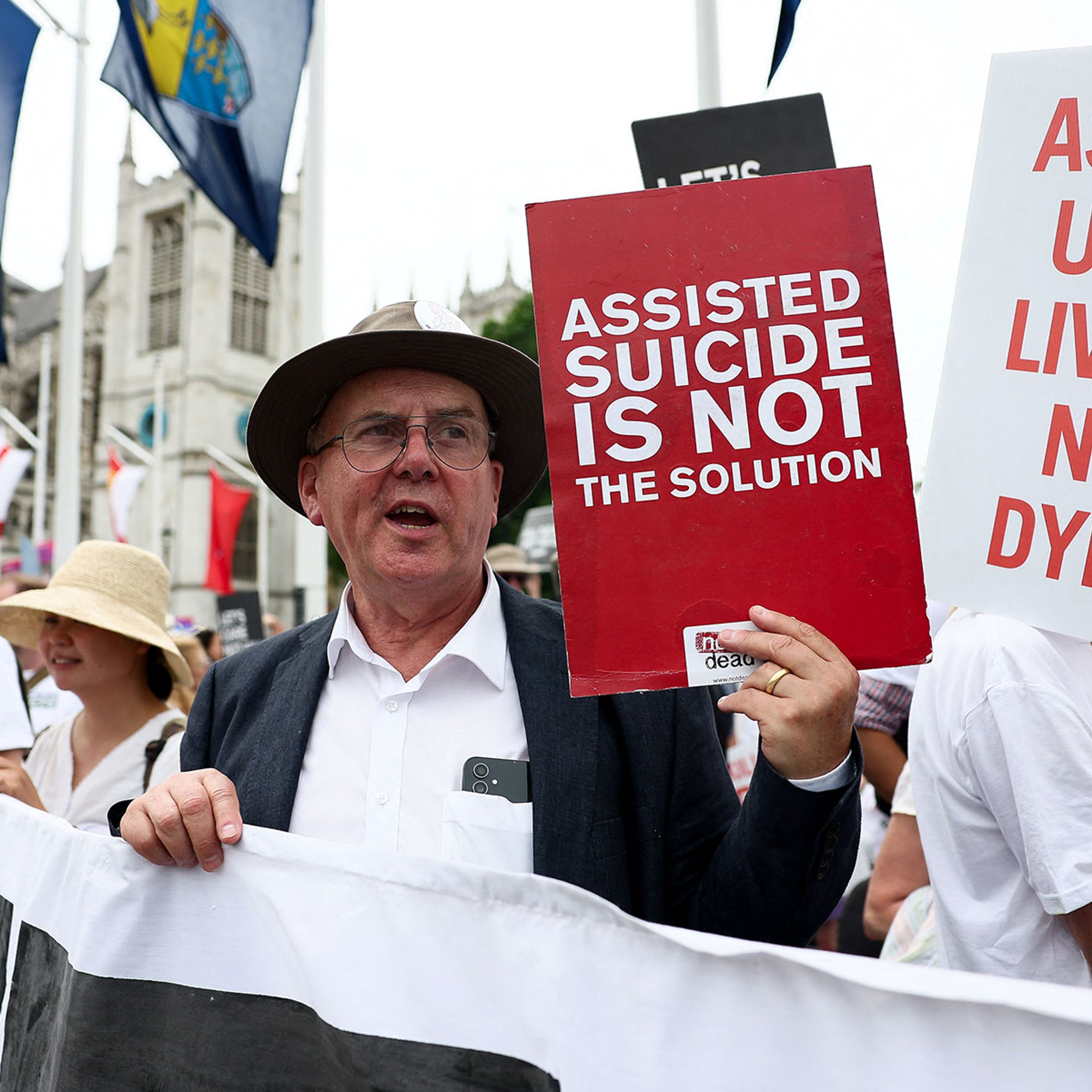
Going further than anyone expected, the Law Lords ordered Keir Starmer, the Director of Public Prosecutions, to spell out exactly when – or, possibly, if – action would be taken against someone who helps a friend or relative to take their own life. Opponents of assisted suicide are deeply worried that this may lead to effective legalisation.
The right-to-die lobby is already pointing to the Oregon model as a possible blueprint for Britain.
Former human rights lawyer Lord Joffe is one of the movement’s foremost proponents and his opinion is unequivocal. He says that assisted dying ‘clearly works’ in Oregon. And given that, he asks, how can anyone think that assisted dying would not also work in the UK.
The number dying is rising every year
_______________________
But opponents say the legislation introduced in Oregon – the first state in America to allow doctor-assisted suicide – simply does not work. And it’s not just the experience of lumberjack Mr Prueitt that supports their argument.
They point to the fact that although the rules require those handed the lethal prescriptions to have a life expectancy of only six months, some who subsequently decide not to kill themselves have gone on to survive for a year-and-a-half more. Or even longer.
Critics warn that because many doctors refuse to participate, patients end up shopping around for the handful of physicians willing to prescribe.
It makes it all the more likely the person who is writing the prescription will neither know the patient nor provide an impartial assessment of them.
It is also said that those suffering from depression, a condition that can impair decision-making, are rarely excluded from the process as they should be.
But perhaps most worrying of all, say critics, is the trend for other treatment to be denied to those who are terminally ill. Instead of being given the medicines that might prolong their lives, they are being offered £30 to cover the cost of drugs that will end their days in a matter of hours.
To better answer the questions, it is first necessary to understand how Oregon’s Death With Dignity Act has worked since it was passed in 1997.
So far, 401 patients have been assisted to their deaths. The majority of those were aged between 55 and 84, white and well-educated. Eighty per cent were cancer sufferers.
The most frequently mentioned motives for ending their lives were loss of autonomy, a decreasing ability to participate in activities that make life enjoyable, and a loss of dignity.



Comments