
In Canada, they are holding an election today. If the Liberals win, I think their leader, Prime Minister Mark Carney, should say, “Thank you, President Trump.” I lead my Impromptus today with this issue.
Those of you who remember the Republican race in the 1988 presidential primaries — and who among us doesn’t? — will recall the phrase “Thank you, New Hampshire.” It recurred, that year.
Earlier this month, I filed a report from Copenhagen: “America Rattles Denmark.” I would like to share some excerpts from a new piece by Jonathan Martin, of Politico (formerly of National Review). In Canada, he found things that I found in Denmark.
It’s hard to overstate how stung Canadians are by the tariff threats and Trump’s incessant talk of taking over the country, an increasingly unfunny riff he repeated again recently in the Oval Office after not saying it for a few weeks.
They feel betrayed, really.
Trump, says Martin, has “prompted a surge of nationalism in Canada.” Storefronts have signs that say “Shop Local” and “Proudly Canadian Owned.”
One more excerpt from Martin’s piece:
“We’ll always be neighbors, and hopefully friendly neighbors, but the special relationship doesn’t exist,” said Tom Long, a longtime Conservative Party strategist who goes back to the Brian Mulroney era. “We’ve got assets in the north that need to be defended from Russia and China and probably Americans now.”
It’s startling to hear, but hardly uncommon.
I observed, or experienced, just the same in Denmark.
Switching subjects: In a column not long ago, I wrote of the Naval Academy, from whose library the Trump administration has removed 381 books. These are supposed to be “woke” books, I gather. They include Maya Angelou’s famous memoir I Know Why the Caged Bird Sings and the treatise by Karen and Barbara Fields, Racecraft.
(Remaining in the library are Mein Kampf, The Camp of the Saints, etc.)
Here is an op-ed piece by Ryan Holiday. It begins,
For the past four years, I have been delivering a series of lectures on the virtues of Stoicism to midshipmen at the U.S. Naval Academy in Annapolis, Md., and I was supposed to continue this on April 14 to the entire sophomore class on the theme of wisdom.
Roughly an hour before my talk was to begin, I received a call: Would I refrain from any mention in my remarks of the recent removal of 381 supposedly controversial books from the Nimitz library on campus? . . .
When I declined, my lecture — as well as a planned speech before the Navy football team, with which my books on Stoicism are popular — was canceled.
Our midshipmen at the academy are not snowflakes. They ought not to be treated as such. Whether from the left or from the right, snowflakery and cancel culture are absurd.
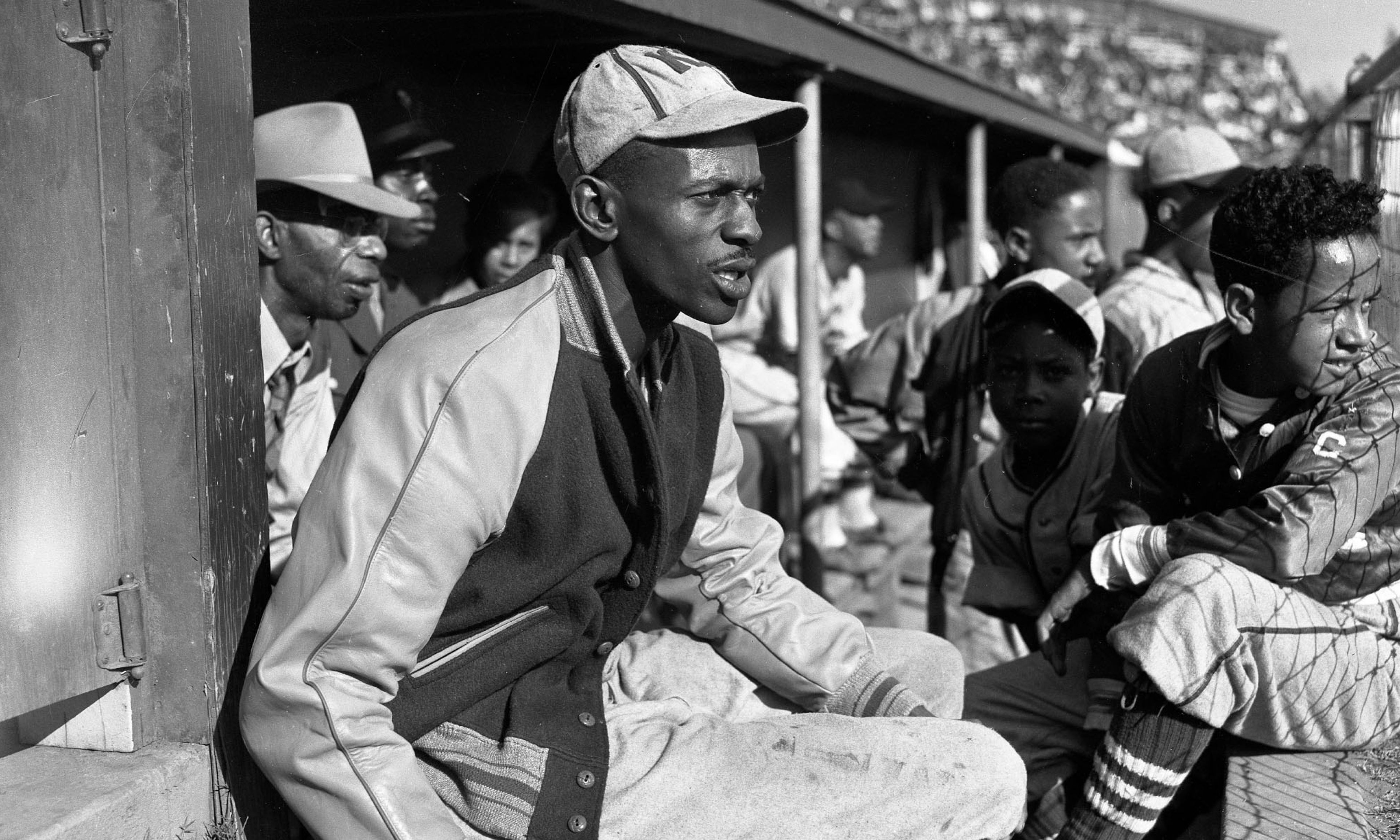
One of the subjects of my column today is Satchel Paige. After writing my column, I read the obits page of the New York Times — which included this: “Alexis Herman, First Black Secretary of Labor, Is Dead at 77.”
An excerpt:
Her mother, Gloria Broadus Caponis, was a schoolteacher. Her father, Alex Herman, owned an insurance company. He also owned the Chattanooga White Sox, a Negro minor league team, and signed the future Hall of Fame pitcher Satchel Paige to his first professional contract.
Some more:
Mr. Herman was also a civil rights activist, a Democratic politician and a ward leader in Mobile.
After Ms. Herman and her father visited a minister on Christmas Eve when she was 5, their car was driven off a dirt road by one driven by members of the Ku Klux Klan. She recalled that her father handed her the small silver pistol that he brought for protection as he traveled to community meetings.
“He told me, ‘If anybody opens this door, I want you to pull this trigger,’” she told The Chicago Tribune in 1997.
He locked the door behind him and confronted the Klansmen, who beat him.
One more excerpt:
A year or so later, Ms. Herman was walking to her home with her mother, who was so tired that she decided that they would take a bus the rest of the way. When they boarded, her mother collapsed from exhaustion in the front seat. The bus driver told her to move to the back of the bus.
But she could not — or would not — and the driver wrested her from the seat, opened the door and pushed her onto the street.
“With tears in her eyes, torn stockings, and struggling to get off her knees, she held her head high and said to me, ‘Come on, Alexis, we’ll just keep walking,’” Ms. Herman wrote in an essay . . .
Ms. Herman was educated in parochial schools to avoid having to attend segregated ones.
Last fall, I wrote an essay called “Wrestling with Race.” A personal essay. Time is such a tricky thing. When I was growing up, I thought that the indignities and horrors of Jim Crow were a thing of the past — a distant past. They were barely over. Alexis Herman has died at 77. I used to think that 77 was antique. I don’t think so anymore.
Anyway, we could spend all day on this, or all year.






Comments