
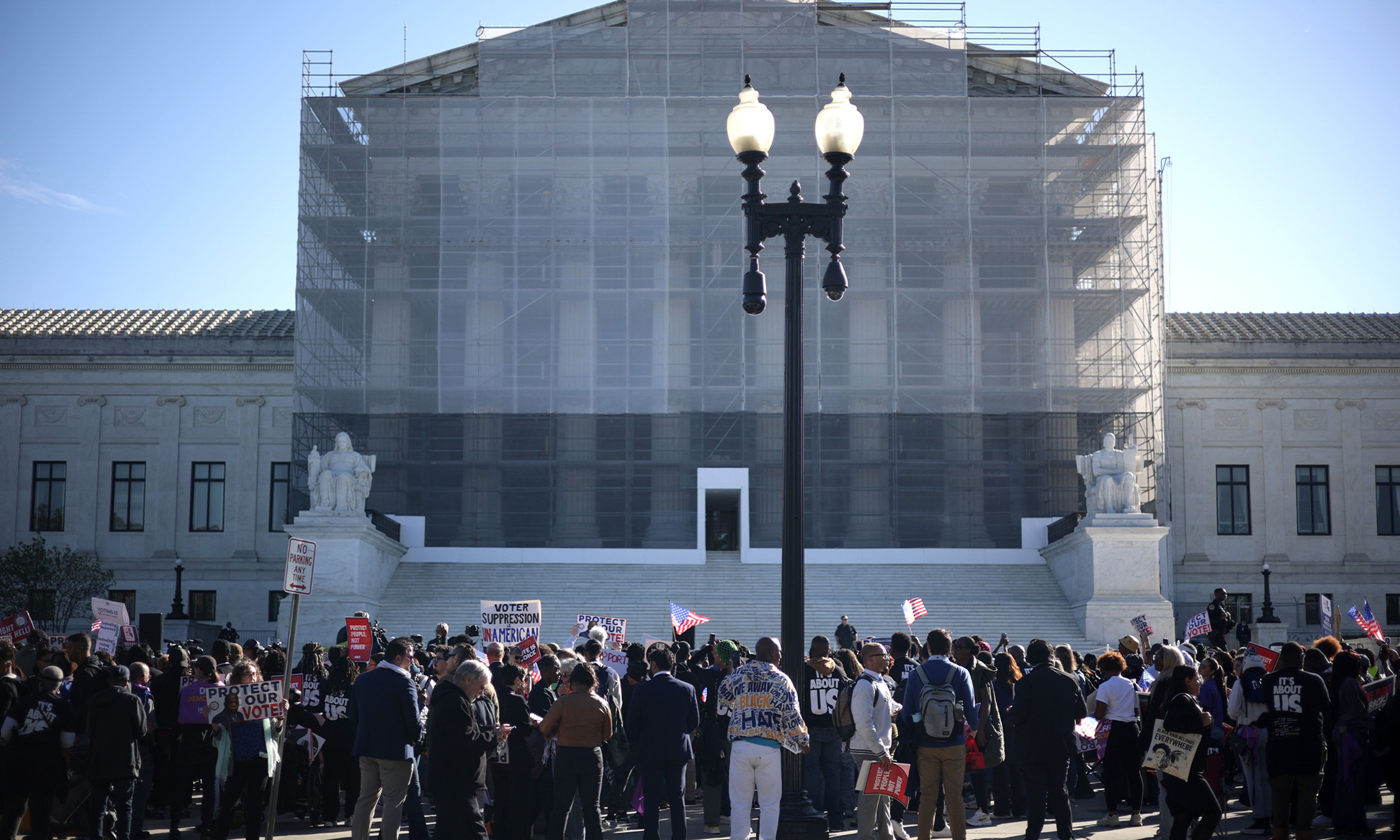
With the overturning of Virginia’s partisan gerrymander by the state’s highest court and the Supreme Court’s ruling that the majority-minority districts once mandated by judicial interpretations of the Voting Rights Act’s Section 2 are unconstitutional, Republicans look like they’re set to win the mid-decade redistricting wars that Donald Trump inaugurated. It looked touch-and-go there for a while. But the GOP’s victories could yet be pyrrhic.
Splitting up reliably Democratic majority-minority districts, thereby diluting their partisan lean by pushing more Republicans into them, will certainly make those districts less Democratic. By virtue of the math, however, it also means that districts which were once ruby red will have a lighter hue to them.



Comments