
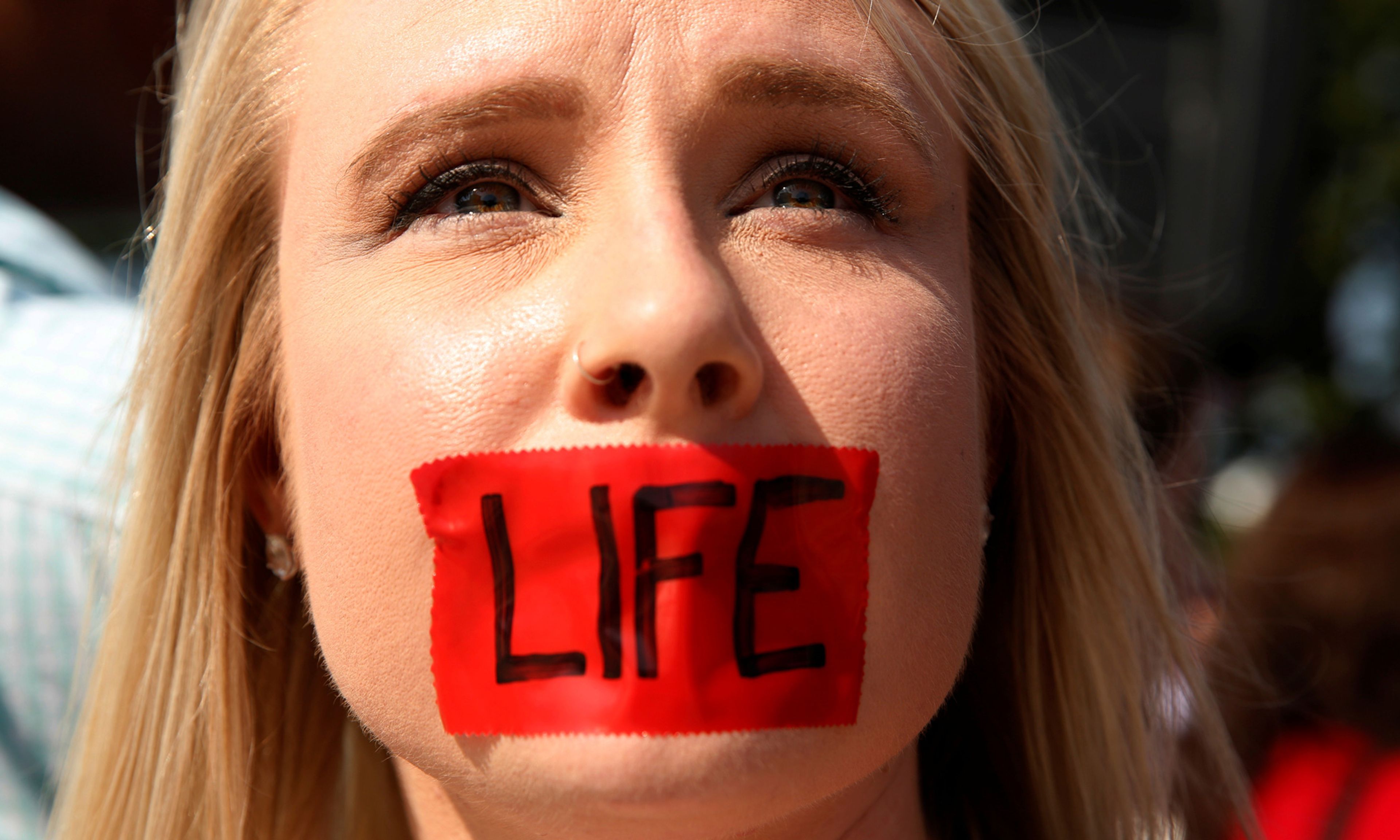
A lot of media attention is on the so-called Women’s March on Washington happening Saturday, a seemingly thinly veiled rally for legal abortion and protest of the new Republican majority in the White House. In the “City of Angels,” a different kind of gathering is happening in Exposition Park, a bilingual “festival” with speakers who include Rwandan genocide survivor Immaculée Ilibagiza and actress Patricia Heaton. OneLife LA, sponsored by the Archdiocese of Los Angeles, with the theme “Choose Love.” What does that mean exactly? Kathleen Buckley Domingo, associate director of the Office of Life, Justice and Peace there talks a bit about it.
KJL: What’s different about One Life LA?
Kathleen Buckley Domingo: OneLife LA isn’t a protest or a political rally. From the beginning, Archbishop José Gomez had a vision of using the cultural leadership of Los Angeles to our advantage to create an event that was both a celebration of what a culture of life truly is and a catalyst for performing works of mercy to create it. OneLife LA is a lot of fun. It is a festival with salsa music and food trucks. We use this sense of camaraderie to get at the heart of what it means to be pro-life. Under the rhetoric of issues is the need to understand who we are as people and what we are made for. OneLife LA seeks to enliven our recognition that we are brothers and sisters in Jesus and call us to radical service as a result. KJL: Who is the one life you’re focused on?
Domingo: OneLife LA can be interpreted in a variety of ways. Some see it as ”what am I doing with the one life I’ve been given”? Others see “helping the world one life at a time.” I view it as an emphatic call to community: though many, we are all one. And the Golden Rule to do unto others as you would have done to you becomes far more than a platitude but the core of what it means to be part of the human community.
Lopez: Your theme is Choose Love. That’s pretty broad, like saying “God is love.” You can go anywhere with that. How exactly does one choose love? Especially when talking about abortion? Especially when talking about brutal end-of-life decisions?
Domingo: We’re having a bit of fun with our “Choose Love” theme this year and setting out to beat the world record for the number of people forming the shape of a heart! Certainly a theme such as this could be taken in a very cheesy direction, and if it draws people into OneLife LA, that’s great! But, once there, we hope they learn something earth-shattering about love. We hope they learn that love is not just willing the good of the other but doing something about it. That love means making yourself uncomfortable and unpopular some of the time. Our culture might tell us that love is allowing — allowing a woman to free herself of an unwanted child or allowing someone to end her suffering by taking her life. But permissiveness is not love. The goal of OneLife LA 2017 is to allow people to experience, through our speakers and music and celebration, authentic love that corresponds with the deepest longings of our hearts. To realize that each person is made in love and for eternal life in love. In this context, issues such as abortion or suicide have no place. They negate love. They negate hope. Love requires a radical outpouring of ourselves so that the other person knows his worth and his destiny and is empowered to live fully.
Lopez: Is OneLife an anti-Roe event or something else and more?
Domingo: OneLife LA takes place in January at the same time as pro-life events across the country. We stand in solidarity with the hundreds of thousands who, each year, defend the right to life of all people, born and pre-born, by commemorating the anniversary of Roe v. Wade. OneLife LA is vehemently anti-Roe because it is pro-life. In celebrating the beauty and dignity of every human life, OneLife LA opposes the despair of Roe and the impoverished definition of human life it commenced. Beyond an “anti” position, OneLife LA seeks to bring participants to an experience of what a culture of life is meant to be and how we might get there.
Lopez: The event is bilingual? To what extent do the English speaking and Spanish speaking pro-life movements/activists/realities/needs overlap?
Domingo: Of the many accomplishments of OneLife LA in our three-year history, I believe the greatest is that we have created an event equally attended by Spanish and English-speaking participants. OneLife LA incorporates aspects of faith and family far beyond the political rhetoric often associated with pro-life events. Because of that, we find that it has a broad appeal to people who may not have a history of political activism but are looking to learn how their families can share their faith-filled understanding of love and caring for those in need. Specific needs may differ, but the desire to build a community in which every person is respected and loved, and civic and community structures are built upon this foundation, transcends every culture.
Lopez: Wouldn’t it be a lot easier to win people over on this issue if the Church would support getting birth control in the hands of women? Is that one of the most frequently heard questions you get as a representative of the Church on these issues?
Domingo: Abortion and birth control are often touted as key, or the only key, to women’s empowerment. We are seeing this in dramatic fashion through the Women’s Marches taking place around the country this weekend. The prophetic wisdom of the Church stands firmly against this notion. In past decades, it may have been more difficult to substantiate why we believe abortion and birth control are bad for women. Now, it is not. We have decades of experiences of women and men suffering physically, emotionally and spiritually after abortion. We have a growing cultural movement away from hormonal birth control because it is actually really harmful to women’s health. Being consistent, and illustrating how understanding and reverencing our sexuality truly empowers women, turns out to be far more convincing.
Lopez: What do you hear pregnant women and young, poor mothers say they need most?
Domingo: Across the board, the greatest need of pregnant women and mothers is personal support. This applies in a particular way to young and poor moms. They need good quality, life-affirming, accessible prenatal care and medical care for themselves and their families. They need paid maternity leave. They need help with childcare. But, more important than any of those is a structure of support. Many people wonder what they can do personally to help a mom who is struggling. There are so many things! Bringing dinner over once a week would be great. Offering free babysitting is super! Just ask, and she will tell you what she needs. Every family needs a support structure to thrive. Especially single parents or those working extra hours to make ends meet.
Lopez: Why is the abortion issue so important and how does it bleed, for lack of a better word, into other issues?
Domingo: The issue of abortion gets to the very core of who we are. Are we the kind of people for whom personal liberty is so important it can justify taking the life of another, vulnerable human being? Or are we the kind of people who understand ourselves to be in community with others with a responsibility to love and care for our brothers and sisters (or in this case sons and daughters)? Abortion can be discussed from so many different angles, but I see the problem as a misunderstanding of anthropology. Individual women may come to abortion because of financial or relationship trouble. But the social machinery pushing abortion is driven by a warped view of human life. We cannot know the dignity of the unborn child unless we first come to know our own dignity. And this can be true of any other issue today where the person is being degraded to something less: human trafficking, immigration, assisted suicide, etc.
Lopez: Does the pro-life movement have a communications problem? Can the OneLife approach fix it?
Domingo: It’s tough to speak for the whole movement, but we made a strategic choice not to use the term “pro-life” whenever possible. In fact, in all of the materials leading up to our first OneLife LA, we didn’t use the term at all. Instead, we wanted people to come experience what we meant by “pro-life” rather than prematurely attaching to that label all of the political and cultural baggage. I do think that many are stuck in a decades-old binary of “pro-choice” and “pro-life” that just doesn’t work anymore. I also think that many are not allowing themselves to learn the current needs of women considering abortion because of fear that their needs would no longer line up with our solutions and we would have to rethink everything. People want to be on a winning team. Most people also realize that the “pro-life movement” is not sharing an intellectual position only but a lifestyle. And, lifestyle change is difficult. It takes people who are good ambassadors of that lifestyle to build relationships and share positive messages over and over, year after year. We believe that attracting people to what we are “for” is a better strategy than scaring people from what we are “against.” Only time will tell which strategy is more effective.





Comments