
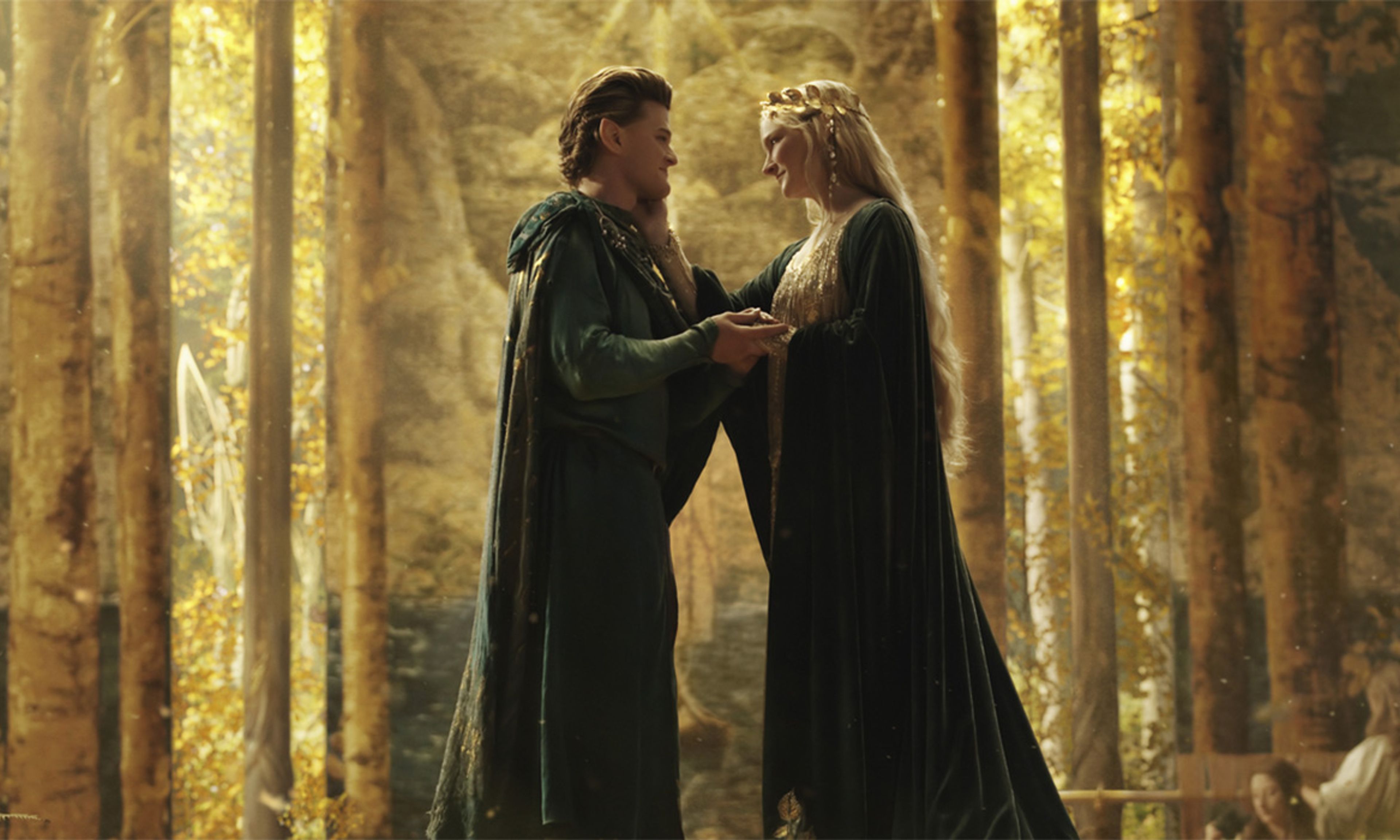
Jack thinks the fourth episode of Rings of Power was “boring” and too slow-paced. I had no similar problem. Taken apart from the question of fidelity to the books, I found this episode to be engaging, and think the pacing of storytelling is fine. The series compresses events that unfold over many centuries in Tolkien’s timeline; those events are necessarily a bit rushed for television, but I appreciate the time taken to build dramatic tension and introduce a bunch of new characters (as well as characters such as Gil-galad, Durin, and Celebrimbor who are known to readers but not the non-book-reading audience, and who frankly are not that fleshed-out on the page). Moreover, the pacing is undoubtedly designed to allow time to extend the series over multiple seasons; there are few worse mistakes in television than blowing through the key elements of your plot too quickly and having to tack on unnecessary events to manufacture drama.
I’m also less concerned than Jack about the depiction of Elrond, who after all is presented in the books as a loremaster and a diplomat, not a commanding personality.
As with my critique of the first two episodes, my chief concern is that the series will diverge too far from the essential elements of Tolkien’s mythos. Gil-galad’s explanation to Elrond of why the elves need mithril to avoid “fading” reeked of midichlorians, although the fading of the elves is a major theme of Tolkien – they are presented as at the height of their power when they first embark from Valinor, with the light of the Two Trees in their eyes, and steadily diminish thereafter, being held off from decay by the rings wielded by Elrond and Galadriel. I suppose the series is attempting to frame the fear of fading as a major motivation for the forging of the Three Rings by Celebrimbor.
The bigger game is the Downfall of Númenor. There are three essential elements to the Downfall of Númenor that advance Tolkien’s broader theological and philosophical outlook while advancing the plot that results in the War of the Last Alliance and, in the longer term, the entire history of the Third Age that culminates in the story of the Lord of the Rings. The first and most important is that Númenor is destroyed when its leaders rebel against mortality itself, attempting to sail to Valinor to conquer the Blessed Realm and, they believe, claim eternal life on earth. This brings down the wrath of Eru Ilúvatar, the name Tolkien gives to Almighty God.
The truly great evils throughout Tolkien are rebellions against the divine design: Morgoth seeking to rise to the level of Ilúvatar, and to create his own races of being (the Orcs); men seeking eternal life against the strict Ban that was placed on their sailing into the West; the Sons of Fëanor swearing an oath to Ilúvatar to claim the Silmarils. If the Downfall is presented in these terms, while the elves contribute to Sauron’s power and corruption in their own effort to avoid fading, then the parallel sins will fit in Tolkien’s vision.
But thus far, we have been given none of the conditions in Númenor that give rise to the challenge to the ban: a mighty and haughty king and his approaching death, and his desperation to extend his life. The other two essential elements are that the attack on the Ban is the result of the honey-tongued advice of Sauron (who as a result loses forever his capacity to assume a form appealing to men), and that the remnant of the Númenoreans is led by Elendil because his people reject the king’s blasphemy. This sets up the unfailing enmity between Sauron and the heirs of Elendil in Middle-Earth. I will judge the series in good part by whether it remains faithful to these core pillars of Tolkien’s creation.






Comments