
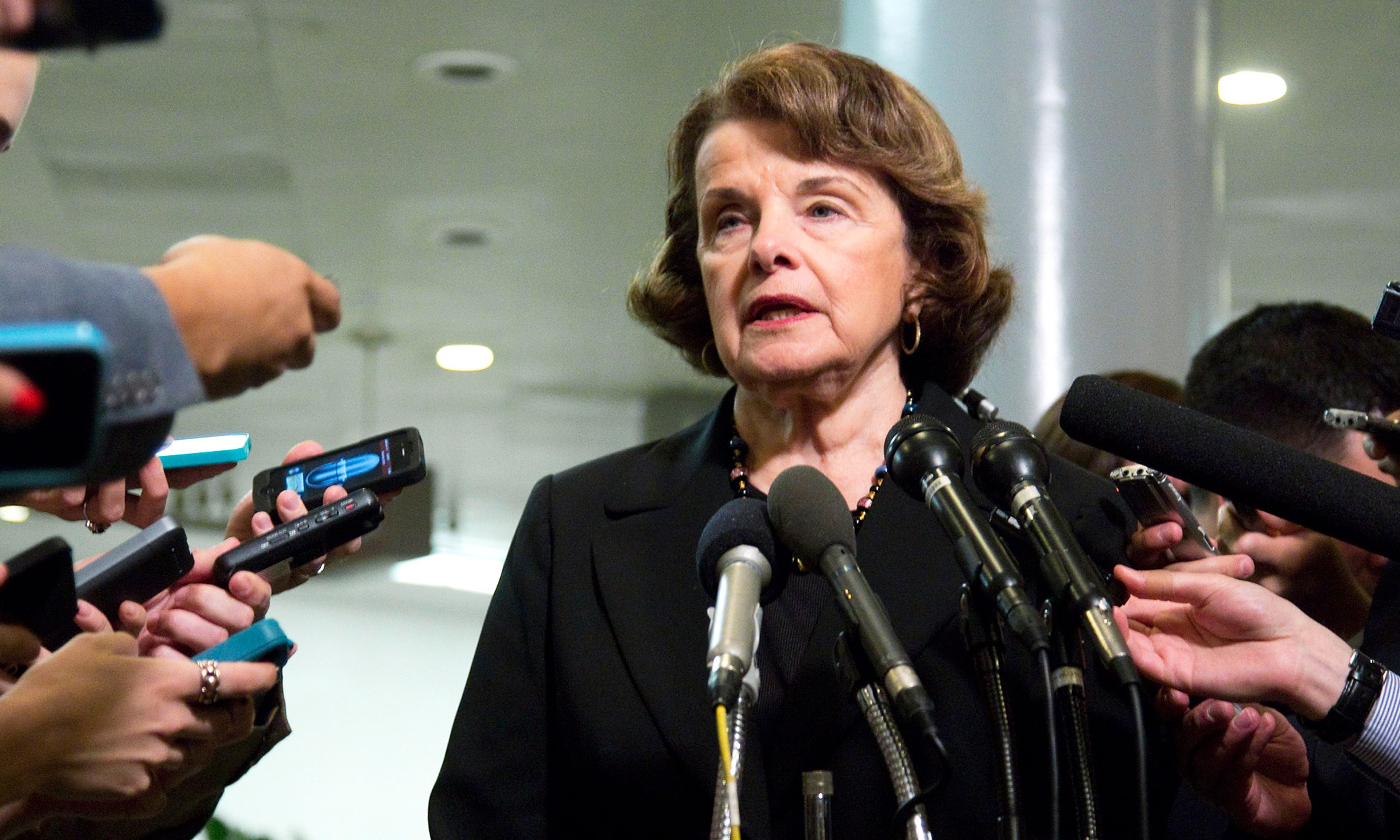
Senator Dianne Feinstein died in office this week at the age of 90, following a career in public life that spanned more than a half century. Her passing prompted the New York Times to note that, as a U.S. senator, Feinstein was something of a maverick. “Ms. Feinstein called herself a political centrist, and she sometimes changed her mind,” the paper’s obituary read. Indeed, she “often embraced conservative ideas.” The paper fails to elaborate on the longtime California senator’s traditionalist bona fides save her occasional preference for “conservative suits.” But beyond Feinstein’s sartorial reserve, the label has been misapplied. It isn’t so much that Feinstein was a conservative. Rather, what she wasn’t was a radical.
The Democratic Party’s rapid ideological evolution from a party of center-left liberals to far-left progressives left the senator behind the times, but no conservative would have called her one of their own. The Times noted the extent to which Feinstein “supported gay rights in housing and jobs,” but she also “angered many advocates by vetoing domestic partner-rights legislation” as San Francisco’s mayor. Indeed, she did, but that was also 1982, and the position put her well within the mainstream of Democratic politics. California itself didn’t extend domestic partnership benefits to gay couples until the year 2000.



Comments