
Among the challenges for higher education brought about by the emergence of artificial intelligence is that it’s very hard to tell whether a candidate for an academic position really knows his or her material, or is merely coasting on stuff prepared by AI. How do we separate wheat from chaff?
In today’s Martin Center article, Robert Wright has a modest proposal: Use the quodlibet.
What?
Wright explains:
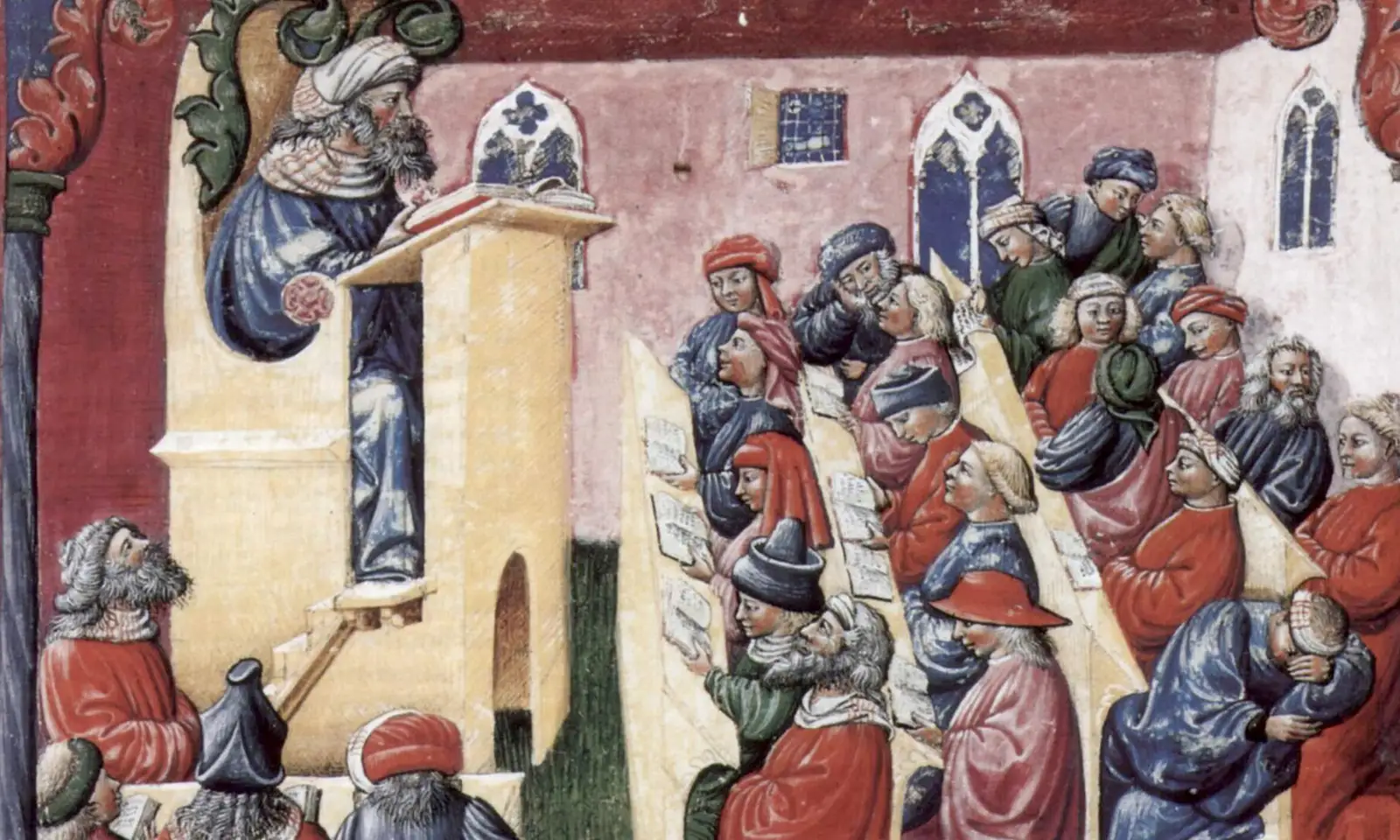
Medieval masters faced a much harder test. Beginning at Paris in the 1230s, the theology faculty held disputations de quolibet a quolibet: about anything, from anyone. Twice a year, during Advent and Lent, the university suspended ordinary lectures so that anyone present, whether student, rival master, or visitor, could put a question to a master who did not know the questions in advance. On the first day, arguments for and against each were aired on the spot. On a later day, the master “determined” the questions, putting them in order and giving his considered answers, which he typically then revised for publication.
Since AI makes written work unreliable, why not return to oral examination to find out who merits the position most?
Wright continues:
So I propose that every finalist for a tenure-track job, and every candidate for tenure, promotion, or contract renewal, should hold a quodlibet. Make it public and at least two hours long, before the department, students, and faculty from neighboring fields. Anyone may ask anything within the discipline, defined more or less broadly depending on institutional type. No slides, LLMs, or other crutches allowed on either side of the podium.
It’s a good idea.





Comments
On “Let’s Bring Back the Quodlibet”