
In Federalist 10, James Madison wrote: “Liberty is to faction what air is to fire, an aliment without which it instantly expires. But it could not be less folly to abolish liberty, which is essential to political life, because it nourishes faction, than it would be to wish the annihilation of air, which is essential to animal life, because it imparts to fire its destructive agency.” This is precisely why the First Amendment to the U.S. Constitution provides that “Congress shall make no law abridging the freedom of speech.” The Framers’ clear intent was first and foremost to protect political speech.
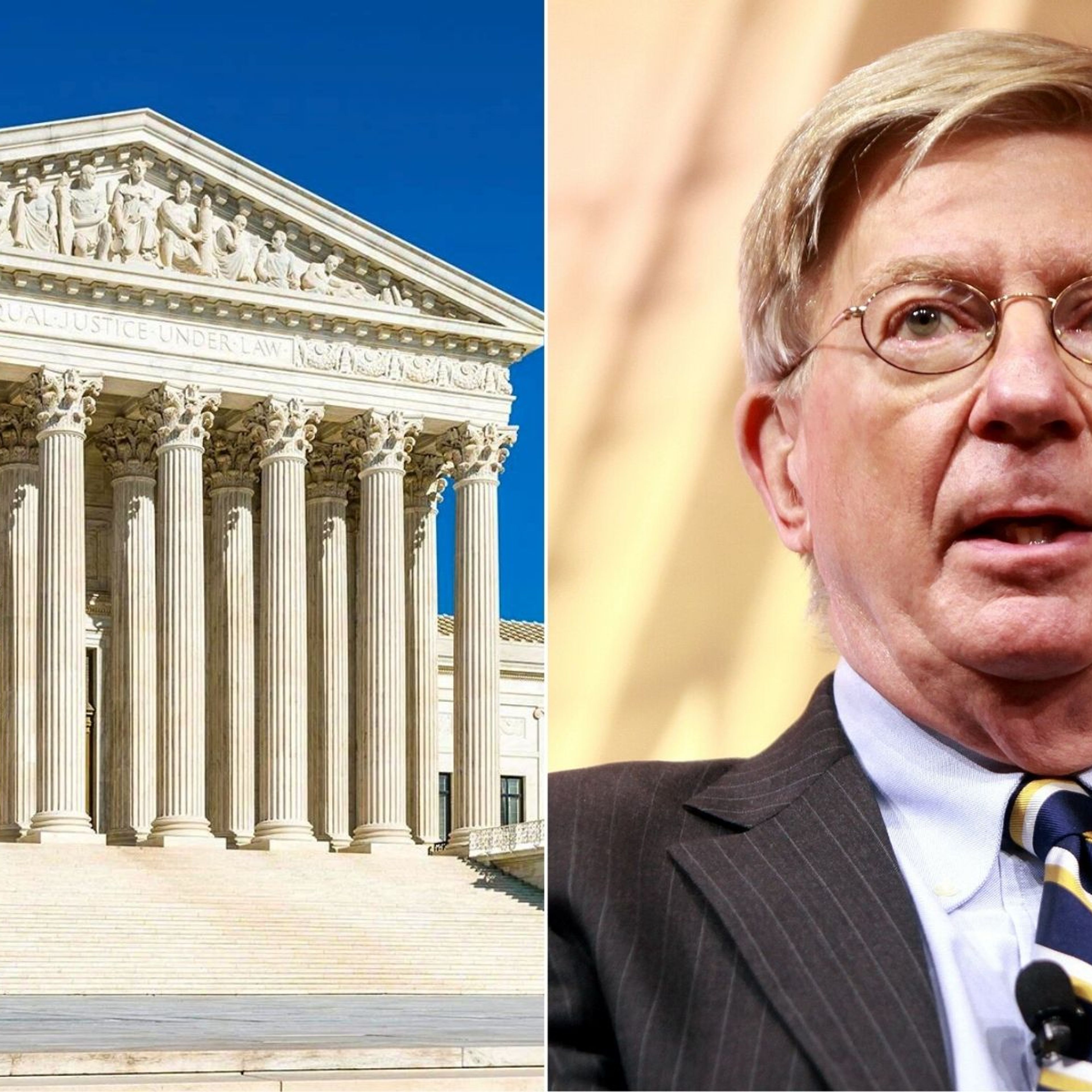
Today, in a rare summer session, the Supreme Court heard arguments as to whether it should overrule its previous decisions in Austin v. Michigan State Chamber of Commerce (1990) and McConnell v. FEC (2003) — specifically, in the latter case, the part that addresses the facial validity of section 203 of the Bipartisan Campaign Reform Act of 2002, more commonly known as McCain-Feingold.
In 2008, Citizens United, a grass-roots advocacy group, produced a movie called Hillary about Sen. Hillary Clinton, who was then seeking the Democratic presidential nomination. The FEC ruled that video-on-demand distribution of Hillary would violate McCain-Feingold, which, among other things, prohibits certain types of political speech within 30 days of a primary election if the speech is financed by a corporation. Citizens United is a not-for-profit corporation, but in the government’s interpretation of the statute, all corporate money is banned.
Once the Federal Election Commission (FEC) determines that a communication’s content constitutes express advocacy or its functional equivalent, the government can ban any corporation or union from engaging in that communication (unless the government designates the organization as a member of the “institutional media”). The government has argued that it can suppress not just Citizens United’s proposed video-on-demand distribution of Hillary, but also “putting [the movie] on its Web site or putting it on YouTube,” or even “providing DVDs . . . in a public library.” During previous oral arguments in Citizens United v. FEC, the government contended that its authority even extends to books.
When the government of the United States of America claims the authority to ban books because of their political speech, something has gone terribly wrong.
What has gone terribly wrong springs from Austin’s three fundamental premises (which predate McCain-Feingold): that the government has a compelling interest in equalizing the voices of participants in political discourse; that the First Amendment affords fewer rights to corporations than to individuals; and that prohibitions on corporate expenditures are necessary to protect shareholders. In attempting to accommodate these premises, Austin has created an unworkable campaign-finance framework that chills fundamental First Amendment freedoms, punishes core political speech with felony prosecution, and continues to generate lengthy, piecemeal litigation.
For similar reasons, McConnell’s validation of McCain-Feingold’s restrictions on “electioneering communications” also must fall. Both rulings are antithetical to the First Amendment, as well as the large body of American jurisprudence regarding the First Amendment, and they must be overturned.
Under Austin, the government can prohibit political expenditures by non-profit corporations (such as a chamber of commerce) that accept donations from for-profit corporations, because otherwise non-profits could serve as a “conduit” for the expenditures of for-profits. This rationale fails because the First Amendment does not permit the government to suppress a person’s speech simply because the speaker might utter another person’s ideas. If that were the case, the government would be authorized to prohibit the independent expenditures of individuals as well, because an individual could theoretically be used as an intermediary to funnel corporate money into the political process.
Austin also failed to recognize that McCain-Feingold’s prohibitions on corporate expenditures are an underinclusive means of removing “immense aggregations of wealth” from the political process because such prohibitions do not apply to wealthy individuals, such as George Soros and Peter Lewis, or to the “institutional media,” which encompasses some of the largest and most financially successful corporations in the United States, including General Electric, Microsoft, Disney, and TimeWarner.
Thus, while billionaires and media corporations are free to exercise their First Amendment rights to devote unlimited funds to propounding their political views, individuals of modest means are barred by state and federal law from pooling their resources to fund the political speech of ideologically oriented non-profit corporations. Austin does not achieve its stated purpose of letting the government equalize the voices of participants in political discourse; instead, it increases the advantage held by rich individuals and an arbitrary set of rich corporations. This destroys the purported rationale for Austin’s second premise: that the First Amendment protects political speech by corporations less than political speech by individuals.
Austin’s shareholder-protection premise is equally flawed. First, it does not make sense when applied to ideologically oriented non-profit corporations, whose supporters may freely resign their membership or withhold donations if they don’t like what the corporation is doing. Second, the overwhelming majority of for-profit corporations are small mom-and-pop businesses. Shareholders of these closely held companies do not need protection from themselves. Finally, shareholders in large publicly traded corporations are already protected by the marketplace, which allows them to buy and sell shares at will. If an investor in Exxon Mobil doesn’t like the company’s politics, the shareholder can sell the stock, receive fair market value, and reinvest the proceeds elsewhere.
Trying to finesse the issue by tinkering with the definition of “functional equivalent of express advocacy” will not offer the clarity that the First Amendment requires; the FEC’s actions have demonstrated that. And it cannot be denied that Citizens United has a constitutionally protected right to political speech.
Under the current legal regime, which allows for felony prosecution and imprisonment of the responsible officers, no corporation or labor union would dare opine on a candidate’s qualifications without checking with the FEC first. This in and of itself violates the First Amendment. But even those would-be speakers that seek pre-clearance from the FEC can scarcely hope to obtain the needed advice before the moment for political speech has passed. This past election cycle, it took the FEC more than two months, three draft opinions, and a series of unsuccessful votes to issue its only advisory opinion on the application of its “appeal-to-vote” test, which can determine whether political speech is prohibited under McCain-Feingold. That opinion was issued three weeks after the election.
The Supreme Court should reject the rationale for suppressing corporate political speech that was formulated in Austin and relied upon in McConnell. Groups like Citizens United must be allowed to disseminate their constitutionally protected political speech without first checking with FEC minders or otherwise risking imprisonment.
Enough is enough. It is time for the Supreme Court to strike down Austin and McConnell and restore liberty to political life.
— David Bossie and Michael Boos are president and chief counsel, respectively, of Citizens United.




Comments