
Theodore Dalrymple has an excellent article in today’s Wall Street Journal on l’affaire Francaise, from which several paragraphs on the nature of the French economy deserve excerption:
A Martian observing France dispassionately, without ideological preconceptions, would come to the conclusion that the French had accepted with equanimity a kind of social settlement in which all those with jobs would enjoy various legally sanctioned perks and protections, while those without jobs would remain unemployed forever, though they would be tossed enough state charity to keep body and cellphone together. And since there are many more employed people than unemployed people in France, this is a settlement that suits most people, who will vote for it forever. It is therefore politically unassailable, either by the left or the right, which explains the paralysis of the French state in the present impasse.
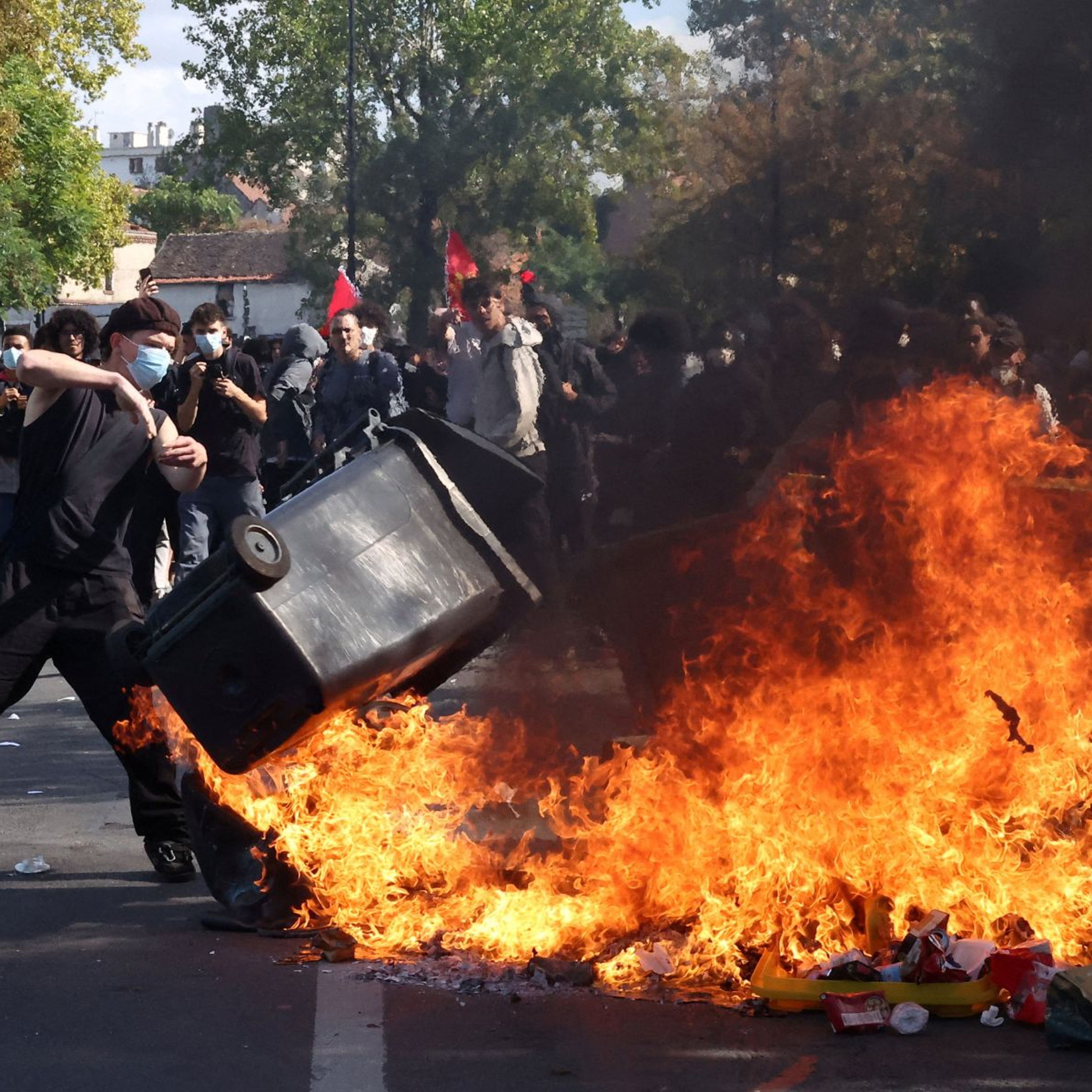
The only fly in the ointment (apart from the fact that the rest of the economies of the world won’t leave the French economy in peace) is that the portion of the population whom the interior minister, Nicolas Sarkozy, so tactlessly, but in the secret opinion of most Frenchmen so accurately, referred to as the “racaille” — scum — is not very happy with the settlement as it stands. It wants to be left alone to commit crimes uninterrupted by the police, as is its inalienable right…
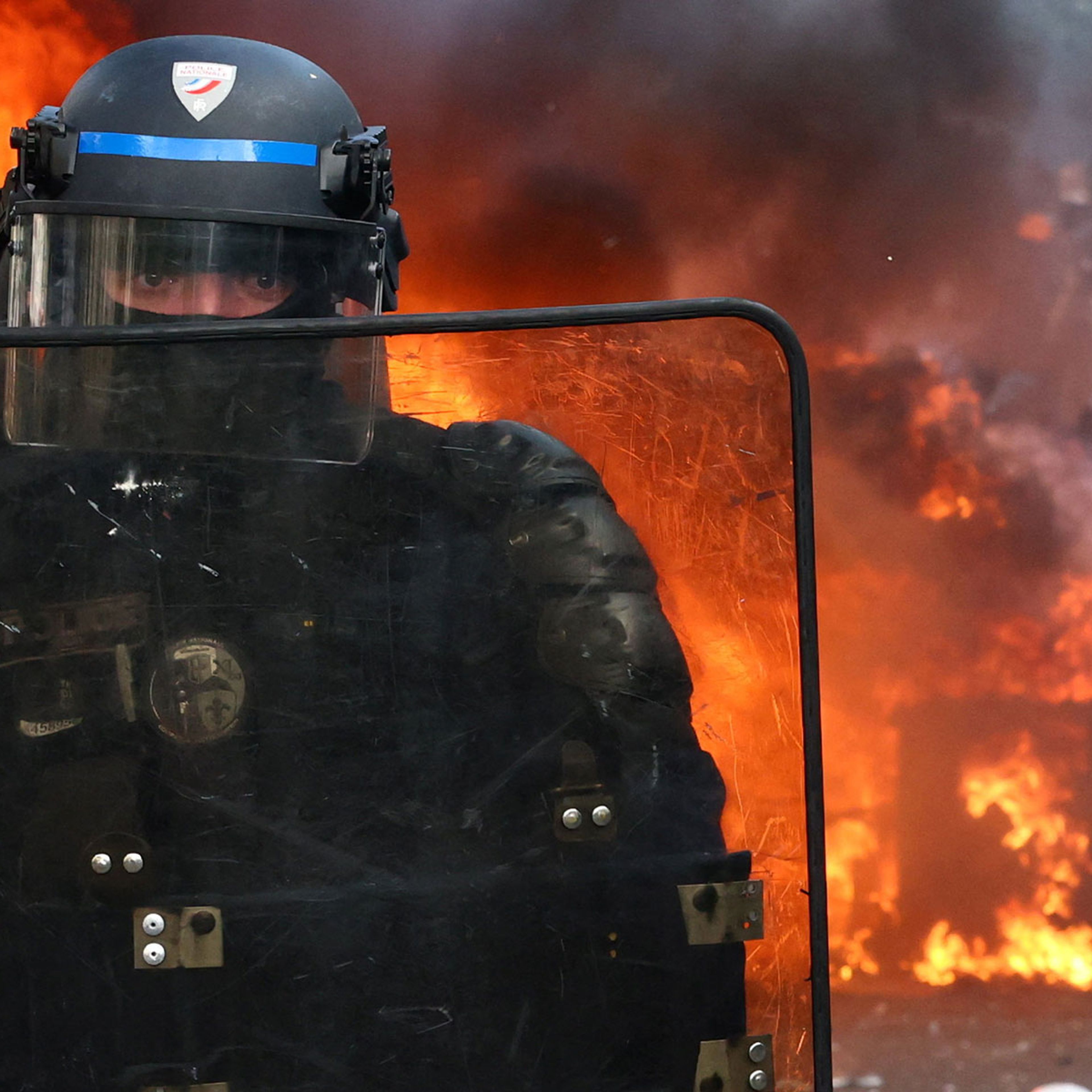
The French left, ever vigilant on behalf of the downtrodden privileged, won’t consider a reform of the labor market that might just help to integrate the racaille into French society. The French right, by contrast, wants to deal with the problem first by ignoring it — for, as the South African whites used to say about the rioting Africans, they are only fouling their own nest — and then, if the worst comes to the worst and the violence spills over to where the decent people live, by repressing it with force. Anyone who has seen members of the Compagnies Republicaines de Securité, the CRS, in the streets of Paris, even on a good day, will not doubt their willingness to obey orders with something approaching overenthusiasm. As one officer in the force reportedly put it, “The more difficult it is, the calmer we are.”
If push were ever to come to shove, the trains to the townships could be turned off, assuming they were not wrecked first by the inhabitants themselves, and the roads to the center of Paris (and other towns and cities) could be blocked with a few armored cars or a couple of tanks. A state of emergency could be declared, after which the CRS could go about its business in all calmness and serenity. The left would squeal and protest a bit, but secretly be relieved that, thanks to the CRS, the labor laws protecting their voters did not have to be changed after all, with the consequent introduction of “savage liberalism” into France.
Dr. Dalrymple also points out exactly what the stakes are for M. Sarkozy:
The current interior minister, Nicolas Sarkozy, is the first French politician to suggest some approach to the problem other than building more community centers made of concrete and named after great French poets. As a result, he is both hated and feared, and the rioters must hope that if they burn enough cars and kindergartens he will be forced to resign and thus lose his chance of winning the presidency and letting the CRS loose. This will enable “les jeunes” to return to the life they know and understand, that of criminality without interference by the state.
I hope that Tony Blair, who has presided over a subtle and gradual Frenchification of the British economy, is paying close attention.
Fans of Dr. Dalrymple can find his comments regularly at the blog of the Social Affairs Unit, where he posts under his real name, Anthony Daniels, along with many other cultured and humane authors.



Comments