
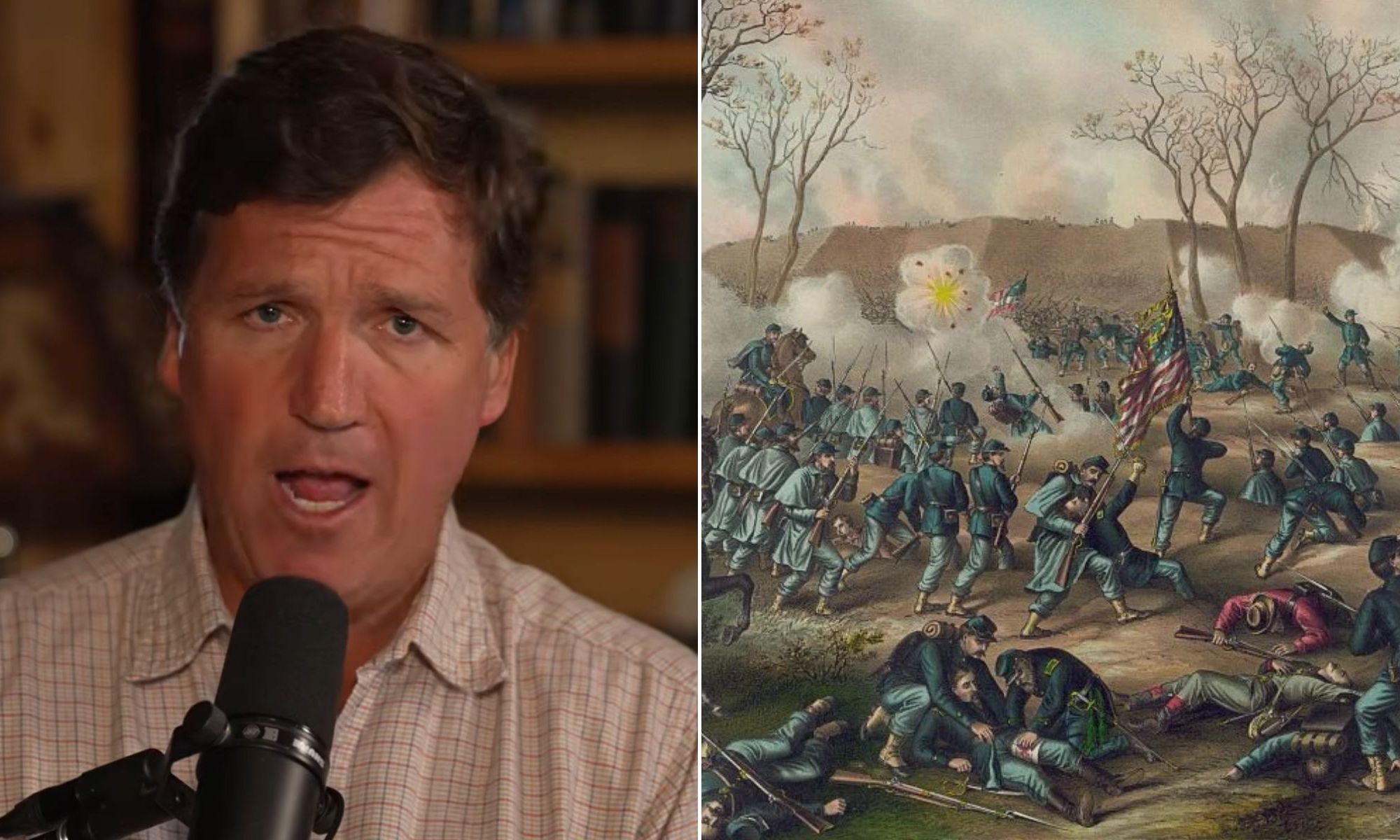
Andy notes the ridiculousness of Tucker Carlson’s claim that “unconditional surrender means foreign troops get to rape your wife and daughter.” Carlson’s claim makes more sense if you see history solely through the eyes of Nazi Germany. German women in 1945 did face a brutal campaign of mass rape when their country fought to the bitter end. Even then, however, that campaign was conducted by the Soviet Red Army — not by the armies of the Americans and other Western nations. Nor did we perpetrate mass rape in Japan, or in the South during Reconstruction, nor in any other American war. (Of course, rape, murder, robbery, and other abuses of civilians do happen in wars from even the best of armies, which is yet another reason not to send armies to war lightly. But there’s a huge difference between crimes that may or may not be punished by military superiors and an orgy of sexual abuse on a massive, state-sponsored scale.)
There are some broader myths about the concept of unconditional surrender. The phrase entered the common American lexicon as Ulysses S. Grant’s terms for the surrender of Fort Donelson in February 1862. It received much play in the Northern press at the time, due in part to the paucity of Union victories up to that time and in part because it fit neatly as a pun on Grant’s initials (which were themselves the product of a typographical error at West Point). Even then, Grant didn’t coin the term; it had been used by Andrew Foote, leading Grant’s gunboat support, at the preceding battle of Fort Henry, and the Fort Donelson ultimatum originated with Grant’s subordinate and old teacher, Charles Smith. It may also have reflected Grant’s particular and warranted contempt for Gideon Pillow, one of the Confederate commanders at Fort Donelson. In any event, demanding unconditional surrender of a fortification in a battle is rather a different matter than demanding it as the peace terms for an entire war.




Comments