
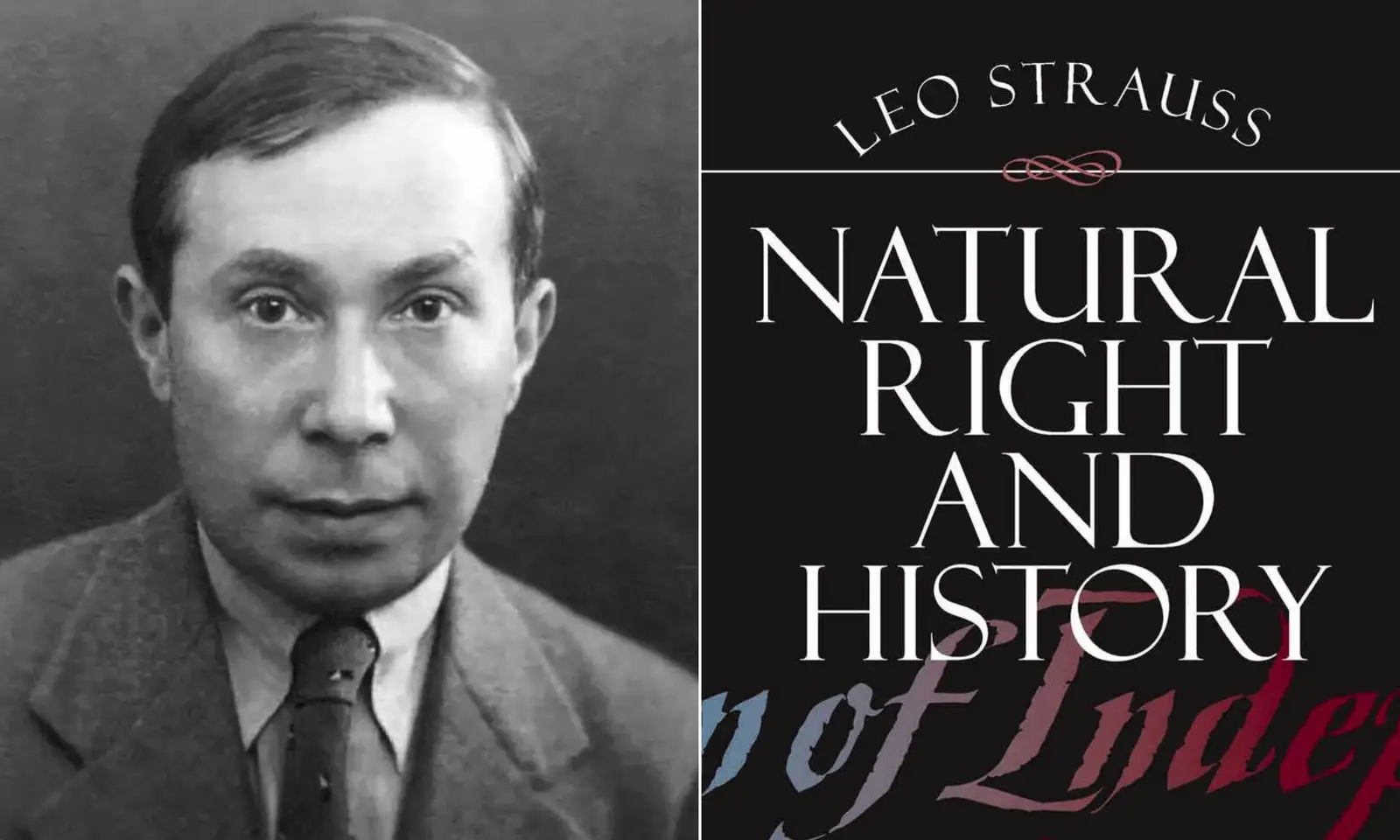
Conservatives will often talk about the point at which “everything went wrong” — for some, this is 2020, the year everything went woke. Many others will diagnose LBJ’s Great Society as the disaster defining our generation. For Leo Strauss, the German-American political philosopher, the West took a turn for the worse when Machiavelli sat down to write in the early 16th century.
Strauss’s thought, which is illuminated in his 1953 book Natural Right and History, is derived from his extensive genealogy of Western political thought. Natural Right presents Strauss’s attempt to recover the premodern conception of natural right, and with it, the entirety of reason, and the project (or “quest,” as he prefers) of political philosophy. Those Straussians who accept the thesis that modernity, brought about by Niccolò Machiavelli, is fundamentally flawed, are beginning to shape the future of American politics.





Comments
On “Natural Right and History: The Question of Strauss and the Postliberals”