
Mark Krikorian’s piece on the homepage yesterday explained why two executive actions, pursued by President Reagan and the first President Bush, don’t amount to anything like legal precedent for the president’s plan to give effective legal status to millions of illegal immigrants: They were much smaller in scale, despite claims to the contrary, and they tied up issues created by congressionally passed amnesties, rather than expanding an executive order. (Reagan’s so-called precedent also just deferred prosecution; it didn’t offer work authorization as Obama’s plan will.)
He calculated that the semi-relevant Bush 41 program may have granted legal status to about 140,000 people — since that’s the number who ended up getting green cards after Congress made recipients of the program eligible for them. Obviously not of the same scale as the presidents’ action. But the difference actually seems to be even more dramatic, Mark points out on the Center for Immigration Studies’ website: As of January 1991, eight months after the Bush executive action had been announced, it was reported that 44,000 people had gotten legal status through the program.
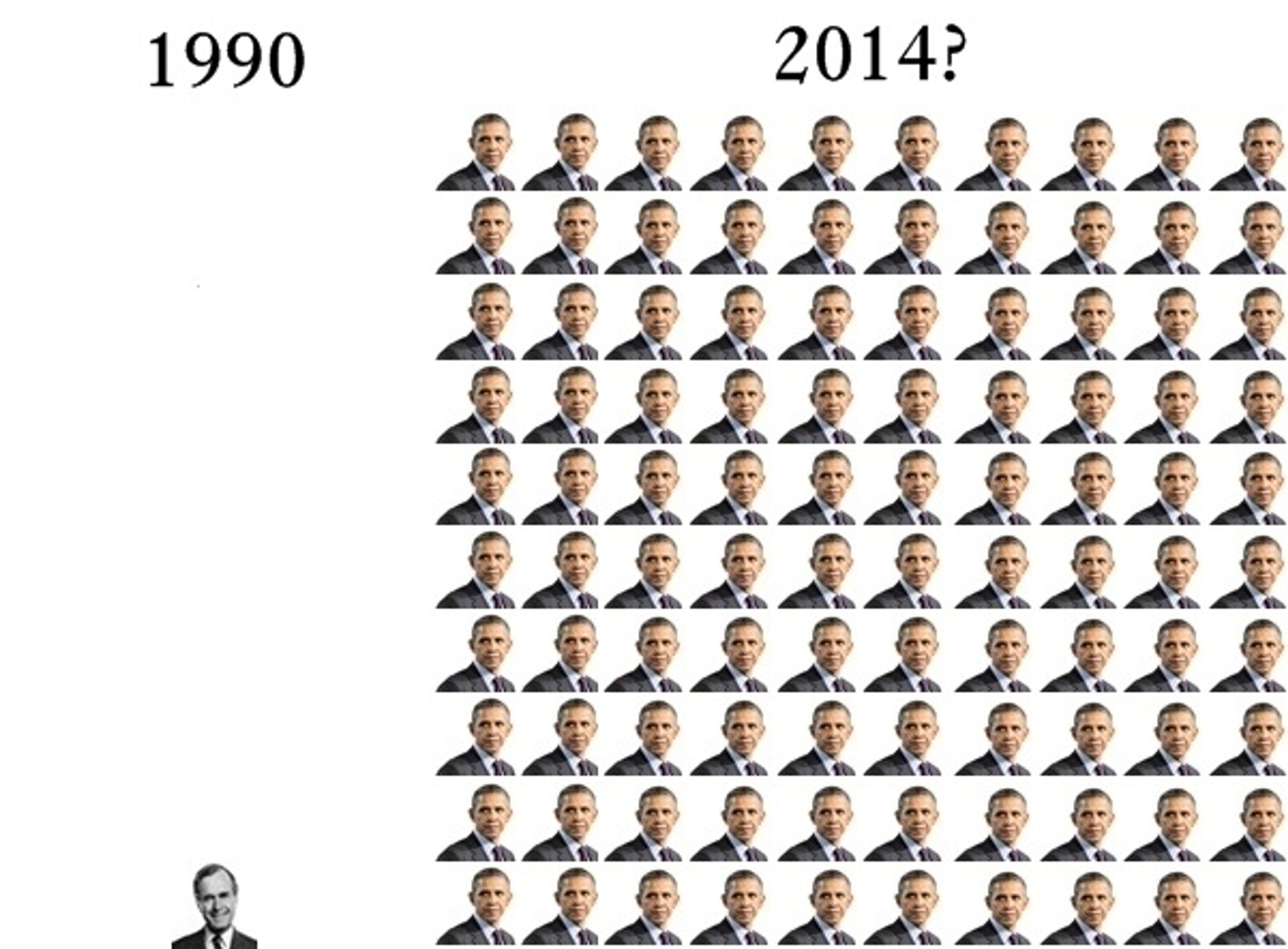
Even with a little wiggle room, Mark notes, this would make Bush’s program’s effect not much more than 1 percent of the potential scale of President Obama’s action, which is estimated to offer legal status to 4 to 5 million illegal immigrants.
Now, it’s possible that the president’s plans won’t be taken advantage of by all eligible, so this is not a precise comparison. But I’ve composed a sophisticated infographic to give readers a sense of relative scale:






Comments