
Three years ago yesterday, I wrote for the Corner a short reflection on Pearl Harbor, on the occasion of its 70th anniversary. Back then, the big conversation in Washington, D.C., was over looming budget cuts to the military. Some (including me) were warning that a hasty draw down of our military forces might not be the wisest move in an unsettled world. None of us had any proof that a smaller U.S. military would help contribute to global disorder, but it seemed a not-irresponsible claim in the light of history, including Pearl Harbor.
On that 70th anniversary day in 2011, none of us had heard of the Islamic State, no one thought that Russia might invade and partition part of Ukraine, Iran still seemed years away from a nuclear weapon, and there were hopes that China would still grow into a responsible great power role.
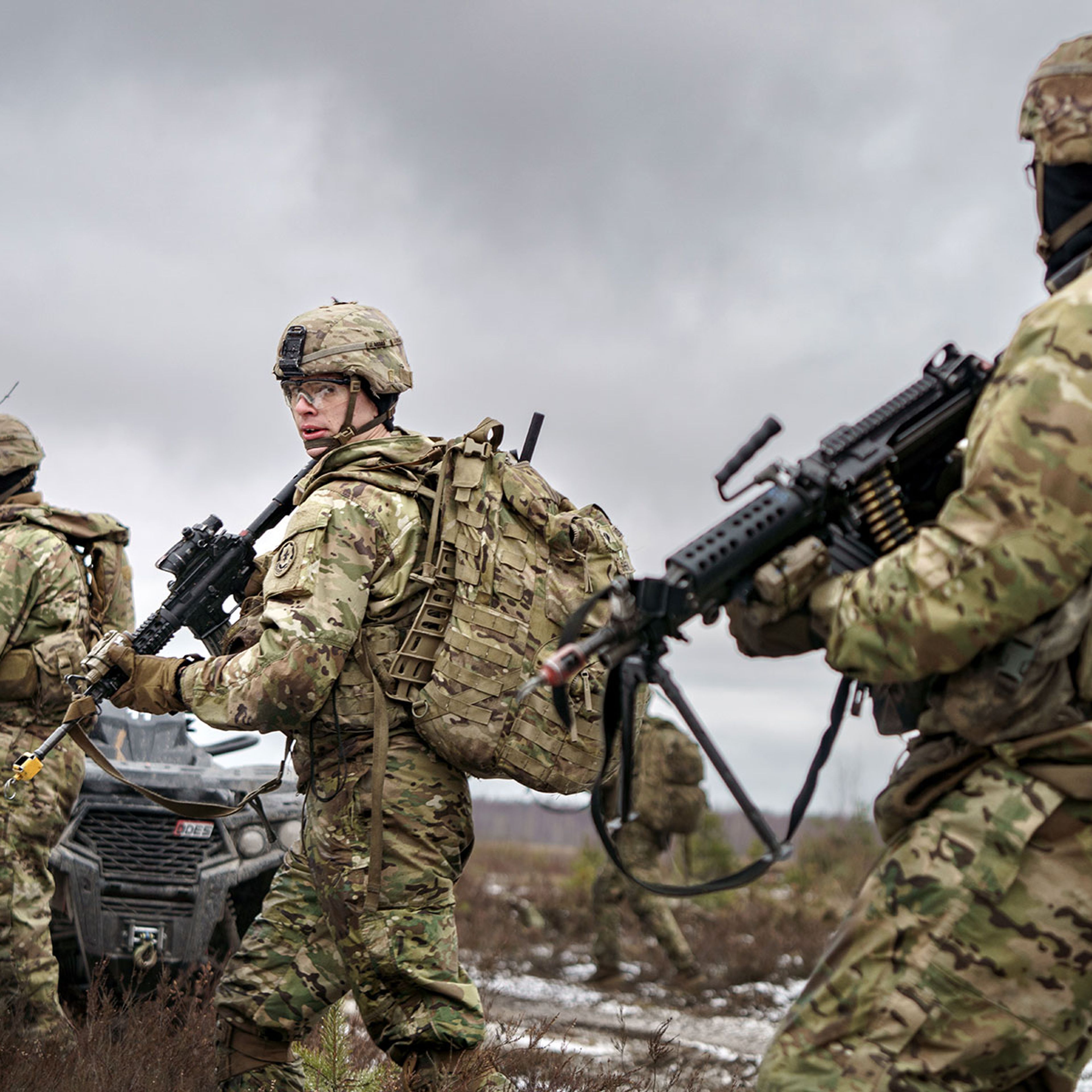
Just over a thousand days later, the world looks as unsettled as it has since perhaps the 1930s. Victor warned last week that war clouds appear to be gathering, in ways similar to 1914 or 1939. Other observers caution against tying oneself too closely to any historical prism, seeing them as less predictive than expressive of authorial prejudices. That may well be so, but it is undeniable that, from dramatic increases in terrorism to great power tension, there is more disorder and threat today in the world than even a few years ago. The question, of course, is how far these trends will develop, how unsettled our world will become, and how ultimately it will affect the United States.
Not all of this can or should be laid at America’s doorstep. But if precipitately withdrawing U.S. troops from Iraq abetted the bloody rise of the Islamic State and if Western irresolution in the face of Russian aggression led to further adventurism in Ukraine, then the lessons from past conflicts seem apposite. Part of this is the perception on the part of disruptive actors that Washington is distracted, unfocused, and exhausted, and thereby less likely to meaningfully involve itself in local crises. Part of it is the objective failure of U.S. policy to impose costs or develop imaginative and significant responses to regional unrest. Yet, like that sunny morning in Honolulu 73 years ago, the world was in a state of unrest (combat, actually) long before the Japanese bolt out of the blue that shattered America’s complacency.
Next year marks the 70th anniversary of the end of World War II. Should current trends continue, then we will be spending more time talking about coming conflict than commemorating the end of the world’s most devastating conflagration.




Comments