
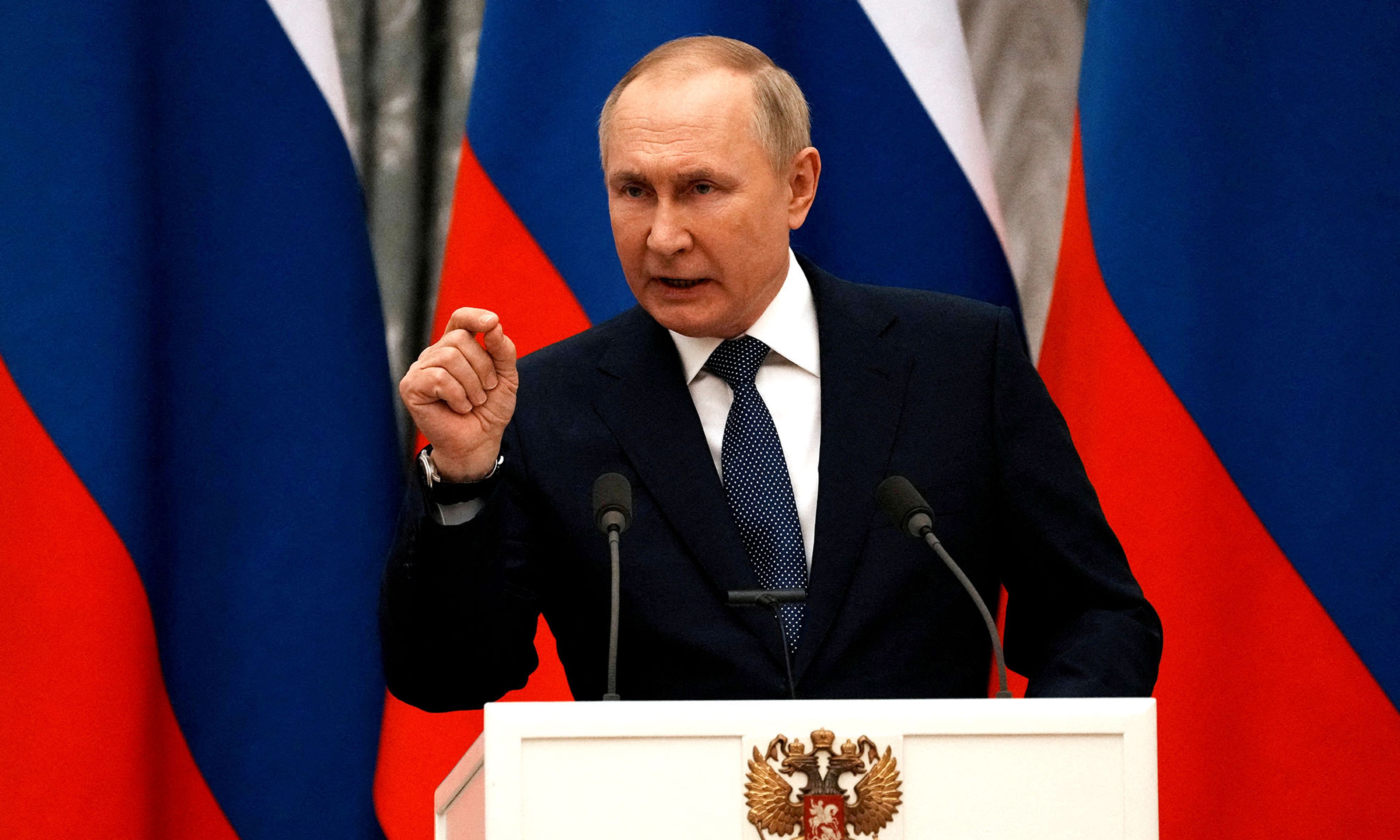
In world politics, the equivalent of getting “flipped off” is being personally sanctioned. There’s a standard set of penalties that a country’s sanction entails: travel bans, asset freezes, and bans on doing business with that country. When imposed by the U.S., these often have severe consequences and elicit the most fear. As an example, Fatou Bensouda — the Gambian former chief prosecutor of the International Criminal Court — had her credit cards canceled and bank accounts frozen almost immediately when she was sanctioned by the Trump administration in 2020, reflecting U.S. financial power. When imposed by other countries, the impact is rather less relevant and sometimes even a joke.
Russia is a case in point. Since its invasion of Ukraine, many Americans have been sanctioned by Russia for their criticism of Putin’s regime. Moscow’s sanctions list includes not only top officials — Joe Biden, Nancy Pelosi, Antony Blinken, and Jen Psaki — but also some familiar yet unusual figures, such as Hillary Clinton, Hunter Biden, Mark Zuckerberg, and George Stephanopoulos. That these names would join the heavyweights is rather absurd — a point not lost on the sanctioned. “I want to thank the Russian Academy for this Lifetime Achievement Award,” tweeted Hillary upon the news. Meanwhile, given the lack of a “Jr.” after Joe Biden’s name in Russia’s release, the White House interpreted the measures as applying to the president’s deceased father. “May he rest in peace,” said Psaki.
Odder still, the lists include many who — until being sanctioned — were not widely known or, at least, not connected to Russia and politics. These include Ryan Roslansky, the head of LinkedIn; Brian Moynihan, CEO of Bank of America; Bianna Golodryga, a journalist at CNN; Eddy Acevedo, chief of staff at the Wilson Center (a D.C. think tank); and Horacio Rozlanski of Booz Allen Hamilton, a management consulting firm in McLean, Va. Just last week, Russia extended the list to nearly all members of Congress. Most have little, if any, apparent influence on Russia policy, yet they were included anyway. “There goes my Spring Break plans!” said Representative Brendan Boyle (D., Pa.), on learning that he couldn’t travel to Russia. John Curtis (R., Utah) and Debbie Dingell (D., Mich.), meanwhile, called the sanctions a “badge of honor.”
The actual impact of these measures is negligible, if nonexistent. Nobody expects Hillary Clinton, for instance, to buy herself a dacha near Moscow anytime soon, though one can’t rule out Hunter Biden’s eyeing the board of Gazprom, I suppose. For most Americans in public or corporate life, being on that list is all upside. And since it seems that simply tweeting against Russia is enough to get one “sanctioned,” it’s never been easier to join this club.
So apply today.

Comments