
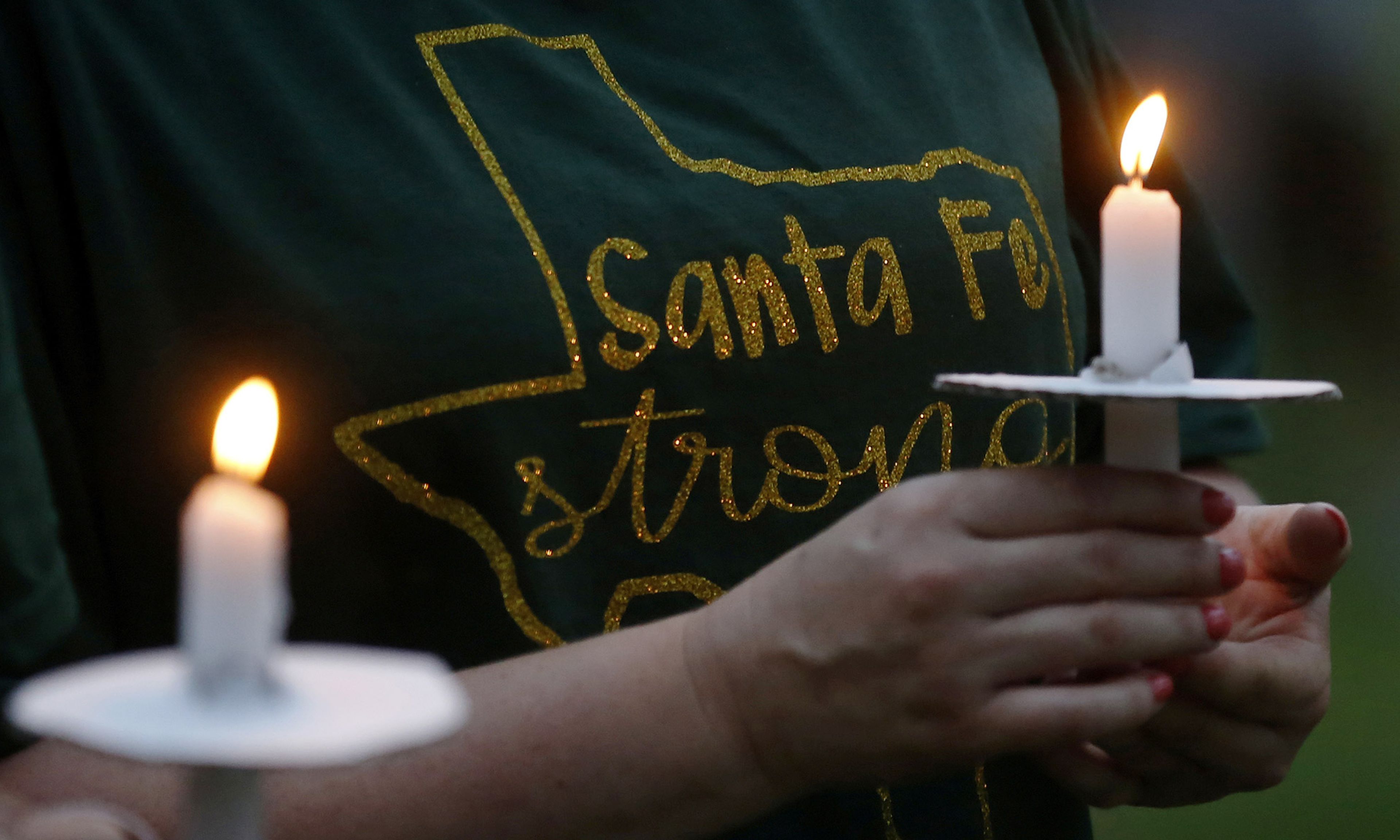
Today’s Morning Jolt discusses school shootings and the common difficulties of the teenage years, and I thought of another aspect that I forgot to include — the degree to which our society, in its reaction to violence, inadvertently rewards that violence.
Every teenager wants attention, to be recognized, to feel like they have value that other people recognize. We generally teach our children that violence doesn’t solve problems, or at least we try to teach them that violence is not an acceptable way to get what they want. But . . . do we really reinforce that teaching with our actions?
We could argue that our society has deemed certain kinds of violence acceptable or not really worth any serious denunciation (COUGHChris BrownCOUGH), but I’m thinking more about violence and threats as a method of getting attention. Usually, violence works. The world has oodles of activist groups, and thankfully fewer terrorist groups. Terrorism and threats don’t always work in achieving a group’s goals, but they ensure a group cannot be ignored.
Think of the way that our society responds to threats of violence over art and images that Muslims deem blasphemous. We’ve seen it both before 9/11 (Salman Rushdie’s The Satanic Verses) and afterwards — cartoons of Muhammad, the film Innocence of Muslims, Theo Van Gogh, Charlie Hebdo. Think about all the times you’ve heard about or walked past a protest and not given it a moment’s thought. A non-violent protest is easy to ignore, but a protest that has a decent chance of leading to violence is impossible to ignore.
A non-violent teenager is easy to ignore. A violent teenager is impossible to ignore.
Almost all of us encounter situations that make us angry, but we restrain ourselves from lashing out through violence for a lot of reasons – we believe that it’s morally wrong, we’re afraid of the moral or legal consequences, we recognize that our violent impulses are not aligned with the kind of person we want to be. Perhaps another factor is infamy — no matter how angry we are in the moment, we would be mortified to be remembered as “that maniac who tried to hurt all those people.”
But for a certain segment of angry young men, infamy isn’t a disincentive; it’s the goal. School shooters are hated, but they’re remembered, they’re feared, everyone wonders about what motivated them. They’re famous. Their experiences and pain aren’t just random occurrences in a cruel world; they’re key clues in the run-up to a horrifying crime. No doubt many shooters believe that through their wicked actions, they’re forcing everyone else to belatedly care about what happened to them — even if, as I write in the Jolt, the pains and struggles of their lives are usually extremely common in the life of American teenagers.
The question for news media, both national and local, is, “How do you cover a school shooting without providing any inadvertent glamorization of the shooter — or creating a perception that the troubled life of a shooter is more worthy of study and attention than the lives of their victims?”





Comments