
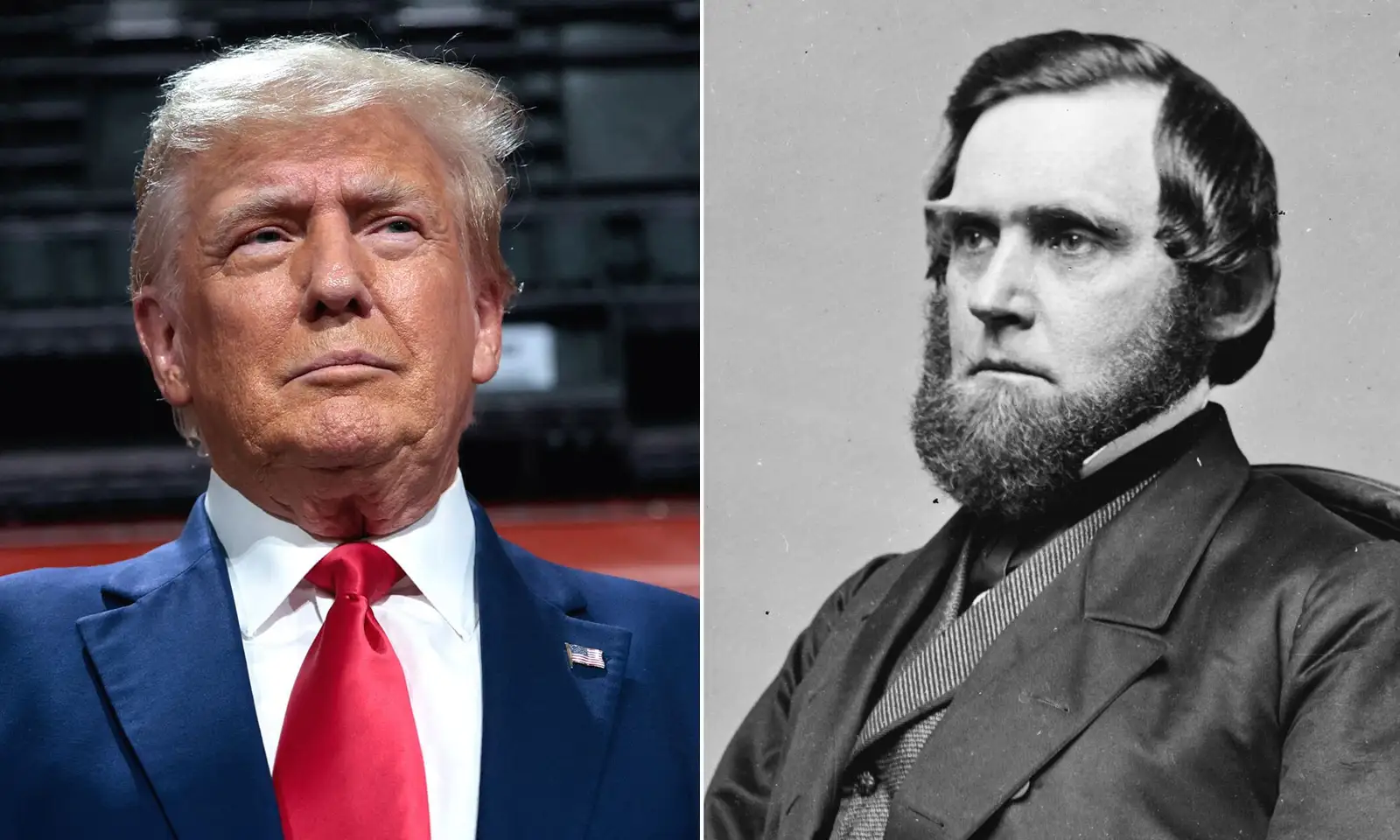
The Supreme Court hears arguments Thursday to decide whether to disqualify Donald Trump from being president again. The theory pursued by the Colorado Supreme Court is that Trump “engaged in insurrection” within the meaning of Section 3 of the 14th Amendment. The core problem with this theory — even aside from questions of whether and how courts can adjudicate such issues — is that Trump did not engage in the January 6 riot at the Capitol, whether or not that qualifies as an insurrection.
I’ve explained previously at length why that’s my conclusion from reading Myles Lynch’s scholarship on the contemporaneous precedents applying Section 3, as well as from reading the 1867 legal opinions of then-attorney general Henry Stanbery. (Section 3 also has an “aid and comfort to the enemies” of the United States provision, but it wasn’t the basis for the Colorado decision and runs afoul of the narrow definition of “enemies” in use in the 1860s, so I’ll focus here on the “engaged in insurrection” language.)



Comments
On “Section 3 Disqualification and the Cases of John Floyd and Emerson Etheridge”