
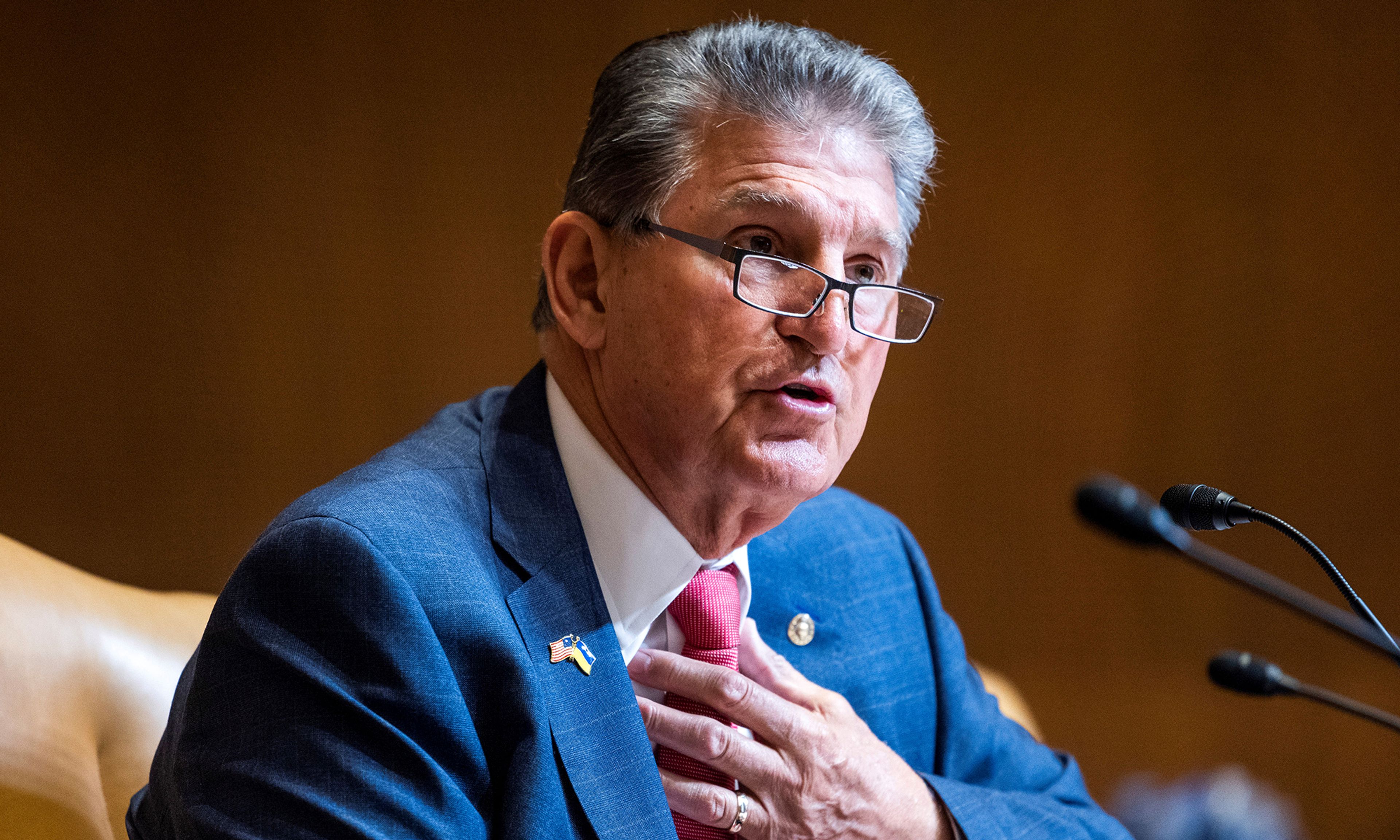
The bad joke that is that the Inflation Reduction Act is a gift that keeps on giving. But sadly for Senator Joe Manchin (D., W.Va.), he’s the butt of this joke. It was he who made the passage of this Orwellian-named statute possible, presumably because he believed the false advertising of it as means of reducing the budget deficit reduction. Of course, the assertion that this horrid mix of massive showering of subsidies with pharmaceutical price controls will reduce inflation and the deficit was laughable from the get-go.
Manchin was utterly fooled by his Democratic colleagues.
First, even assuming, wrongly, that the legislation’s hike in corporate tax rates will raise enough revenue to pay for the subsidies, the result is still not deficit reduction. Realistically, the statute’s hideous 15 percent corporate minimum tax is unlikely to raise even that much revenue. As I’ve often said, raising the corporate income tax is one of the worst and most distorting ways to raise revenue. Such tax increases reduce capital investment and, in turn, lower growth and, eventually, even government revenues.
As David Henderson reminds us:
The 15 percent tax is on corporate income without some of those deductions. One major such deduction is for corporate investment. Under the tax law, companies can “expense” investments, taking a deduction for purchase of capital in the year that they made the purchase. But in their financial statements, they must depreciate the asset they purchased over the life of the asset. The 15 percent tax is applied to their income as reported on their financial statements rather than on their income minus completely legal deductions.
Ironically, this provision will hurt manufacturers. Democrats in recent years have claimed that they want to encourage manufacturing in the United States. But those tears for lost manufacturing have now shown themselves to be crocodile tears.
But I guess this is on Manchin. It’s not as if there isn’t loads of literature on the impact of raising the corporate tax on the economy and revenue.
Second, according to some of the messaging around the Act, the deficit reduction was premised partly on the dubious idea that the IRA was part of the “deal” surrounding it. We were told, for instance, that the IRA would be even more deficit-reducing thanks to an agreement to put a separate bill on federal permitting up for a vote. That logic doesn’t hold water. Bills and their effect on the deficit need to stand alone and can’t be dependent on another bill down the road. That’s true even if a permitting reform meant to streamline the process for more than Manchin’s 300-mile gas pipeline from West Virginia to Virginia would be incredibly good and have partisan support.
Unfortunately for Manchin, predictably, some Democrats have already voiced their opposition to that part of the deal. As a result, it may never happen. In truth, the deal as it seems to be agreed upon is no more than cronyism if it only applies to one project. But I’ll leave it to others who know more than me about this issue to weigh in.
Finally, President Biden will now add $330 billion to the deficit by forgiving $10,000 of debt (taken voluntarily by students and their parents) for each borrower with an annual income below $125,000. As Dominic Pino brilliantly puts it:
The idea that Democrats somehow turned into deficit hawks was always ridiculous, but to fully undo the supposed deficit reduction just over a week after the reconciliation bill was signed into law shows true shamelessness.
I hate guilt by association, but Manchin deserves some shaming. After all, he happily voted for the American Rescue plan, which played a prominent role in both the deficit size and this inflation we are facing.
As I noted on Friday: if the polls are correct and 60 percent of Americans truly want “major” government reforms and distrust the government, this unfortunate political theater and favor trading won’t help.






Comments