
My longstanding, oft-stated preference for DC movies over Marvel movies is best summed up by a Sonny Bunch Washington Post piece from last year. The Zach Snyder–led enterprise actually tried to imagine how the people of the world would respond if it learned they were not alone, and gods and demons walked among them. The answer — echoing with what we’d imagine if we tried — can be pretty dark. You can imagine the shock, the fear, the awe, and even the worship. In its best moments (especially the opening sequence), the much-maligned Batman v. Superman shows the helplessness and terror that mere mortals would fear and establishes the motivations for Batman to defend his city from what seems like an overwhelming and potentially extraordinarily dangerous threat.
That’s a heavy intro to a review of Shazam! — a movie advertised as much, much lighter fare. And it is lighter. It’s laugh-out-loud funny at multiple points, and the heavy points of the plot aren’t truly related to the awe and wonder of the metahuman phenomenon. The central characters are kids, and they’ve all grown up in the metahuman era. The existence of flying people is normal for them, and they’ve got the memorabilia to prove it (one character’s prized possession is a flattened 9mm round that was allegedly fired at Superman). So when Billy Batson gets his powers, the shock isn’t so much “Wow, how did this happen?” It’s more, “Wow, this happened to me!” And there is an interesting plot point centered around the frustration of a different character that it didn’t happen to him.
The heart of the movie, however, isn’t the story of Billy’s quest for power but rather his search for family. He’s a foster kid, alone since the moment he got separated from his mother at a carnival, and he’s dedicated to tracking her down, assuring her that he’s safe, and reuniting with his “real” family. So he shuns his latest foster family — a faith-filled, blended group of misfits who begin each meal by putting their hands together at the center of the dinner table and praying a touching and sincere prayer of thanks — and keeps looking for his mom.
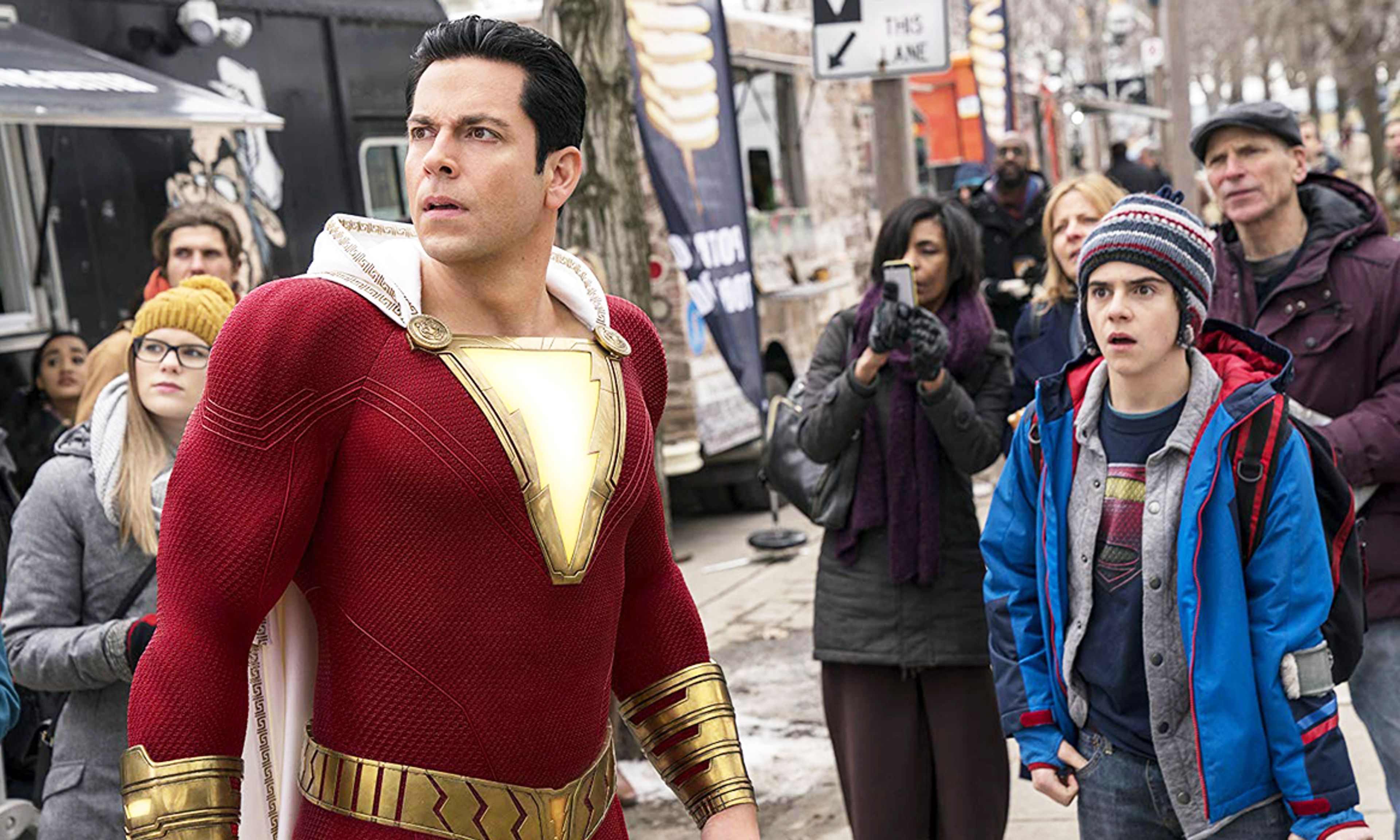
Billy’s transformation into a superhero changes everything and nothing. It changes everything about his physical power, but it does absolutely nothing to his character or his motivations. He’s still exactly the same foster kid with exactly the same troubles. There are an exuberant (and hilariously funny) series of sequences as he tests the limits of his new powers, but when the excitement fades, it’s clear that he’s the same old Billy. He uses his powers to hustle a few bucks from an adoring public, runs from real danger, and basically acts exactly like a troubled 14-year-old. (By the way, Zachary Levi does an excellent job portraying superhero-Billy as confused, exultant, angry, and sometimes cowardly.)
But the best part of “Shazam!” is Billy’s foster family. His sidekick, Freddy, is a wisecracking, social-media-savvy young teen who initially seems to handle his disability (he uses a crutch to walk) with aplomb. The foster parents are warm and loving and wise enough to know that all they can do is try. We get to know each of the other kids well enough to know (even if just fleetingly) that they have their own issues. Look, I get it that this is a movie that is meant to be enjoyed, and it’s not intended as a vehicle for exploring Deep Issues about blended families, but the family that director David Sandberg puts together is real enough to give one of the final twists of the movie some actual emotional punch.
Outside of the seemingly once-in-a-lifetime achievement of Christopher Nolan’s Batman trilogy, superhero movies aren’t generally works of art. And the cultural importance placed on them (how many think-pieces can these movies inspire?) far, far outweighs their actual content and substance. They’re immensely popular not because they’re generally meaningful but because they’re just plain fun. In fact, I don’t think I’ve actively disliked a single superhero movie since the beginning of the modern Marvel/DC era. But sometimes a superhero movie stands out from the crowd. The underrated Man of Steel did, in part because it just got the gravity of the Superman introduction. Wonder Woman portrayed a fascinating collision between heroic idealism and man’s fallen, broken nature. Marvel’s Captain America movies are a cut above the rest in part because Chris Evans is just so darn good at giving his character a thoughtful moral center. Shazam! belongs in that exalted company. Go for the sheer joy of it, but don’t be surprised if it touches you more than you thought it might.






Comments