
My column today is headed “A royal touch, &c.” Whose royal touch? That of King Willem-Alexander, of the Netherlands. His reaction to the antisemitic attacks in Amsterdam a few weeks ago was apt. In my column, I also discuss the Chaco War, column-writing, sports, and so on. Here.
Let’s have some language, right here in the Corner. A reader writes,
Will you please consider addressing the mistaken commonly used phrase “I wanted to . . .” and explain that the person is actually asking for something in the present? And should say “I want to . . .”?
Only one of my language pet peeves. Too many for my own good. Thank you.
I’m afraid I’ll have to disappoint. “Becky Sue, I wanted to ask you whether you would go to the prom with me.” That has the sense of: It has been on my mind. So now I am expressing it. This is both common and A-OK, in my book.
Another reader writes,
Do you have any idea how or why “give,” “gave,” “giving” became “gift,” “gifted,” “gifting”? My theory is that it started with a “gift letter” that a parent or other benefactor must provide along with a capital gift to a mortgage applicant.
Once more, I will have to disappoint. It is utterly common — practically de rigueur — for nouns to become verbs in English. You can give someone a hard time, or give him an explanation. When you gift him something — you have given him something as a gift. I can see where the impulse comes from.
My dad strongly disliked the verb “to golf.” When he was growing up, you “played golf”; you didn’t “golf.” But practically every noun is a candidate for verbdom.
A reader writes,
Thanks for gisting your conversations.
Often, I write a blogpost summarizing, or giving highlights, of my Q&A podcast. Have you ever heard the verb “to gist”? I hadn’t.
One more reader:
Jay:
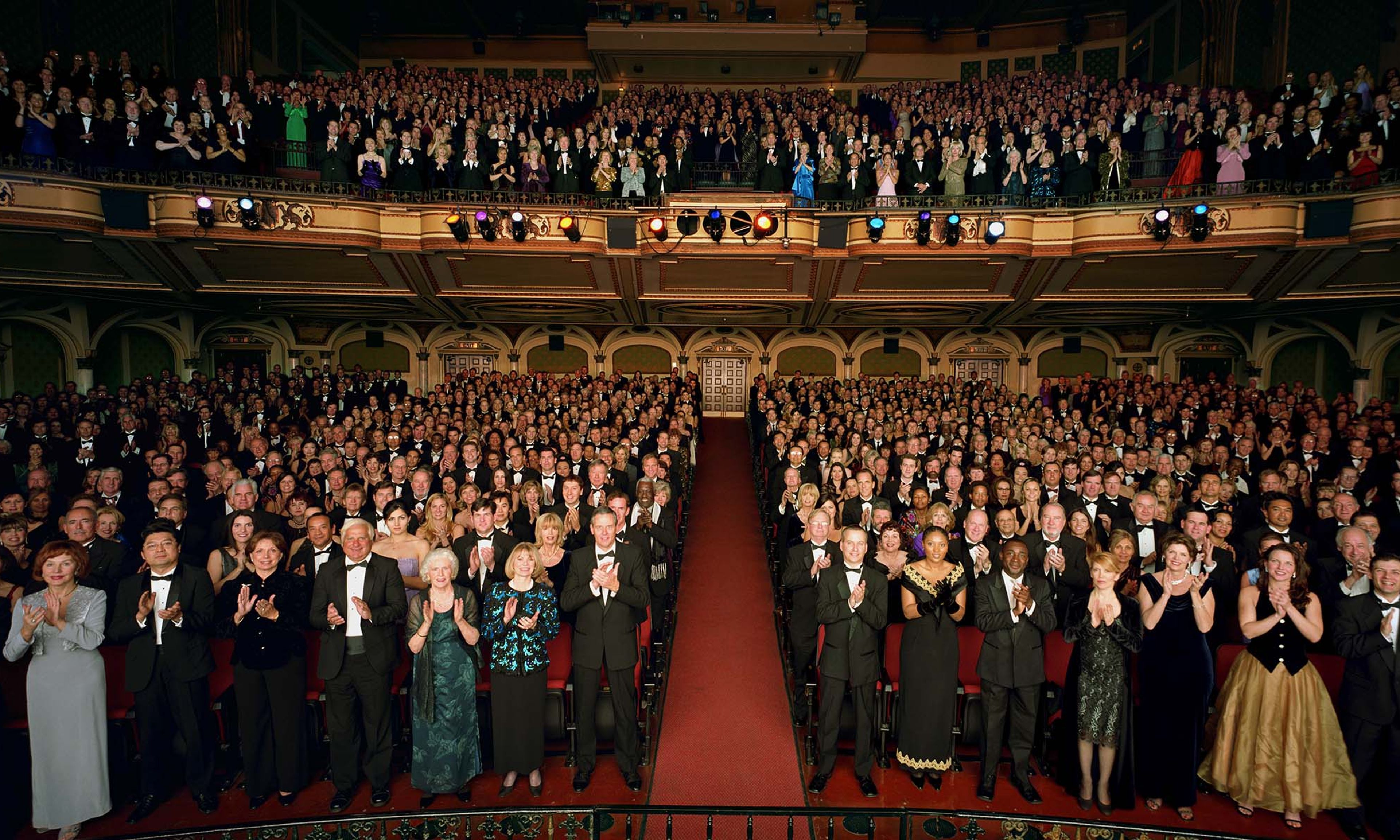
. . . I enjoy attending concerts, and because I am an upstate New Yorker, those I go to are usually at the Saratoga Performing Arts Center (the Philadelphia Orchestra) or Tanglewood (the Boston Symphony). I don’t have a great ear, and I can’t really say whether a concert has been great, good, or mediocre. I’m just happy to hear it in person. However, every concert — every concert — receives a standing ovation. Is that now the norm? I haven’t been down to see the New York Philharmonic in years, but I wonder — is it the same there and elsewhere? If so, how does an audience react to a truly great performance?
Great question. You have heard of “grade inflation.” There came a time when a B was something like an insult. There has been standing-ovation inflation too. Maybe we have reached the point where a normal ovation, instead of a standing one, is an insult.
If a standing ovation is normal — standard — what can an audience do to express extra appreciation? Jump up and down?
That said, I can say this about New York (City): a standing ovation is still accorded to a minority of performances.
Thank you to all readers and correspondents.






Comments