
The other day, Jonah mentioned Standpoint, the excellent new British magazine. I enjoyed its comprehensive appreciation of Conor Cruise O’Brien:
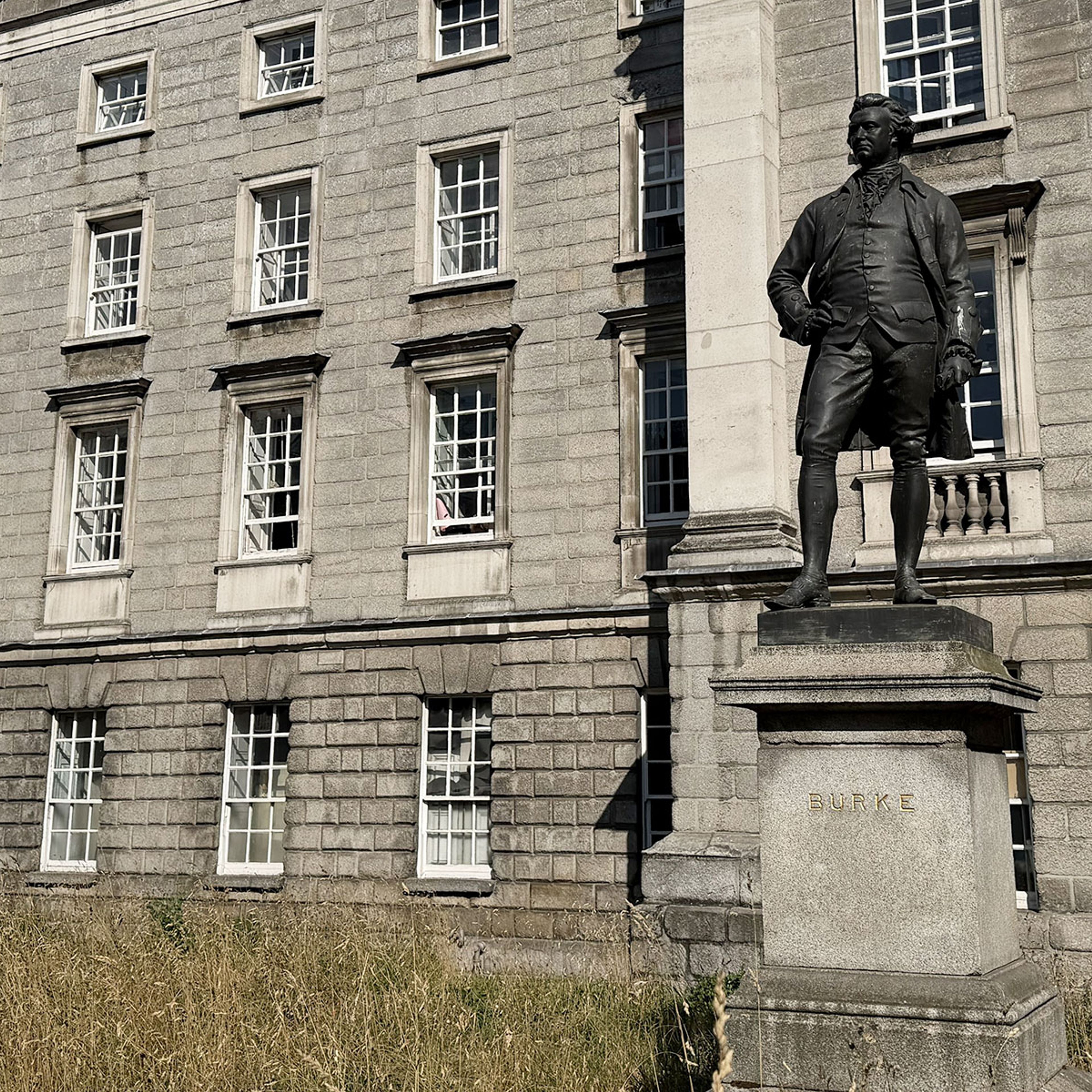
While politics and journalism claimed more of his time than academe, his scholarly preoccupation with Edmund Burke grew with time, and kept pace with his own odyssey from the Left. The Great Melody: A thematic biography of Edmund Burke (Sinclair-Stevenson) appeared in 1992 as the final instalment of a process that had begun with his seminal introduction to the 1968 Penguin Classic edition of Reflections on the Revolution in France. It is impossible not to sense O’Brien’s emotional identification with his subject’s idiosyncratic Irishness, his Catholic background, his political progress, and his wish to command a world stage; the first person singular intrudes far more persistently than in most biographies. By the time he wrote it in The Great Melody, O’Brien fully identified with Philippe Raynaud’s definition of Burke’s stance regarding the Revolution: “à la fois libérale et contre-révolutionnaire.” This identification unbalances the book’s structure at some points, and allows obsessive reiteration; it also enhances it as an instalment of intellectual autobiography. The epilogue, placing French and Russian revolutions in direct line, shows how far O’Brien had travelled from the marxisant fashions of his youth. But the achievement of the book is to unite the “liberal” Burke (on India, America, Ireland) with the “counter-revolutionary” Burke on the totalitarianisms bred by abstract theory. In some ways it reads like an anticipation of the Memoir (Profile Books, 1998) of his own life he published a few years later.





Comments