
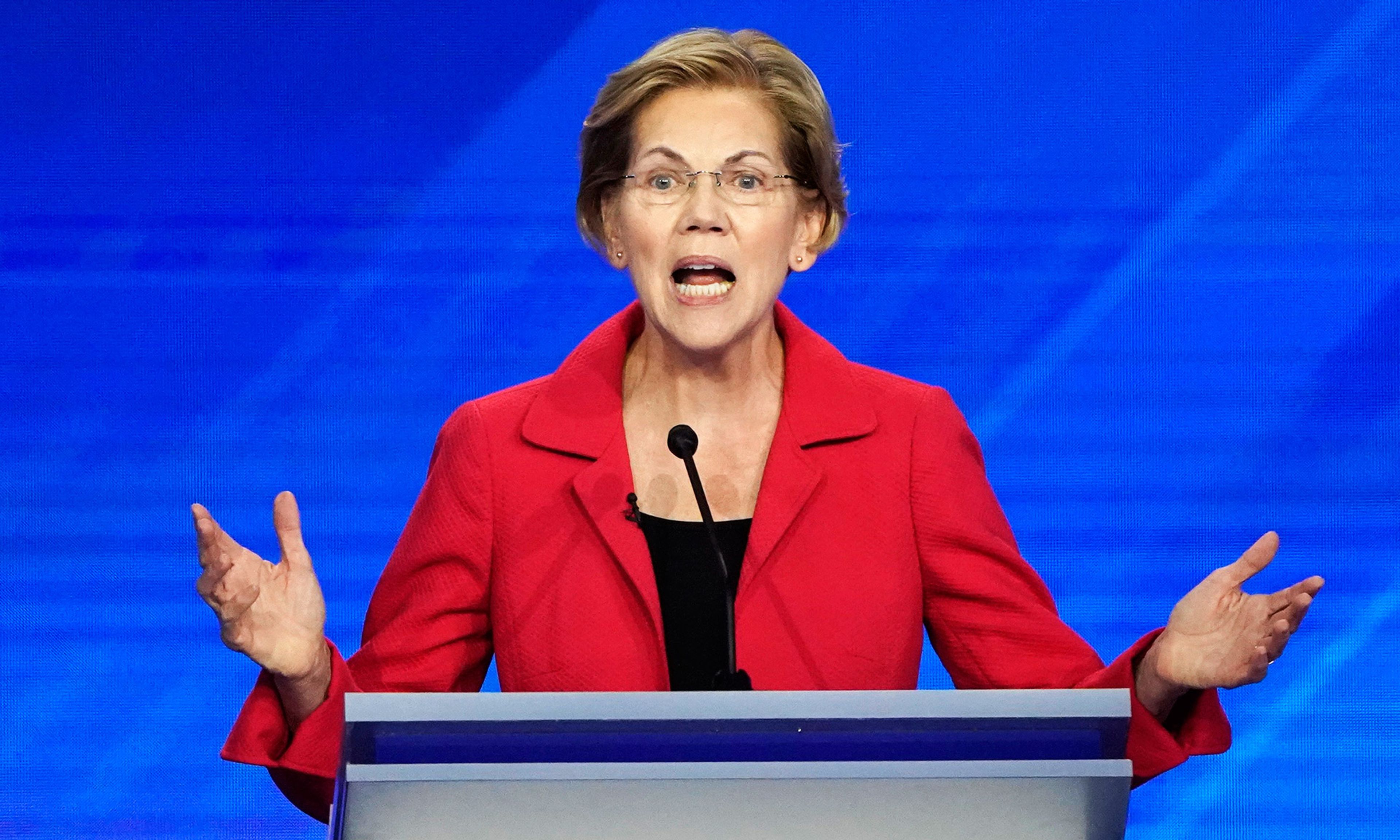
His latest column imagines a future in which Elizabeth Warren wins the next presidential election.
Warren won convincingly. The Democrats built a bigger majority in the House, and to general surprise, won a slim Senate majority of 52 to 48.
After that election, the Republicans suffered a long, steady decline. Trump was instantly reviled by everyone — he had no loyal defenders. Only 8 percent of young people called themselves conservatives. Republican voters, mostly older, were dying out, and they weren’t making new ones. For the ensuing two decades the party didn’t resonate beyond its white rural base.
It could happen! But is it plausible? At the end of October 2008, President George W. Bush had a 25 percent approval rating in Gallup, well below anything Trump has recorded as president. The Republican party was associated with an economic meltdown and a foreign-policy disaster. Eight years later, it won elections for the House, the Senate, and the White House.
Brooks’s column goes on to imagine a recession that starts in 2021 and Democratic infighting that sinks Warren’s agenda and culminates in her losing the party’s nomination in 2024. Under those circumstances, the Republican party would probably take back one or both chambers of Congress in 2022.






Comments