
As our Isaac Schorr reported from the courtroom, prosecutors from special counsel John Durham’s office have described the trial of Democratic lawyer Michael Sussmann as a case about “privilege.” It is a clever play on words.
First, there’s the attorney–client privilege. Sussmann is accused of lying to the FBI to conceal the fact that he was working for the Hillary Clinton campaign when he urged the bureau to investigate what he claimed was a secret Trump–Russia communications back channel. Implausibly, Sussmann’s defense claims he was not really representing the campaign’s interests when he peddled the back-channel story, even though he billed the campaign for his time, and even though the campaign has stymied Durham’s attempts to gather relevant documents by asserting the attorney–client privilege to shield its communications.
Then there’s the insider privilege enjoyed by politically connected former government officials who become hotshot Washington lawyers.
If you, an ordinary citizen, contacted the FBI to report a crime, you’d have to speak to whoever the duty agent was that day, or you’d be told to go online and fill out a form. They’d then get to you . . . whenever they got to you. But when Michael Sussmann decided to report what turned out to be a noncrime (the Trump–Russia collusion information he brought the FBI was investigated and dismissed as nonsense), he of course used his high-level contacts. As a former Justice Department official, he had a long-standing relationship with the bureau’s then–general counsel, James Baker. So Sussmann just whipped out his cellphone, found his old buddy Jim in his contacts, texted him on a Sunday night, and the red carpet was rolled out for a meeting at FBI headquarters in Washington the next morning. Now that’s some privileged access right there.
And now, we have the vacation privilege.
Let’s say you, Joe Sixpack, were subpoenaed to be a witness in a criminal trial. You would have to show up when you were told and wait until it was your turn to testify. If you had other demands on your time — like working for a living or family obligations — well, that’d be too bad for you. A subpoena is a court order, and the law says the judicial process is entitled to every person’s testimony. If you are a witness at a criminal trial, you have to work your schedule around the demands of the trial, not the other way around.
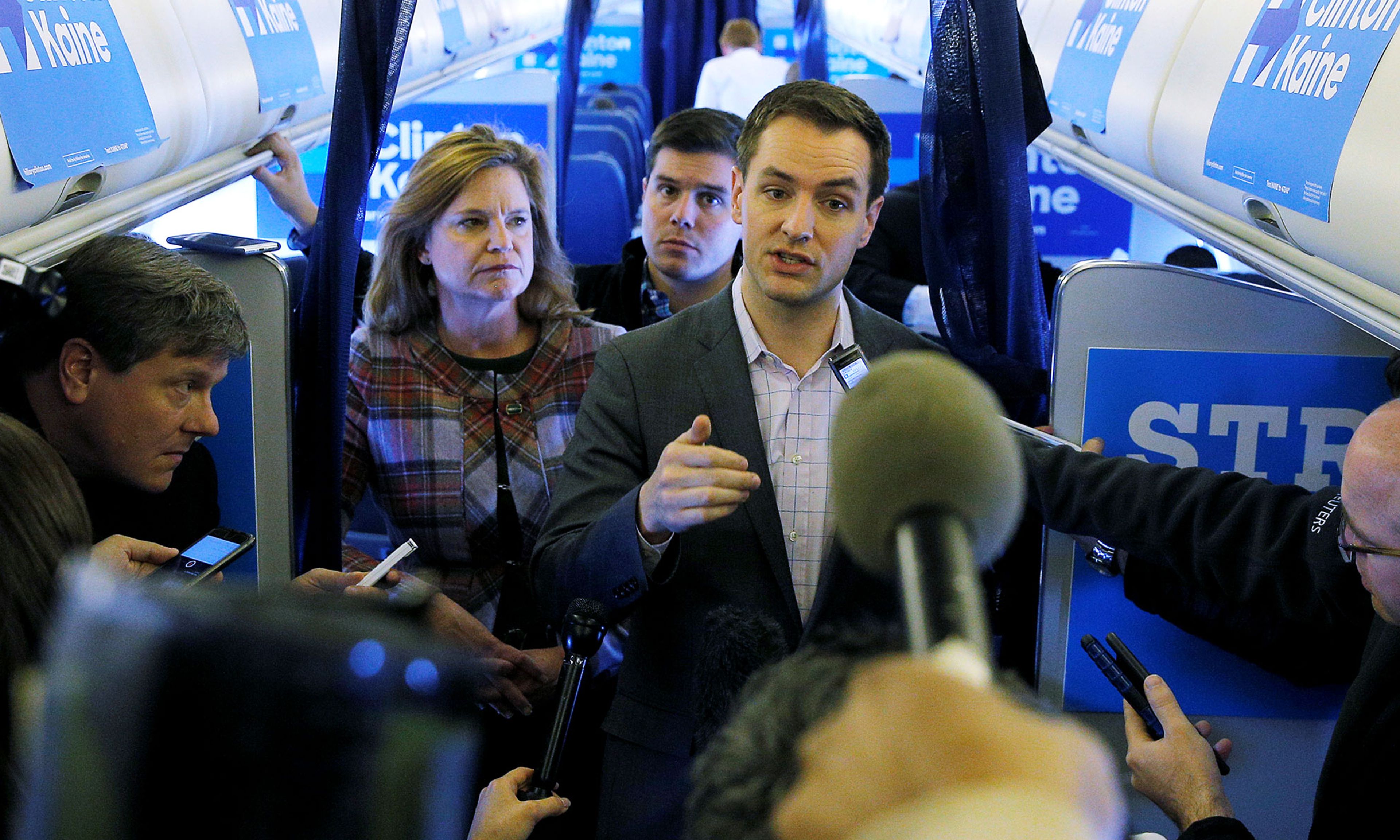
But then again, you’re not Robby Mook, Beltway celeb and manager of the ill-fated Clinton campaign.
Naturally, Mook was in the middle of the campaign’s effort to promote the political smear that Trump had a corrupt relationship with Putin. He is thus under subpoena to testify at the Sussmann trial. The prosecutors have decided they don’t need him for their case, but it turns out the defense thinks he has testimony that might be helpful to Sussmann.
There’s a problem, though: Despite the facts that he’s a witness, and the trial has long been scheduled to start on May 16 (i.e., this past Monday), Mook has plans to go away on vacation to Spain this coming weekend.
For most of us, that would be our problem, not the trial’s. We would be told to put our vacation plans on hold until our duty to testify was fulfilled. Plus, Mook is a defense witness. Under due-process rules, the defense (which has no obligation to present any evidence) does not get to call any witnesses until the prosecution has rested its case. The prosecution is not expected to wrap up its presentation of evidence until next week.
But we’re not talking about just anyone here. We’re talking about the Robby Mook. And so we’re talking about privilege. The Sussmann defense has asked Judge Christopher Cooper to order that the government’s case be suspended on Friday, in the middle of the presentation that prosecutors have been planning for months. This would allow the defense to put Mook on the stand — i.e., to interrupt the flow of Durham’s case so that Mook, a very busy man who really needs a vacation, can catch his flight out of the country.
Many judges would not give such a request the time of day. In fact, one of the unpleasant parts of being a litigator is the not-unusual necessity of breaking to witnesses the bad news that they have to show up in court when needed, regardless of what else is going on in their lives, and that once a trial starts, the court doesn’t want to hear about anyone’s vacation plans.
But in Robby Mook’s case, he wants to go on vacation, the Sussmann defense made the request, and Judge Cooper is actually entertaining it. Cooper hadn’t decided as of yesterday’s court session whether he’d interrupt the government’s case to accommodate Mook’s holiday in Spain, but neither had he rejected doing so out of hand.
It’s Washington. And it’s a case about privilege.






Comments