
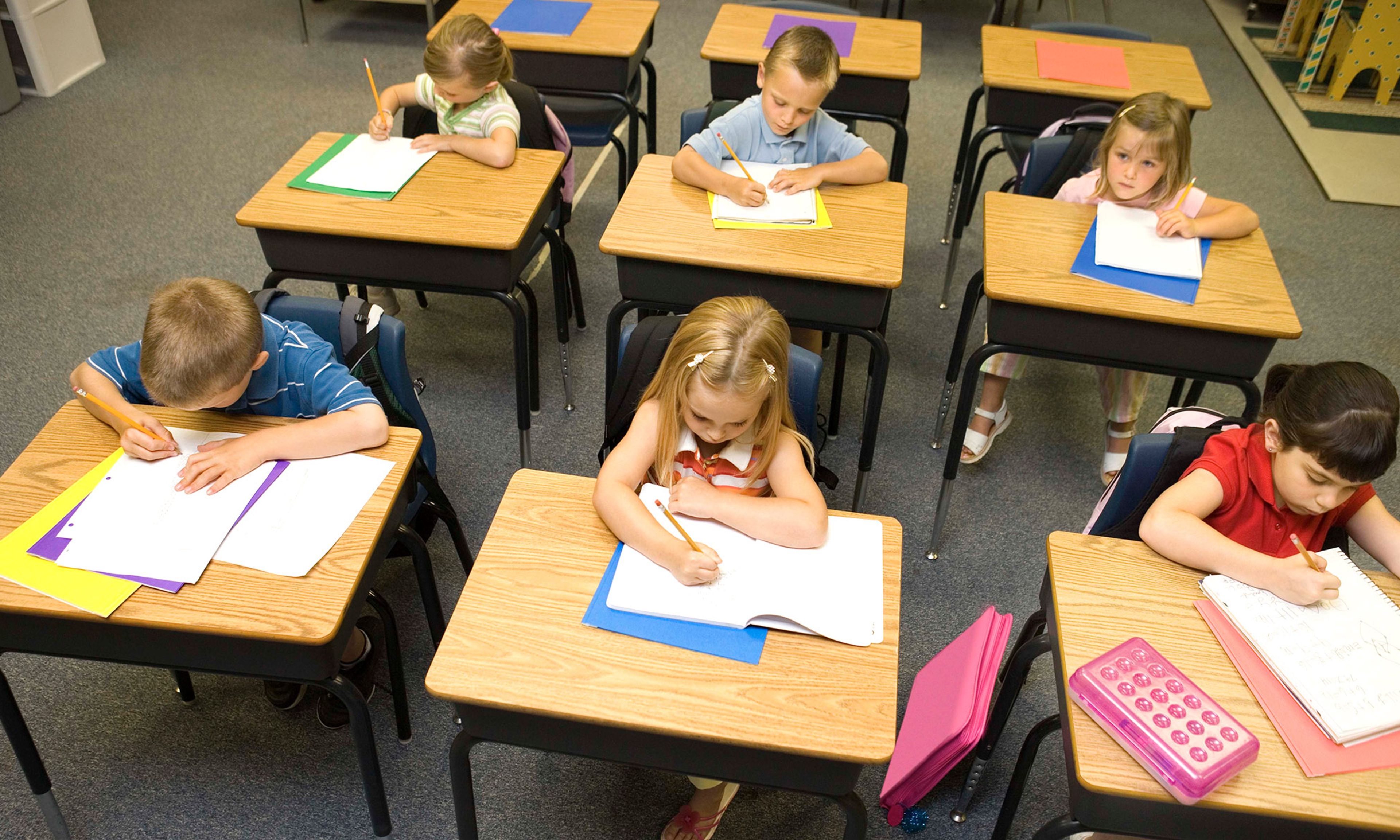
“What we’ve got here is a failure to educate.” Teaching, especially public education, has experienced substantial mission creep over the last decade, some of it self-inflicted due to a brew of teachers’ compassion and vanity, and the rest owing to an expanding administrative apparatus that offers classrooms very little while attempting to shoehorn in ever more social engineering from a cohort of overpaid EdDs competing for district- and state-level roles. Recent spats about reporting student pronoun changes to parents chronicled by Haley Strack and Kayla Bartsch’s self-absorption column converge to adroitly reveal the elements most negatively affecting American education.
In the classroom, teachers think too much of themselves and their influence on their students. To be fair, the public’s view of teachers as “underpaid, overworked, and underappreciated” is somewhat true for first- and second-year teachers who begin in the sump pit of the union salary ladder and who have not yet established a lesson-plan regime that they’ll flog for the next decade or more, but the maxim fails to apply to the majority. It’s little more than labor agitprop that many teachers nonetheless accept as gospel. Who doesn’t like appreciation? The problem is that too many teachers are making their interactions with the students about the teacher by assuming that they are the only responsible adults in a student’s life, and that what students need is a confidant rather than a mentor.




Comments