
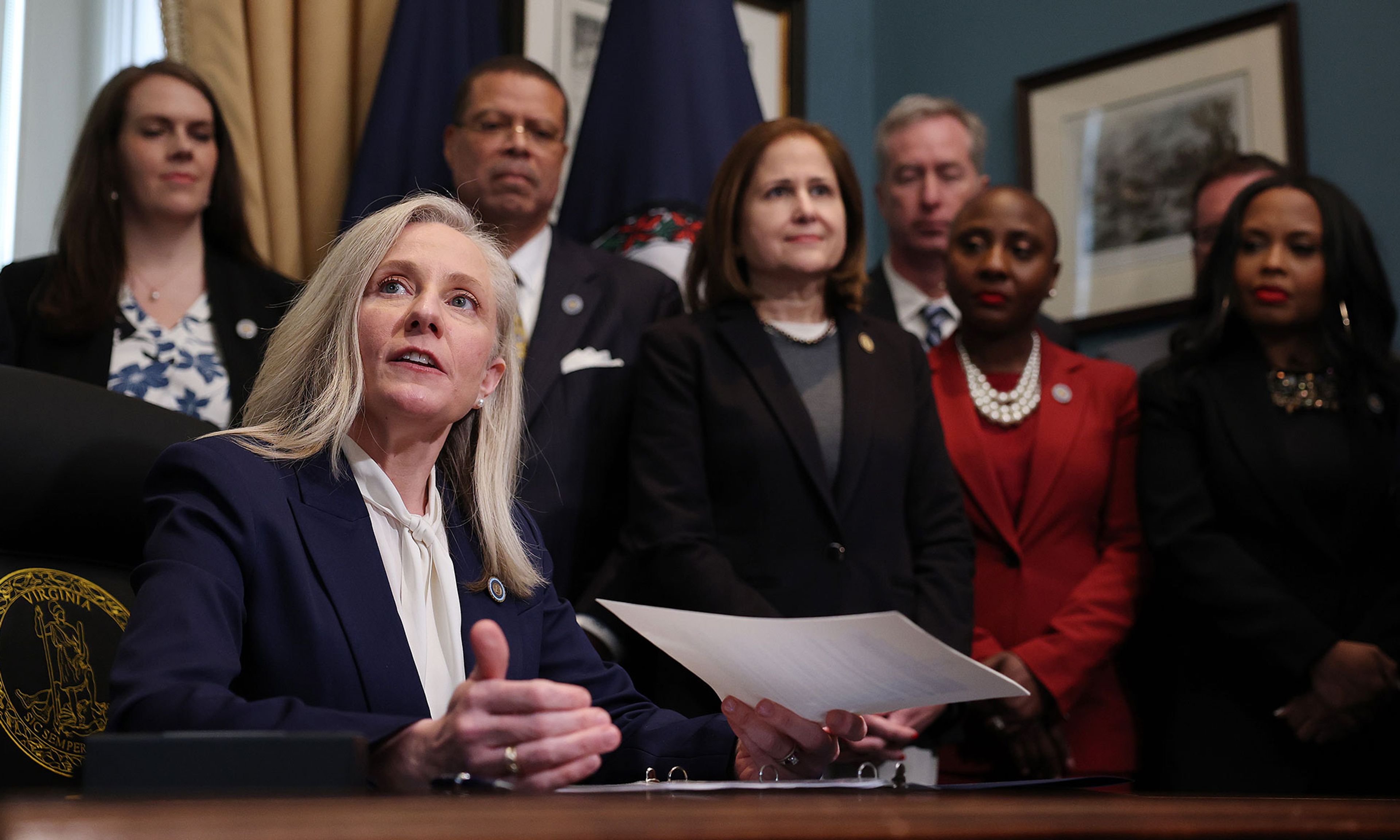
A brief note on a surprise ray of sunshine: The nightmarish Virginia gerrymander is officially and somewhat unexpectedly dead. When last we spoke about matters involving Virginia, I concluded with the grim certainty that Abigail Spanberger had succeeded in constructing the Democratic one-party state in the commonwealth, at least for the next several electoral cycles. After holding a statewide referendum to temporarily undo the nonpartisan redistricting process (one the state’s voters overwhelmingly approved in 2020) in favor of a 10–1 Democratic congressional gerrymander — and winning on a narrow 51.7–48.3 margin — Spanberger was sitting smugly, and I concluded that the Gërrymänderrung was well and truly upon us.
In those pieces, I mentioned in passing that there was a slight chance the Virginia Supreme Court might overturn the decision to even place the initiative on the ballot in the first place — thus invalidating the results, even after Virginia’s voters had schlepped to the polls to register their official opinion. But I warned readers not to take the possibility too seriously. For one reason: As a matter of general principle, conservatives are ill advised to rely on a judicial deus ex machina to deliver them from political outcomes. But for another, more pragmatic one: How often are courts simply willing to invalidate the “will” (note scare quotes) of the voters, expressed mere weeks before? Would one expect a Democratic-leaning court, in particular, to do that?




Comments