
I’ll be part of a virtual conversation with Wisconsin Right to Life (co-sponsored by the National Review Institute) tomorrow (Thursday) at 3:30 New York/D.C. time. RSVP here.
Watch my in-person conversation (hosted by the Heritage Foundation, co-sponsored with the Ethics and Public Policy Institute and NRI) with Ryan T. Anderson and Alexandra DeSanctis on their new book Tearing Us Apart: How Abortion Harms Everything and Solves Nothing, at your convenience virtually:
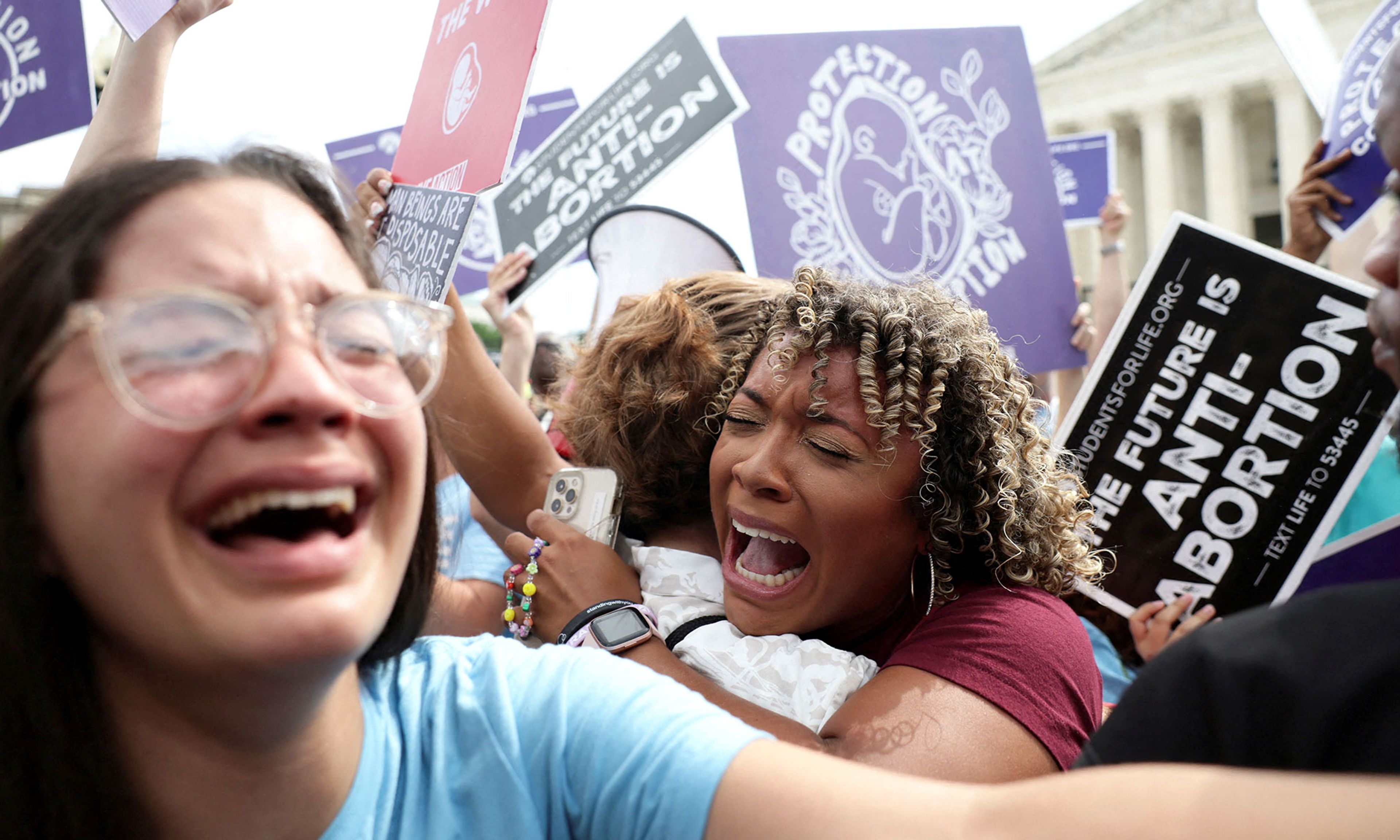
If you are anything like me, you are in catch-up mode on many fronts since Roe v. Wade was overturned by the Supreme Court on Friday. Here are some things worth sharing:
1. Carter Snead & Mary Ann Glendon, “The pro-life movement’s work is just beginning”:
Abortion is a gruesome symptom of our collective failure to take care of one another. This means that, alongside our efforts to protect the unborn, we must act decisively to address the wide range of issues — from poverty to lack of support from fathers — that lead women to choose abortion in the first place.
This will require action in both the public and private spheres. Of course, pro-life nonprofits have been caring for women, babies and families since before Roe was decided. But Dobbs has given new leverage to pro-life voters whom the Republican Party can no longer take for granted. These voters should use their newfound clout to demand public commitments to supporting pregnant women and their children. Republicans who fail to meet these commitments should be disciplined at the ballot box — especially since, with the balance of the Supreme Court no longer a deciding issue, pro-life voters may now be attracted to moderate Democratic politicians who are serious about expanding the social safety net and do not seek to promote abortion.
One upside of Dobbs is that it makes possible broad coalitions of people of goodwill who, despite their disagreement on the fundamental question of abortion, agree that we must all work to provide for the needs of mothers, children and families in crisis. But building these coalitions will require conservatives and liberals alike to let go of any preconceived political dogmas regarding the role and size of government and focus on what works. The right answer might very well require new government programs and increased spending, greater support for and delegation to nonprofit care providers, or some combination of these approaches.
Note this especially:
Moreover, there are an estimated 2 million American couples waiting to adopt children and only 18,000 babies born in the United States voluntarily placed for adoption per year. There is also a strong desire to welcome babies into adoptive families from foster care, should efforts at reunification with biological parents prove impossible. In a post-Roe world, we must find ways to make it easier for women who cannot or do not wish to parent to make the courageous choice to place their sons and daughters with loving adoptive families.
We can expand on public-private partnerships such as the Alternatives to Abortion programs across many states, which allocate funding to nonprofit service providers that, in turn, supply direct services to women and families. In 2021, Texas’s program helped more than 126,000 people secure counseling, parenting support, financial assistance, health care, food benefits and housing; the state allocated $100 million to this program last year. We should also support promising efforts in the nonprofit space, such as Her Plan, which aggregates information and facilitates access to a variety of services for women in crisis, and our new “Women and Children First” research and service initiative at the de Nicola Center for Ethics and Culture at the University of Notre Dame.
2. Helen Alvaré, “Dobbs decision shows US can be both powerful and humane”:
It is a win for human life not because Dobbs promises constitutional protection for unborn human beings, but because for the first time in 49 years, citizens have the chance to argue effectively to protect that life and to try to convince a majority of their fellow Americans. Since Roe, no such argument has been permitted a chance of winning.
It is a win for women, who have increasingly been pressured to live as if their natural ability to bear children, and their desire to rear them, are disabilities. A disability affecting their potential for education. A disability impairing their economic and employment opportunities. A disability respecting their entire social equality. No. American society — including our economy — should now be required to face the fact that women get pregnant and need help and support then and throughout their parenting. It is a scandal that so many American institutions, especially corporations, act as if all women should model the “ideal male worker” and come to the public-square free of child care responsibilities.
3. Gerard V. Bradley, “What Comes After Roe”:
A coherent reading of the entire opinion, however, brings a different picture into focus. This view portends future judicial protection of the unborn under the Constitution. Dobbs may not explicitly endorse fetal personhood, but Dobbs does put building blocks in place for future litigation to deliver to unborn human beings all, or almost all, of the protection that they deserve as “persons” under the Equal Protection Clause. This will require another slog through the courts.
The place to begin describing these building blocks is in the opinion’s affirmation that access to lawful abortion is a singular constitutional question for which there is no fit precedent because, and only because, it kills an unborn human being.
What sharply distinguishes the abortion right from the rights recognized in the cases on which Roe and Casey rely is something that both those decisions acknowledged: Abortion destroys what those decisions call “potential life” and what the law at issue in this case regards as the life of an “unborn human being.” . . . None of the other decisions cited by [those two cases] involved the critical moral question posed by abortion. They are therefore inapposite.
No wonder, then, that Dobbs affirms that “respect for and preservation of prenatal life at all stages of development” is a legitimate state interest. If abortion is not lethal to a human being, the whole case that Dobbs makes collapses. . . .
Dobbs, then, is a decisive turning point on the road to securing an equal right to life for every human being, in the womb and out of it. It is the end of the beginning of the greatest civil rights struggle of our time.
4. Archbishops José Gomez & William E. Lori:
Our first thoughts are with the little ones whose lives have been taken since 1973. We mourn their loss, and we entrust their souls to God, who loved them from before all ages and who will love them for all eternity. Our hearts are also with every woman and man who has suffered grievously from abortion; we pray for their healing, and we pledge our continued compassion and support. As a Church, we need to serve those who face difficult pregnancies and surround them with love.
Today’s decision is also the fruit of the prayers, sacrifices, and advocacy of countless ordinary Americans from every walk of life. Over these long years, millions of our fellow citizens have worked together peacefully to educate and persuade their neighbors about the injustice of abortion, to offer care and counseling to women, and to work for alternatives to abortion, including adoption, foster care, and public policies that truly support families. We share their joy today and we are grateful to them. Their work for the cause of life reflects all that is good in our democracy, and the pro-life movement deserves to be numbered among the great movements for social change and civil rights in our nation’s history.
Now is the time to begin the work of building a post-Roe America. It is a time for healing wounds and repairing social divisions; it is a time for reasoned reflection and civil dialogue, and for coming together to build a society and economy that supports marriages and families, and where every woman has the support and resources she needs to bring her child into this world in love.
As religious leaders, we pledge ourselves to continue our service to God’s great plan of love for the human person, and to work with our fellow citizens to fulfill America’s promise to guarantee the right to life, liberty, and the pursuit of happiness for all people.”
5. From The Pillar, “After Dobbs: Abortion in America by the numbers”:
All together, the estimates made both by abortion supporters and opponents suggesting that overturning Roe may only reduce abortions by 10%-12% seem fairly accurate.
6. Sherif Girgis, “Dobbs’s history and the future of abortion and privacy law”:
Dobbs’s resulting breadth will be celebrated and deplored. The sometimes overwhelming burdens facing women in difficult pregnancies will now become more visible. Those who believe it unjust to take unborn life to relieve those burdens must redouble existing efforts to lighten them in other ways. But the basis of their moral belief, too, will now have a rare, frankly unsettling visibility: A year from now, there will be infants going from milk to soft foods because Dobbs triggered laws and shuttered clinics on Friday and not Monday. Now gestating, they’ll learn to walk, catch fireflies, fall in love, comb gray hair, because of appointments canceled last Friday. Not just by good fortune but — for the first time in generations — by legal right.
7.
8. Doctors don’t know what life is — American Medical Association says limiting abortion is ‘violation of human rights’:
9.
10. Chelsea Patterson Sobolik, “Why We Should Celebrate the Dobbs Decision”:
I was born to a single, teenage mother whose circumstances mirror that of many women who choose abortion. She was 19 years old with limited financial resources and no spouse to help shoulder parenting responsibilities. Around 85 percent of women who have abortions are in the same position as my birth mother. Her decision to make an adoption plan for me was hard. It’s rarely easy for a woman to willingly surrender her own flesh and blood.
11. Ramesh Ponnuru, “Pro-Lifers Should Hold Off on Seeking National Abortion Ban”:
We generally leave the prohibition and prosecution of homicide to state governments. We have good reasons for this arrangement, and some extra reasons for adopting it in the case of abortion. Even if we all agreed that abortion should be banned, we would not agree on the details of the laws that would follow from that premise.
Is it enough to take medical licenses away from doctors who perform illegal abortions, and impose steep fines on people who perform them without licenses? Or does justice and deterrence require tougher sanctions? Allowing states to enact different laws would shed light on which laws would work best to protect life while having the least negative side effects.
11.
12. Wall Street Journal editorial, “The Justices Didn’t Lie to the Senate”:
No judge can know what those facts might be in advance of a case, and judges owe it to the parties to consider those facts impartially. A judge who can’t be impartial, or who has already reached a conclusion or has a bias about a case, is obliged to recuse himself. This is judicial ethics 101.
An authority on this point is no less than the late progressive Justice Ruth Bader Ginsburg, as she explained in 1993. “It would be wrong for me to say or preview in this legislative chamber how I would cast my vote on questions the Supreme Court may be called upon to decide,” she said. “A judge sworn to decide impartially can offer no forecasts, no hints, for that would show not only disregard for the specifics of the particular case, it would display disdain for the entire judicial process.”
Every Supreme Court nominee since has followed that Ginsburg guidance. Judge Ketanji Brown Jackson, who will soon join the Court, hewed to it on every question she was asked about precedent. Our guess is that she’d vote to overturn all of last week’s rulings on religious liberty, guns and abortion if she gets the chance. But that doesn’t mean she lied to the Senate.
13. Ross Douthat, “The End of Roe Is Just the Beginning”:
The pro-life movement is inevitably bound to some kind of conservatism, insofar as a anti-abortion ethic is hard to separate from a conservative ethic around sex, monogamy and marriage. But among its own writers and activists, the movement has understood itself to also be carrying on the best of America’s tradition of social reform, including causes associated with liberalism and progressivism.
The late Richard John Neuhaus, the most eloquent pro-life intellectual of my youth, was once a left-wing pastor who marched with Martin Luther King Jr., and he saw the fight against abortion as proceeding from the same universalist premises as the civil rights movement. Contemporary advocates of pro-life feminism like Erika Bachiochi have linked their critique of abortion to the views of 19th-century feminists and suffragists, portraying an abortion rights politics as a fundamental evasion of society’s true responsibility to women. . . .
Any confident prediction about this ruling’s consequences is probably a foolish one. There can be no certainty about the future of abortion politics because for almost 50 years all policy debates have been overshadowed by judicial controversy, and only now are we about to find out what the contest really looks like. It’s merely the end of the beginning; the true end, in whatever settlement or victory, lies ahead.
14. Tish Harrison Warren in the New York Times, “Dobbs, Roe and the Myth of ‘Bodily Autonomy’”:
A sperm and an egg unite to grow into a human inside the body of a woman. The state doesn’t force this to happen any more than it forces aging or forces weight loss from exercise or forces lungs to take in oxygen and release carbon dioxide.
To use language of forced gestation or of a state “controlling” women’s bodies is to portray biology itself as oppressive and halting the natural course of the body as the liberative role of the state. . . .
I recently came across a blog post by the literature scholar Alan Jacobs, describing Simone Weil’s insistence that “if we need a collective declaration of human rights, we also, and perhaps more desperately, need a declaration of human obligations.” I find this beautiful. Speaking as a woman, with a woman’s body, I want safety and freedom for all women. I want women to be full participants and empowered leaders in public life. I believe we, as human beings and image bearers of God, have a right to bodily integrity, protection and liberty.
But these rights also carry obligations to others, perhaps especially to those vulnerable bodies that depend on us. This is the heart of the question about abortion: What are our obligations to one another? We have an obligation to unborn children. We have an obligation to seek women’s safety and flourishing. For too long these obligations have been pitted against each other, but they need not be and, to move forward, we must create a world where they never are.
15. Ryan T. Anderson & Alexandra DeSanctis, “Why the Arguments about ‘Bodily Autonomy’ and ‘Forced Birth’ Fail to Justify Abortion”:
Examining the bodily autonomy argument for abortion highlights a crucial pro-life point: abortion is wrong not only because strangers shouldn’t kill each other but also and especially because parents have special obligations to their children, and it isn’t governmental overreach to require parents to fulfill those obligations.
16. Nicole Winfield, “Pope hails families, blasts ‘culture of waste’ after Roe”:
Pope Francis celebrated families Saturday and urged them to shun “selfish” decisions that are indifferent to life as he closed out a big Vatican rally a day after the U.S. Supreme Court ended constitutional protections for abortion.
Francis didn’t refer to the ruling or explicitly mention abortion in his homily. But he used the buzzwords he has throughout his papacy about the need to defend families and to condemn a “culture of waste” that he believes is behind the societal acceptance of abortion.
“Let us not allow the family to be poisoned by the toxins of selfishness, individualism, today’s culture of indifference and waste, and as a result lose its very DNA, which is the spirit of welcoming and service,” he said.
The pope, noting that some couples allow their fears and anxieties to “thwart the desire to bring new lives in the world,” called for them not to cling to selfish desires.
17. David B. Rivkin Jr. & Jennifer L. Mascott (WSJ), “The Supreme Court Reclaims Its Legitimacy”:
It was at that time, and not today, that the justices overstepped their boundaries and ensured that the court would become the focus of political contention for half a century. Dobbs belatedly corrects that error by recognizing that the federal judiciary’s constitutional role is merely to decide cases and controversies, based upon the established tenets of law grounded in the Constitution, federal statutes and common law. Policy decisions properly belong to the elected branches of federal and state government.
18. Erica Perlman, “Don’t stand idly by during her pregnancy crisis”:
The vulnerable pregnant Jewish women who do not want abortions need more than rhetoric from American Jewry.
19. Destiny Herndon-De La Rosa, “The Bigger Vision of a World Without Roe v. Wade”:
Sometimes a scared young woman only needs to be told that she is strong enough to choose life for her child. Other mother’s simply need assistance with their phone bill or new tires for their car so she can keep her food delivery job. Other women are sometimes starting from scratch and after going to the housing authority at two months pregnant, discover there is an 18-month to 5-year long waitlist. The needs women face run the gamut. Some are small and easy to provide, while others are going to take big systemic changes that I know feel incredibly overwhelming to many of us because we live in a patriarchy—a world built by men and for men, that was never designed to accommodate female fertility. Changing those foundational realities is going to take time. But while we are voting on policies that create an equitable society for women and children, our work does not end at the ballot box. That is the easiest form of action.
The real work at the heart of what our organization does is helping the pregnant woman in our community with her $50 phone bill, or chipping in a few bucks to send a teenager on the other side of the world to trade school, or helping charities and ministries provide safe shelters for the invisible and often forgotten (or even worse, politicized) pregnant migrant mothers at the border who are fleeing violence and just trying to protect their children the same way any one of us would. We must value all of these lives, inside and outside of the womb. Parts of that can feel daunting, I understand. But there is absolutely something, big or small, that every single one of us can do to contribute to a truly sustainable global culture of life. This is the reality many women and their unborn children are facing. For a woman to truly have a choice, her basic needs must be met.
20. Elizabeth Kirk, “Reflecting on the Impact of Dobbs”:
We remembered all of those, no longer with us, without whom this day would not have happened: Professor Charles Rice (Notre Dame law professor), Nellie Gray (founder of the March for Life), Vicki Thorn (founder of Project Rachel’s post-abortive healing ministry), Joe Scheidler (founder of the Pro-Life Action League and known as the “godfather of pro-life activism”), Fr. Paul Marx (founder of Human Life International), Brian Duggan (Executive Director of the National Committee for a Human Life Amendment), and many more.
21.
22. Wall Street Journal editorial, “Abortion Goes Back to the People”:
Can America still settle its political conflicts democratically, and peacefully? We’re about to find out after the Supreme Court Friday overturned Roe v. Wade and returned the profound moral issue of abortion to the states and democratic assent, where it has always belonged.
Critics say the Court’s 6-3 decision in Dobbs v. Jackson Women’s Health Organization is rule by unelected judges. But Roe was the real “exercise of raw judicial power,” as Justice Byron White put it in dissent in 1973. That’s when seven Justices claimed to find a constitutional right to abortion that is nowhere mentioned in the Constitution and had no history in American common law. The Court on Friday finally corrected its mistake, which has damaged the legitimacy of the Court and inflamed our politics for 49 years.
The Justices in the majority deserve credit for sticking with their convictions despite the leak of Justice Samuel Alito’s opinion in May. The leak was probably intended to create a furor to pressure the Justices to change their mind, and it has led to protests in front of their homes and even an apparent assassination attempt against Justice Brett Kavanaugh. By holding firm, they showed the Court can’t be intimidated.
23. George Weigel, “Dobbs and the Vindication of American Democracy”:
One final point as the debate over the right to life moves into state legislatures: After Dobbs, it will be harder to argue that the abortion license decreed by Roe v. Wade was gestated in the womb of the Declaration of Independence and latent in the concept of liberty prevalent at the American founding. Properly understood, the civil rights triumph of June 24, 2022, will help clear the ground on which the hard work of rebuilding a culture of life can continue—a culture that does not mistake liberty for license, which was a notion foreign to the founders and framers.
24. Charles Camosy, “Pro-lifer 3.0 to abortion-rights supporters: Let’s talk”:
The United States at large has a huge problem with maternal mortality, most of which comes into play after birth. Pro-lifers should be pushed to get on the side of expanded Medicaid services, especially (but not only) in states that significantly restrict access to abortion.
They should also be pushed to get on the side of mandatory paid family leave, childcare support, robust labor protections based on family status, health insurance that adequately cares for children with special needs, mandatory areas and times for breast-milk pumping, and more.
25. Jeff Jacoby, “Overturning Roe does not make the Supreme Court ‘illegitimate'”:
Arguably, the Supreme Court’s worst ruling ever came in 1857, when it held in Dred Scott v. Sandford that persons of African ancestry had “no rights which the white man was bound to respect.” Millions of Americans were horrified by the decision, among them Abraham Lincoln, who condemned it unreservedly. But he did not deny the court’s legitimacy.
The decision was appalling, Lincoln said, and everything possible must be tried to get it overruled. But he also stressed his “respect for the judicial department of government.” Eventually Dred Scott was upended by the Thirteenth Amendment. The Supreme Court — and its legitimacy — remained intact. They remain intact today, as Dobbs, however controversial, is acknowledged the law of the land.
26.
27. Archbishop Salvatore Cordileone, “Our World Needs Men to Become Fathers to the Fatherless”:
When a marriage culture breaks down, even more heroism is required of fathers to protect and provide for their children and their children’s mothers. Which means that, in a society riven by family fragmentation, all of us men need to step up and become fathers to the fatherless.
28. Naomi Schaefer Riley, “We’re still failing kids in foster care”:
The trend toward kinship care helped many children, but others have been harmed because we shuttered group homes
29. New York Post, “Long-lost sisters reunite after 55 years apart: ‘Love at first sight’”:
30.




Comments