
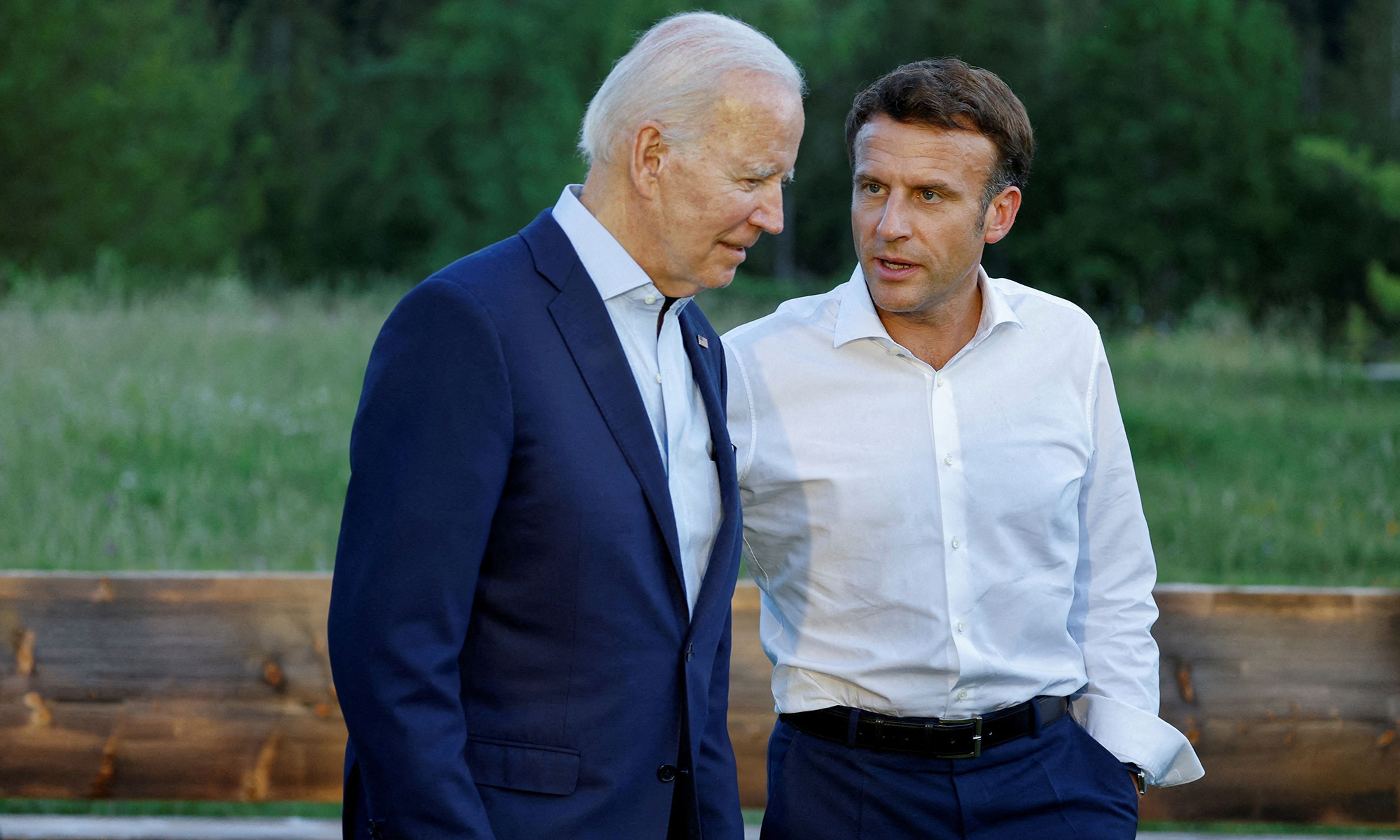
It’s hard to argue with Rich’s pithy summation of French president Emmanuel Macron’s recent remarks. Macron’s attempt to preserve ambiguity regarding the West’s commitments to Ukraine’s defense, in which he added that introducing Western ground troops to Ukraine cannot “be ruled out,” only proved that Western ground troops have been definitively ruled out. As Rich observed, the bulk of the NATO alliance took the opportunity to reaffirm their objection to Macron’s float.
But Macron’s comments illustrate the challenge before, in particular, the United States. The NATO alliance’s prima inter pares has two prime directives: keeping the alliance focused on presenting a united front against foreign threats and preserving the integrity of the alliance. At times, these goals can be at odds with one another, and Russia’s mechanized war of conquest on the continent is a stress test. As Macron’s remarks indicate, some of the alliances’ members are more gung-ho in their desire to “do anything we can to prevent Russia from winning this war” than others. Indeed, as should be expected, the alliance members most willing to court risk in the effort to degrade Russia’s capacity to project power across its borders are nations on the frontier with Russia. It’s the president’s job to mollify those restive nations so that they don’t take matters into their own hands.


Comments