
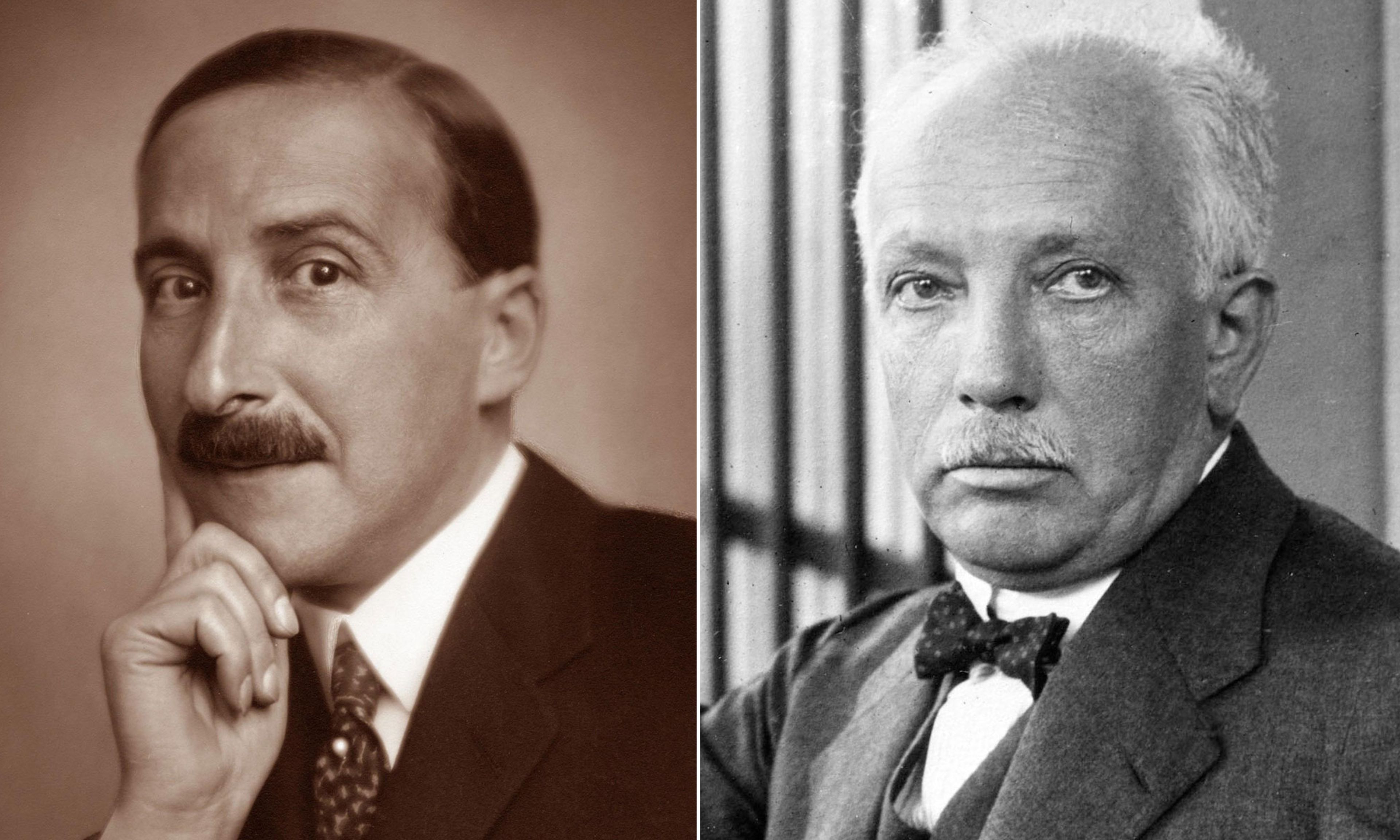
Last month, I wrote an essay centered on Stefan Zweig: “The World, Yesterday and Today.” He was a writer to whom music was very important. Among his friends and colleagues were Berg, Busoni, Strauss, Reger, Ravel, and Bartók. I have done a new music podcast on the theme of Zweig and His World: here.
Zweig published his first volume of poetry when he was 19. Reger asked for permission to set six of the poems to music.
When World War I came, some people were caught between nations. They did not belong wholly to one or another. Some were married to people of an “enemy nation.” And what about their children?
In his memoirs, Zweig writes that Busoni “lived like an amphibian between two worlds. He was Italian by birth and education, German by choice.” Busoni is one of the most interesting and gifted musicians in history.
He once asked Zweig, “Where do I belong? When I wake up in the middle of a dream at night, I know I was speaking Italian in my dream. And then, when I write, I think in German.”
Busoni was a shaken man during the war. (Who wasn’t?) Zweig writes that Busoni’s students “were now scattered all over the world — perhaps shooting each other — and at this time he dared not go on with his real work, his opera Doctor Faust, because he felt too disturbed.”
In the 1930s, not long after the Nazis took power in Germany, Strauss asked Zweig to collaborate on an opera with him. “I was very well aware of the honor of such a commission,” writes Zweig. “There was no creative musician of our time whom I would more willingly have served than Richard Strauss, last of the great line of German composers of genius running from Handel and Bach, by way of Beethoven and Brahms, and so to our own day.”
Zweig is very, very interesting on the artistic process. Here is one paragraph, concerning Strauss:
I have met many great artists in my life, but never before one who looked at himself with such impersonal and unswerving objectivity. At that first meeting, Strauss frankly confessed that he knew a musician of 70 no longer had his former youthful powers of inspiration. He did not think, he said, that he could write symphonic works like Till Eulenspiegel and Tod und Verklärung today, for pure music needs a very high degree of creative freshness. But written text still inspired him. Given a subject in verbal form, he could illustrate it to the full dramatically, because he found that musical themes spontaneously developed from situations and words, so in his later years he had turned exclusively to opera.
(In the end, Strauss was not quite done with “pure” music. At the conclusion of World War II, for example, when he was in his 80s, he wrote Metamorphosen. But, true: He had been inspired by verses of Goethe.)
The Strauss-Zweig opera, Die schweigsame Frau, premiered in Dresden during the summer of 1935. Hitler shut it down after three performances. (Strauss was kosher, but Zweig was Jewish.) That opera ends with an amazingly beautiful bass aria — and I end my podcast with it.
Those disposed to such a podcast — a healthy minority, I have reason to think — will like it. Again, here.





Comments