
From the last Morning Jolt of the week…
The Pessimistic Outlook for Trump
Yesterday you got the optimistic outlook for Trump. Now for the pessimistic outlook…
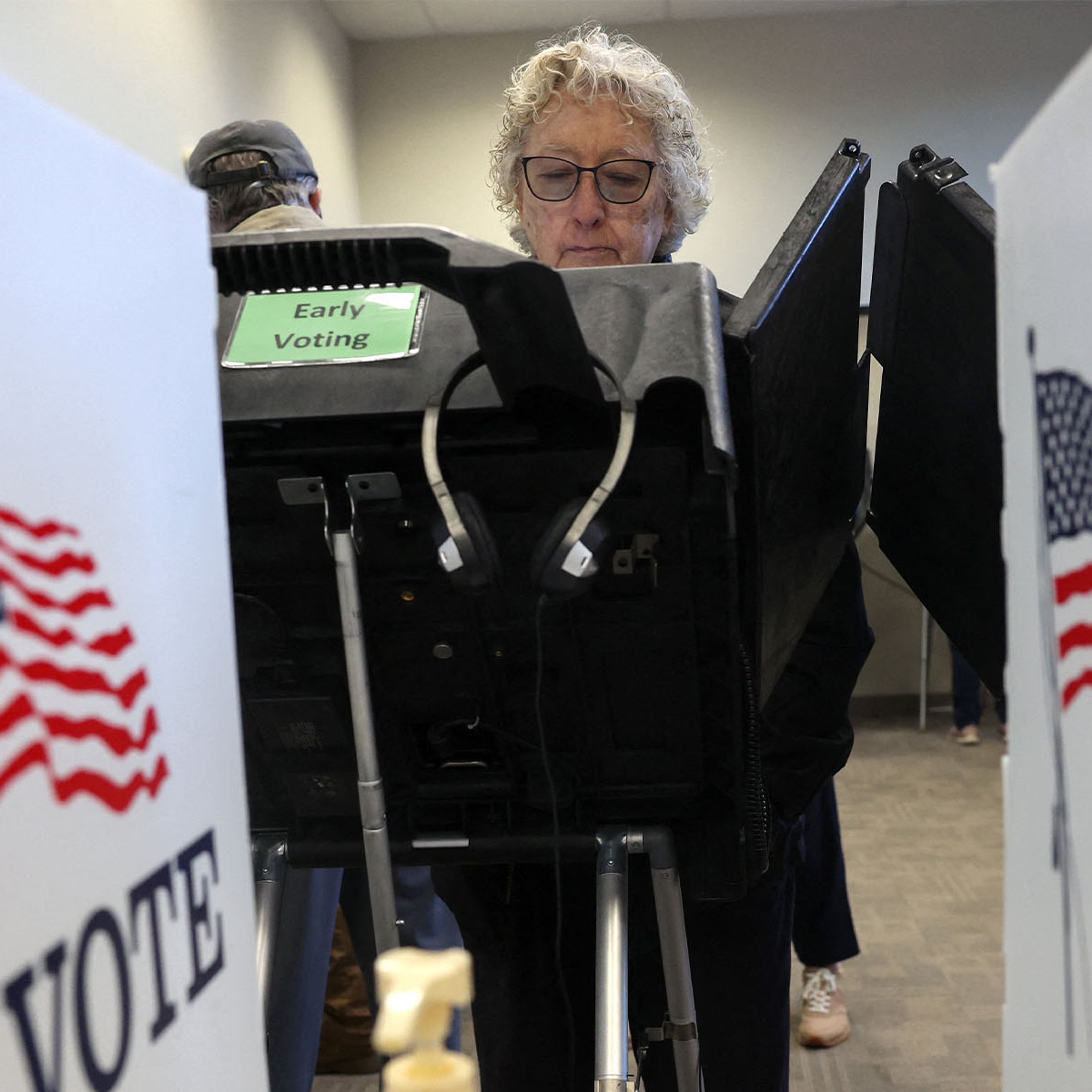
The early voting numbers look ominous for Republicans in a lot of states. Let’s make all appropriate caveats – we don’t know for certain that a registered Republican will vote for the Republican, and that a registered Democrat will vote for the Democrat. And yes, there’s always the question of whether a high early vote total is a genuine surge or just an early vote operation cannibalizing party regulars who would otherwise vote on Election Day. But every voter who votes early is one less for the campaign to worry about on that Tuesday. Generally speaking, a Republican candidate would want to see his party having a nice, solid lead in early voting.
Let’s start in Arizona, where Hillary Clinton led two of the last three polls.
Four years ago yesterday, registered Republicans had a 21,179 vote advantage over registered Democrats in early voting. This year, registered Democrats are ahead by 4,116 votes. This doesn’t mean the state is lost; the early vote is roughly 440,000 so far, and last time Romney won the state by about 200,000 votes, out of 2.3 million cast. But clearly the Clinton campaign thinks the state is in play and is willing to spend money there.
Quinnipiac puts Trump ahead in Georgia by one point. That’s a shocker, but the previous three polls had Trump only ahead by 2 or 4 points. Early voting is up 40 percent from 2012. The state doesn’t register voters by party but keeps demographic information about them; 28.3 percent of the early voters are African-American and 56 percent are women. In 2008, the last cycle we have exit poll election results for, African-Americans were 30 percent of the electorate in the Peach State and women were 54 percent. McCain won the state by 5 points that year. Right now you would expect a narrow Trump win, but when a state is this close, a loss is not out of the question.
In Iowa, registered Democrats continue to outpace registered Republicans in returned absentee ballots, but it’s a smaller margin than last time. Quinnipiac and Loras have shown the state tied, although the most recent Des Moines Register poll puts Trump up by four points. Based upon how Trump has led here for most of the year, you would expect a win… but if the Democrats get-out-the-vote effort works well and the GOP one stumbles…
It’s not certain that Trump will win one of Maine two congressional districts. Registered Democrats continue to outpace registered Republicans in returned absentee ballots in both districts. Trump plans to campaign there again, so obviously the campaign feels it is winnable but not yet locked down.
Mike Pence was in Omaha, Nebraska yesterday. You don’t send the vice-presidential candidate to Nebraska less than two weeks before Election Day if you’re not worried about the Second Congressional District, which Barack Obama won in 2008.
For the rest of the map, just give Hillary Clinton the states where she leads in the polls. As noted yesterday, Trump has never led any independent general election poll in Michigan, Minnesota, New Hampshire, New Mexico, Virginia or Wisconsin. She’s led most of the recent polls in Florida, Nevada and North Carolina.
Right now, you would expect Trump to narrowly win Ohio, but there have been much more surprising outcomes than Hillary Clinton winning in a state where she has 36 offices and Trump has 16.
Assume Evan McMullin wins Utah. Again, the campaign schedule reveals the perceptions within the campaign; the Trump camp sent Pence there recently.
Assume Hillary Clinton wins everywhere on this list and you have the true worst-case scenario: 375 electoral votes for Clinton, 157 for Trump, and 6 for Evan McMullin. (Under that outcome, Trump would have the fewest electoral votes by a major party candidate since Michael Dukakis.)
The best-case scenario and the worst-case scenario are both unlikely; the most likely outcome is somewhere in between.





Comments