
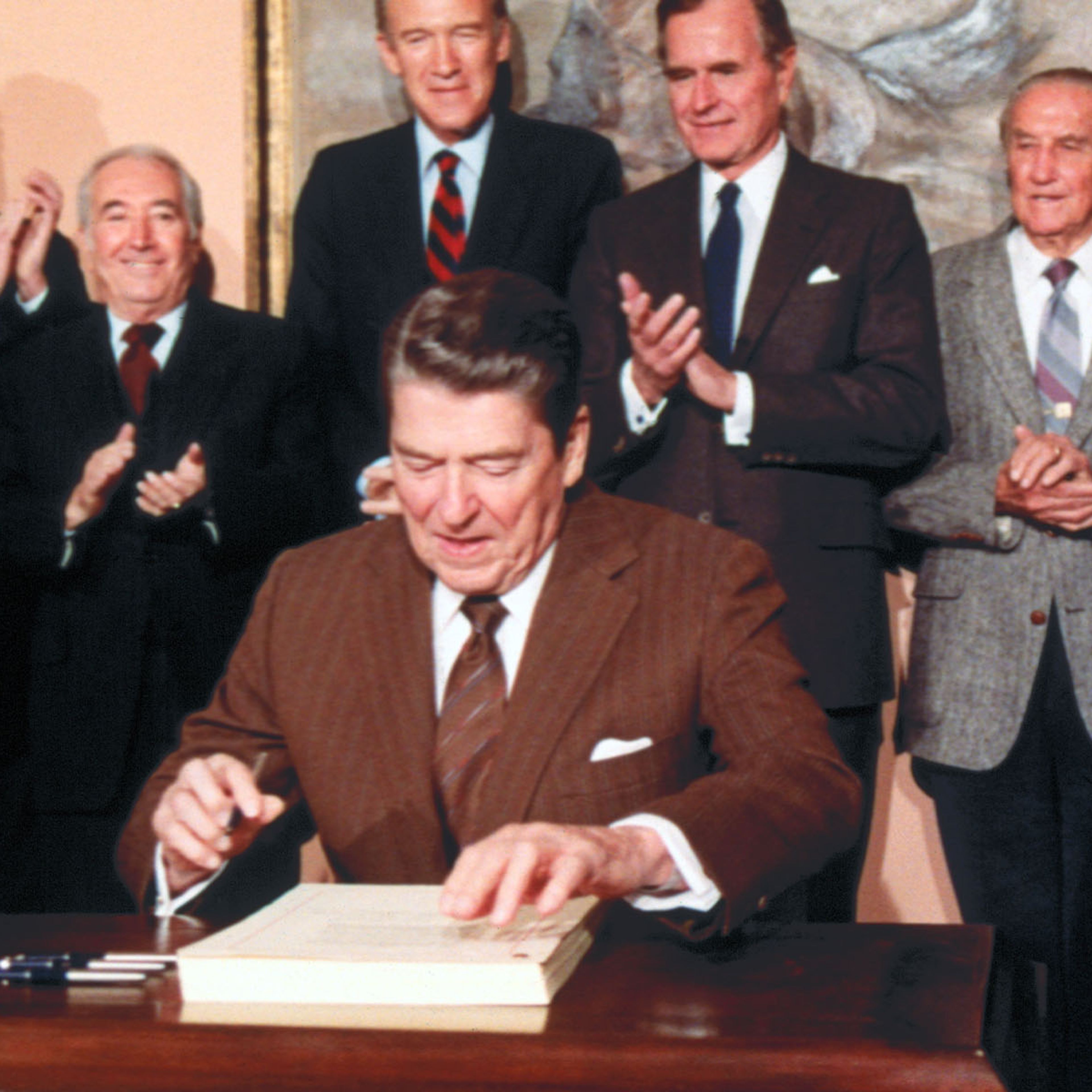
My day job prevented me from commenting earlier on Peter Robinson’s WSJ piece yesterday on Reagan and immigration. I have two thoughts. First, on the narrower, immediate issue of immigration enforcement, I suspect Brother Robinson is right that, chastened by the amnesty crowd’s bait-and-switch in the 1986 law, Reagan would have supported enforcement first:
Yet Reagan would have concluded that reforms intended to normalize their status would simply have to wait, yielding to a single imperative: restoring the rule of law. Before enacting new statues, he would have insisted, the federal government must enforce those on the books. It must “regain control of borders.”
I think most Americans, myself included, could swallow an amnesty if it truly was a final mopping up of a problem we had definitely solved and we were confident we wouldn’t end up with 11 million more illegals down the road. But it doesn’t work out that way, both because many supporters of amnesty are simply lying about their promises of future enforcement and because even those who aren’t lying will always be tempted to defer enforcement, which will cause lobbyists to squawk, while eagerly moving ahead with amnesty, for which they’ll get applause from all the right-thinking people. It’s the same dynamic as the tax debate. If levying additional taxes would truly put our nation’s books back in order, most people would agree to it, but the reason no-new-taxes pledge is so powerful is that the public knows perfectly well that mere promises to cut spending are meaningless and any increased taxes will simply be shoveled to the teachers’ unions and others. This is why “cut spending first” is and must always remain the rallying cry of supporters of responsible government, just as “enforce the immigration law first” must remain the rallying cry of anyone who is serious about preserving national sovereignty. But Peter’s bigger point is about immigration overall, and I suspect that here, too, he’s right that open immigration appealed to Reagan ideologically. I’m afraid Reagan was simply wrong about this, though his error is understandable. He came of age and was formed intellectually in the post-immigration era; mass immigration came to an end when he was 13 years old. From the time he was 20 until he was 34, annual immigration never exceeded 100,000, and was usually much lower. When he gave his “A Time for Choosing” speech in 1964, total legal immigration was less than 300,000 and Ted Kennedy had not yet laid the statutory groundwork for today’s mass immigration of well over a million a year. What’s more, the great struggle of his time was against a totalitarian regime that wouldn’t let anyone out, making the question of how many to let in less salient. But this was beginning to change even by the time he reached national office. George Borjas opens his book Heaven’s Door with the story of Jimmy Carter confronting Deng Xiaoping about emigration:
“Mr. Vice-Premier,” the President said, “the Jackson-Vanik Amendment prohibits our granting most-favored-nation status to centrally-managed economies, unless they provide freedom of departure for their own nationals.” Deng Xiaoping turned to his briefing book, leaned back in his chair, smiled, and asked, “Well, Mr. President, how many Chinese nationals do you want? Ten million? Twenty million? Thirty million.”
Times change and circumstances change, and policy has to change in response. As Reagan’s great predecessor said, “As our case is new, so we must think anew, and act anew. We must disenthrall ourselves, and then we shall save our country.”




Comments