
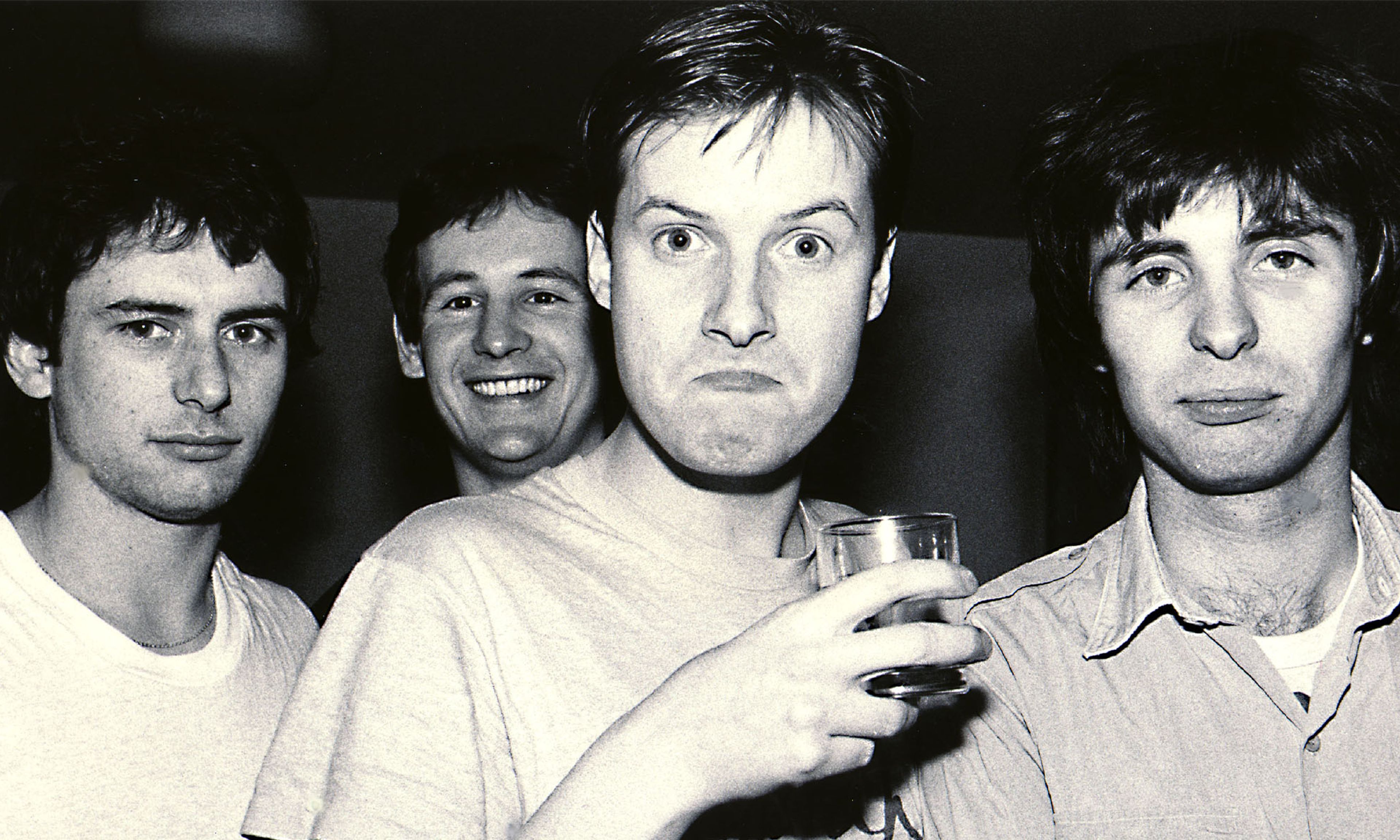
I try not to make it a habit to promote my side podcast here at NR too often, or too obstreperously. It’s a niche thing — Political Beats was a name we hurriedly adopted on the fly, and it has never fully captured what a show I’ve now devoted nearly a decade to is actually about: thoroughly non-political discussion of great music, mostly on an act-by-act basis. (The idea has always been that we’d have guests otherwise known from the world of politics — left, right, center, who cares — on to leave all that at the door and simply rhapsodize for a few hours about a band or artist they truly love.) It may not be for you — and that’s okay.
So forgive me if I make an exception and promote our most recent episode about XTC, a band I have treasured my entire life (from naïve adolescence to the present, at least). Yes, I am asking you to devote three hours or so of your time to our coverage (with co-host Scot Bertram and guest Andrew Gretes) of the first half (1977–1983) of this band’s career. Part 2 is coming next month, and wonders await all listeners (parrots and lemurs, as well as balloons and streamers, await release in a world wrapped in grey). But for this first part, allow me to simply quote from a text I already wrote:
There may be no language in our lungs to tell the world just how we feel about this band, but here we give you a three-hour explanation — with many clips to illustrate where words fail — why XTC is arguably the great lost group of the rock era. In the early Seventies, in a rural English nowheresville named Swindon, songwriters Andy Partridge and Colin Moulding got together with local drum-thwacker Terry Chambers to form a local trio with decidedly quirky, non-chart sensibilities. Later they were joined by keyboardist Barry Andrews and began to slowly build a national profile in the (by then) post-punk scene. And only slightly later than that, they decided they were interested in developing those chart sensibilities after all — but without dropping even one bit of their quirk.
But the story of this band is best told by their music — and it’s practically criminal that it isn’t universally celebrated this world over. In a decades-long career filled with nothing but one sparklingly intelligent post-punk and pop gem after another, XTC was always out of step with their times, always resolutely unassimilable to the true mainstream, always just a bit too self-consciously thoughtful.
Those who tell you “rock is dead” in 2026 may be correct. But if you ever cared even a whit for brilliant, furiously intelligent pop music, then you should know about XTC. You will after this episode. You’ll also understand a little bit more about where I come from personally — and I apologize for that part.






Comments