“How am I, as Secretary of HEW, ever going to find first-class black doctors, first-class black lawyers, first-class black scientists, first-class women scientists, if these people don’t have the chance to get into the best [schools’] in the country?”—Joseph A. Califano Jr., New York Times, March 18, 1977.
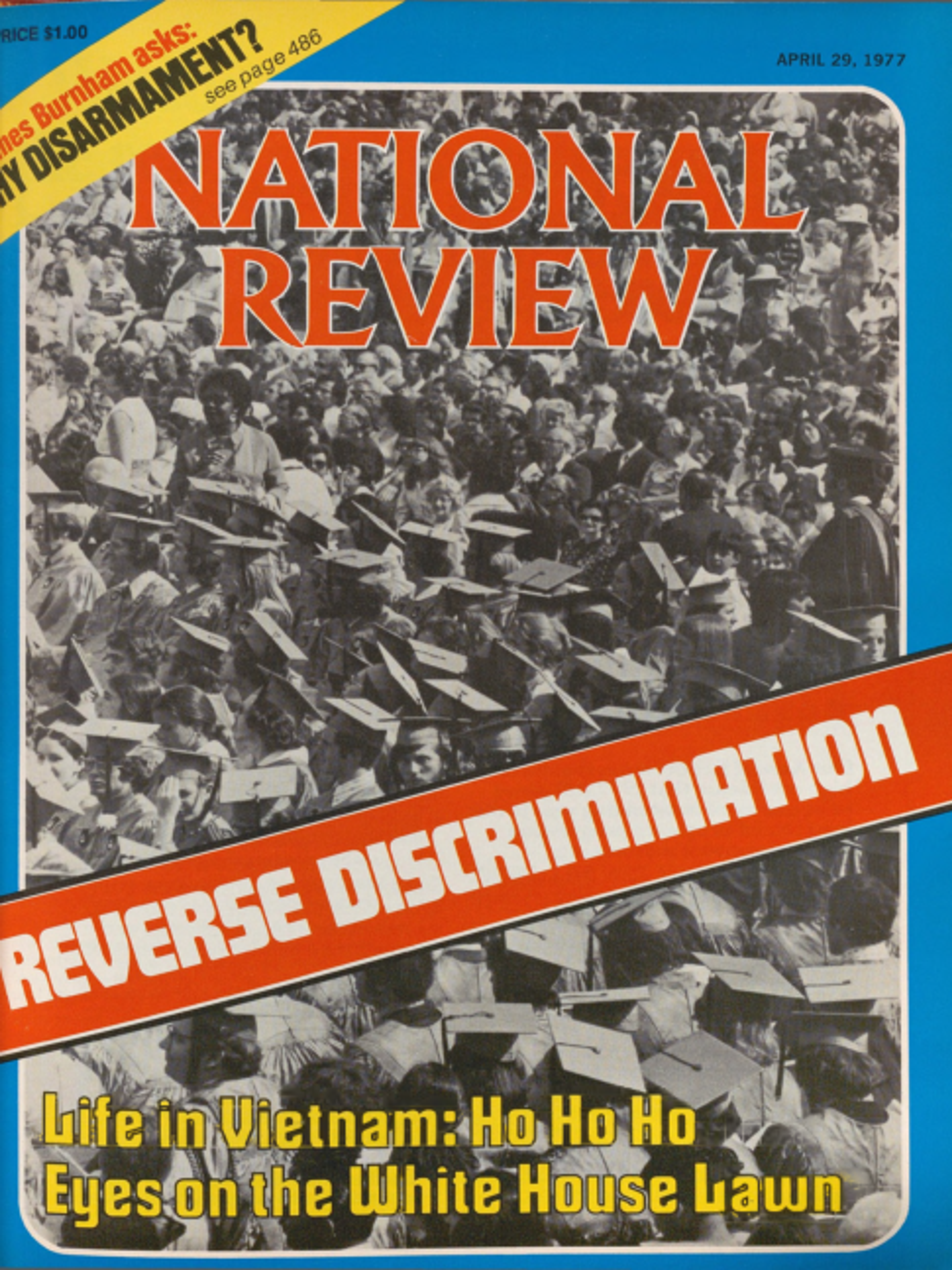
On April Fool’s Day Mr. Califano wisely fudged these words he had spoken two weeks earlier. However, he still does not understand that reversing discrimination is inconsistent with enforcing equality of opportunity. Preferential admissions to colleges and professional schools are now widely practiced. So is “affirmative action,” which is basically analogous to preferential admissions: it applies to hiring, promotion, and employment in general. Persons belonging to selected minorities or under-represented groups (such as women, or blacks) are admitted or hired if they meet scholastic standards which are specially lowered for them. Or, they are given preference over others who have performed as well or better in meeting requirements. This practice, which Secretary Califano endorses, discriminates, in effect, against those who are being displaced in favor of those who displace them. Its legality has been attacked with respect to state institutions. But the Supreme Court, although it heard the DeFunis case (DeFunis v. Odegaard, 1974), avoided deciding it because DeFunis, who had sued the university, had by that time been admitted and graduated.



Comments