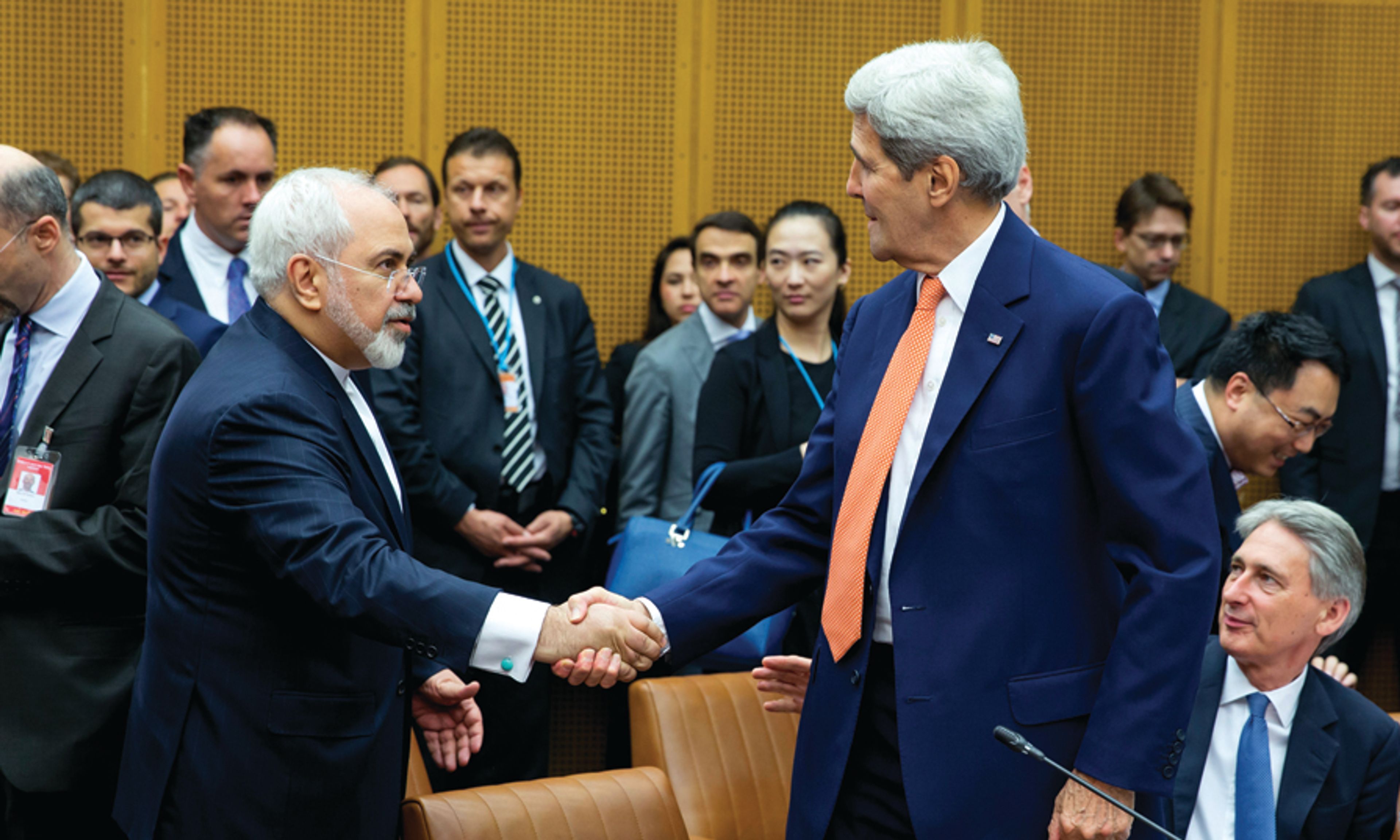
With the signing of the Joint Comprehensive Plan of Action (JCPOA) by Iran, the United States, Russia, China, and three European countries (France, the U.K., and Germany), the action shifts to Capitol Hill. Congress will now devote part of its summer (though not the August recess, which is sacrosanct) to debating the 150-page agreement, and the big question facing elected representatives of both parties is: What is in this document before them? Is it a diplomatic achievement or a disgrace, a technical fix or a fundamental policy shift?
When conscientious legislators sigh, do their duty, and actually pick up the 150-page agreement, they will find that it takes them less time to read than they feared it might. Roughly 60 of those 150 pages comprise lists of all the Iranian entities — firms, companies, ports, ships, banks, individuals, and on and on — that will have sanctions on them lifted. As they peruse those lists, members of Congress should stop and reflect for a moment. It has taken decades for them to craft and entrench the current international sanctions against Iran. To believe that these sanctions can or will “snap back” into place if Iran violates the agreement is foolish. As Robert Satloff of the Washington Institute for Near East Policy has put it:










Comments