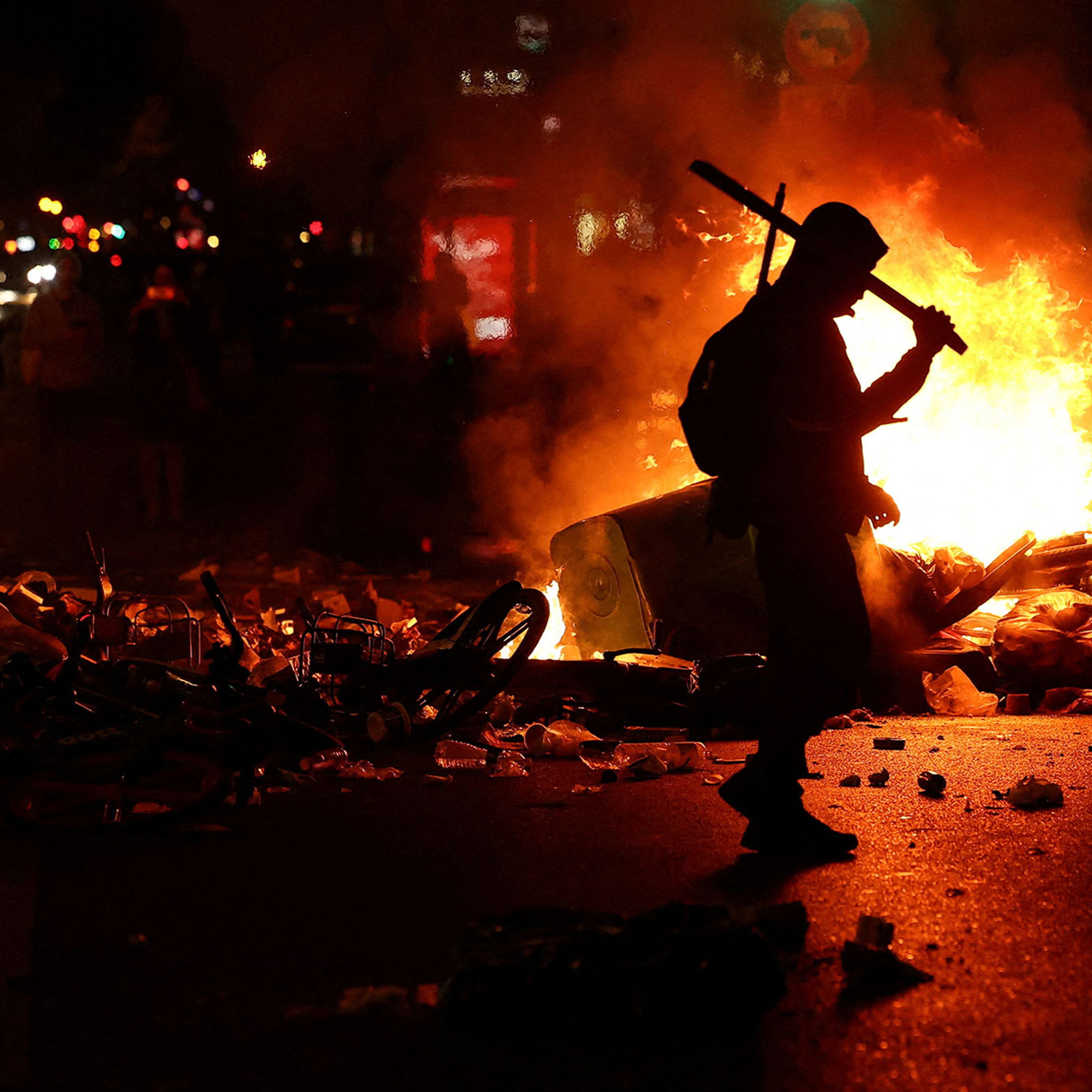
If the bomb outrage at the Johannesburg railway station on July 24 that killed 23 persons is proven to have been the act of an underground political organization, the resistance movement in South Africa will have entered its third and most violent— and most desperate—phase, that of terrorism. The first phase, non-violent protest, ended with the failure of the three-day work stoppage plan in May 1961, when South Africa became a republic outside the Commonwealth. The underground forces then decided on a policy of “selective violence,” in view of the failure of peaceful protest. That December South Africa had its first taste of violent protest, with onslaughts on government buildings in three provinces. Since then there have been hundreds of cases.
This calculated campaign has at various times been directed by the rival African movements and their militant offshoots, including Poqo (extremist members of the PanAfrican Congress), Umkonto we Sizwe or Spear of the Nation, the military wing of the African National Congress, and now the African Resistance Movement (ARM). Mr. Justice Snyman decided, in his inquiry into the Paarl riots of November 1962, that acts of sabotage “are done largely under the guidance of Communists. They use the ANC, Poqo and other bodies for this purpose.” The first act of sabotage that could have deliberately endangered life took place in January 1963, when a bomb was thrown into the offices of the weekly government-supporting newspaper in Durban. Nobody was, in fact, injured, but sabotage continued intermittently all over the country.


Comments