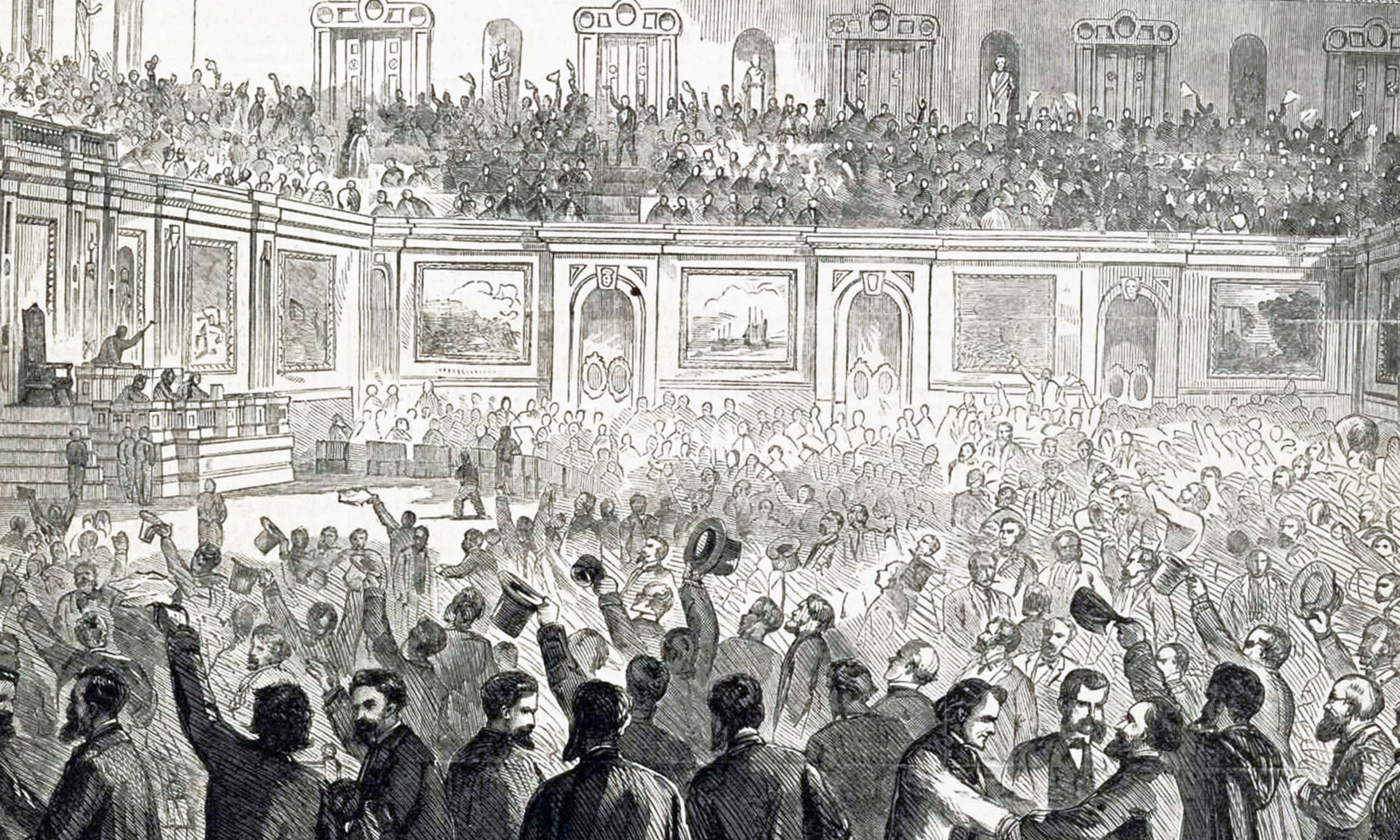
Modern historical accounts tend to treat the Constitution’s three Reconstruction Amendments as a rupture with the Founding. Legal scholar Noah Feldman describes them as an upheaval of the original document that “opened the door for its reconstruction on new terms.” The historian Eric Foner famously labeled the amendments’ ratification as America’s “second founding”; National Review alumnus Garry Wills said the same of Lincoln’s Gettysburg Address. For progressives, this alleged rupture is a triumph: The Founders’ Constitution made peace with slavery; Reconstruction replaced it with a better one. Many conservatives have accepted this telling, if only to lament the loss of state sovereignty that was so treasured during the Revolution.
This narrative misplaces the true constitutional divide. Historians are correct that the 13th, 14th, and 15th Amendments represented a striking revision, if not a fundamental transformation, of the Constitution by establishing new national powers over states to ensure the rights of former slaves and their descendants. This revision, however, was already grounded in the Constitution’s creation, particularly in the work of its foremost framer, James Madison. The Reconstruction Amendments broke with the Constitution drafted in Philadelphia, but that Constitution was not the one that Madison had intended.





Comments